

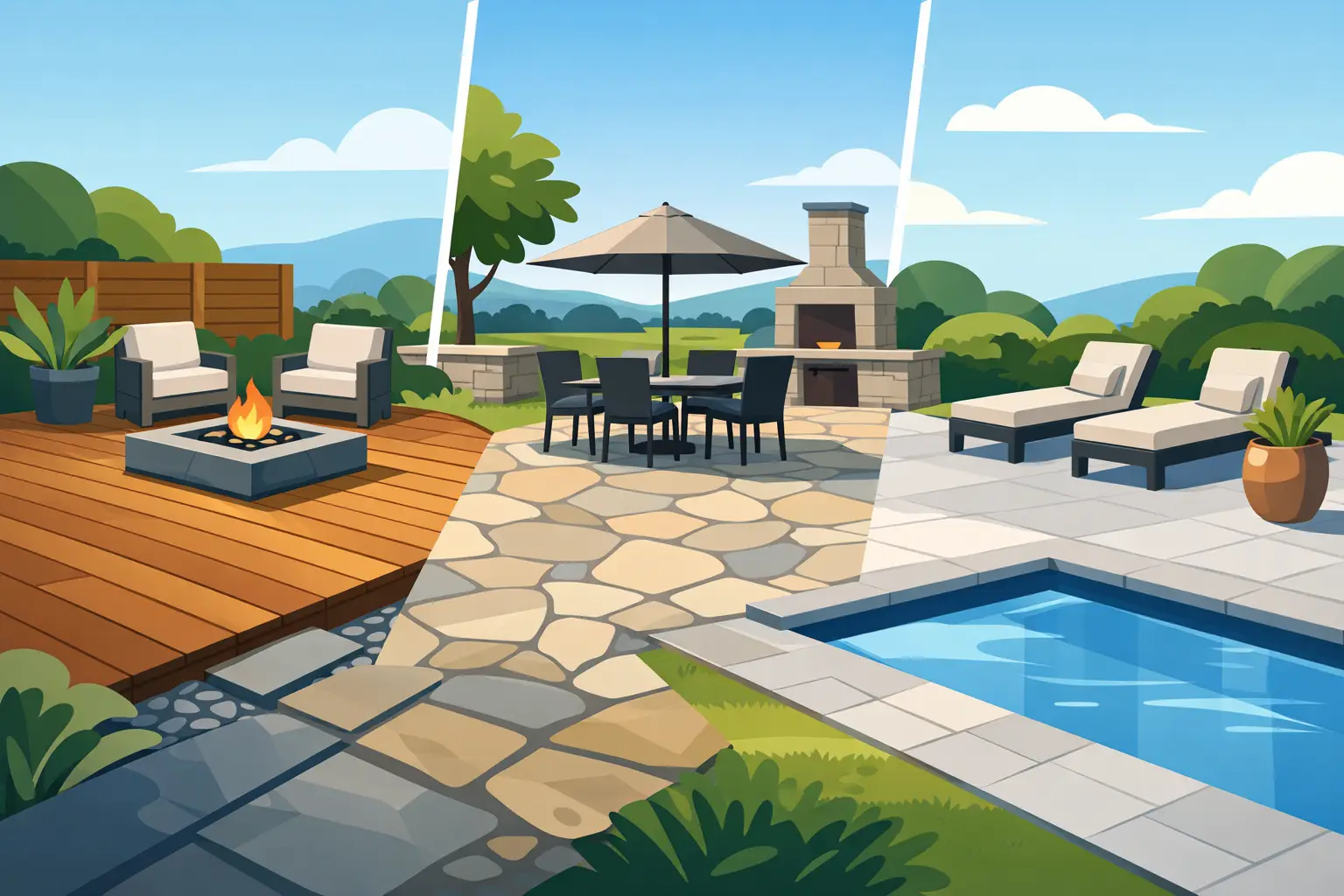
A patio should make your backyard easier to use, not give you another surface to worry about after every hard rain, freeze, or family gathering. The best patio materials for backyards are the ones that match how you live, how your property drains, and how much maintenance you are willing to take on. In Kentucky, that also means choosing a material that can stand up to humid summers, seasonal rain, and winter freeze-thaw cycles.
A beautiful patio is more than a stack of attractive materials. Its long-term performance depends on solid base preparation, proper slope away from the home, dependable edge restraint, and drainage that keeps water from settling where it should not. Start with the right material, then make sure it is installed with the same level of care.
Best Patio Materials for Backyards: Start With Your Priorities
There is no single best choice for every home. A homeowner planning a low-maintenance grilling area may be happiest with concrete. Someone building an outdoor living space with a fire pit, seating walls, and landscape lighting may prefer pavers or natural stone. If your goal is a polished, high-end look that connects to an existing stone façade, flagstone can be worth the additional investment.
Before selecting a surface, think about traffic, shade, drainage, the style of your home, and your budget for both installation and upkeep. A patio beside a pool has different needs than one under mature trees, where leaves, shade, and surface moisture can affect cleaning and traction.
Concrete: Clean, Practical, and Budget-Conscious
Concrete remains a popular choice because it creates a smooth, durable surface at a straightforward price point. A basic broom-finished concrete patio works well for dining tables, grills, outdoor furniture, and everyday use. It is also easy to shape around steps, foundations, and narrow side-yard spaces.
For homeowners who want more visual interest, stamped concrete can mimic stone, slate, brick, or wood textures. Colored concrete offers another way to coordinate the patio with your home and landscape. These finishes can make a concrete patio look more custom, but they also raise the project cost and may need periodic resealing to keep their color and surface protection looking their best.
The trade-off is cracking. Even a well-installed slab can develop cracks over time as the ground moves and temperatures change. Control joints help direct those cracks, but they cannot eliminate movement altogether. Small cracks may be manageable, while larger settling issues can be harder to repair without the patch standing out.
Concrete Pavers: Flexible, Attractive, and Easy to Repair
Concrete pavers are a strong all-around choice for homeowners who want durability without the fixed look of a poured slab. They come in a wide range of colors, sizes, textures, and laying patterns, from traditional brick-style layouts to clean, contemporary large-format designs. Pavers can create a patio that feels tailored to the home rather than poured as an afterthought.
Their biggest advantage is flexibility. Individual pavers can move slightly with seasonal ground conditions, and if one area settles or a paver gets stained or damaged, that section can often be lifted, corrected, and reset. This is especially helpful when access is needed for a buried line or when a patio needs a localized repair years later.
Pavers do require a properly compacted gravel base, bedding layer, and edge restraint. Shortcuts below the surface are what lead to sinking, spreading, and uneven joints. Polymer sand between the pavers helps lock the surface together and can discourage weed growth, but it may need refreshing over time. For a backyard patio with curves, steps, or a built-in fire feature, pavers are often one of the most versatile options.
Natural Stone: Timeless Character With More Variation
Natural stone delivers the kind of color and texture that manufactured materials cannot fully duplicate. Flagstone, bluestone, limestone, and sandstone each bring a different appearance, from formal and refined to relaxed and rustic. Because every piece varies, a stone patio feels connected to the landscape and can add lasting visual appeal to a well-designed backyard.
Flagstone is often installed in irregular shapes for an organic look or cut into more consistent pieces for a cleaner pattern. It works especially well around garden beds, water features, and outdoor living areas where homeowners want the patio to feel less rigid. Some stone options can be set in mortar, while others are installed over a prepared base with joints filled by sand, gravel, or groundcover.
Natural stone is usually more expensive than concrete or standard pavers, both for the material and the skilled labor required to fit it properly. It also calls for thoughtful material selection. Some stones are denser and better suited to wet conditions, while softer or more porous stone may stain, flake, or require more sealing. A professional installer can help match the stone to the location rather than choosing based on color alone.
Brick: Traditional Warmth for Classic Homes
Brick patios have a familiar, welcoming appearance that works beautifully with colonial, cottage, farmhouse, and traditional home styles. The warm red, brown, and charcoal tones of clay brick can make a backyard feel established from the first day. Brick is also durable and can be laid in patterns such as running bond, herringbone, and basket weave.
A true clay brick surface develops character as it ages, but it is not maintenance-free. Mortar joints can need repair on mortared installations, and bricks installed over sand may need occasional leveling or joint sand replacement. In shaded spaces, moss and algae can also make the surface slick if it is not cleaned regularly. Brick is a great choice when its classic appearance supports the overall property style, not just because it looks good in a sample board.
Gravel: Affordable and Relaxed, With Limits
Gravel can be an excellent patio material for casual sitting areas, fire pit spaces, and larger backyard zones where a hard surface would stretch the budget too far. It drains well, installs quickly, and brings a relaxed look that fits many gardens and rural properties. A compacted base and quality edging make a major difference in keeping gravel where it belongs.
However, gravel is not ideal for every use. Chair legs can sink, wheeled furniture is difficult to move, and loose stone may get tracked into the lawn or house. It also needs periodic raking and replenishment. For a secondary gathering space or an economical extension of an existing patio, gravel can be a smart solution. For a main dining area used every day, pavers, concrete, or stone are usually more comfortable.
Drainage and Base Work Matter as Much as the Surface
The most attractive patio material can fail when water is allowed to collect beneath or beside it. Patios should slope gently away from the home so rainwater moves toward a safe drainage area. In some yards, that may mean incorporating a channel drain, dry creek feature, swale, or carefully planned grading around the patio.
Base depth also depends on the material and site conditions. A patio built on stable, well-prepared ground performs differently than one placed over soft soil without adequate compaction. In the Louisville area and throughout Oldham and Shelby counties, changing grades, clay-heavy soil, and runoff patterns deserve attention before construction begins.
Trees are another consideration. Their roots can lift pavers, crack concrete, and disrupt stone over time. Removing a healthy mature tree is not always necessary, but the patio layout may need to be adjusted to protect both the root zone and the finished surface.
Choose a Patio That Fits the Way You Gather
A patio is most successful when it supports real routines. If you picture weeknight dinners outside, leave enough room to pull chairs back comfortably. If you host friends around a fire pit, plan a clear walking path and durable seating area. If the patio will connect the house to a lawn, garden, or pool, consider how people will move through the space instead of treating it as a separate square of hardscape.
For many backyards, pavers offer the best balance of style, repairability, and long-term flexibility. Concrete is a dependable choice for simple, functional spaces, while natural stone provides standout character for homeowners ready to invest in a more customized result. The right answer comes from the property, the budget, and the life you want to enjoy outdoors.
A well-planned patio gives your backyard a place to work hard and welcome people in. When you are ready to turn an underused patch of lawn into a durable outdoor space, MowAction Lawn Care Services can help you choose a material and layout that feels right for your home.