

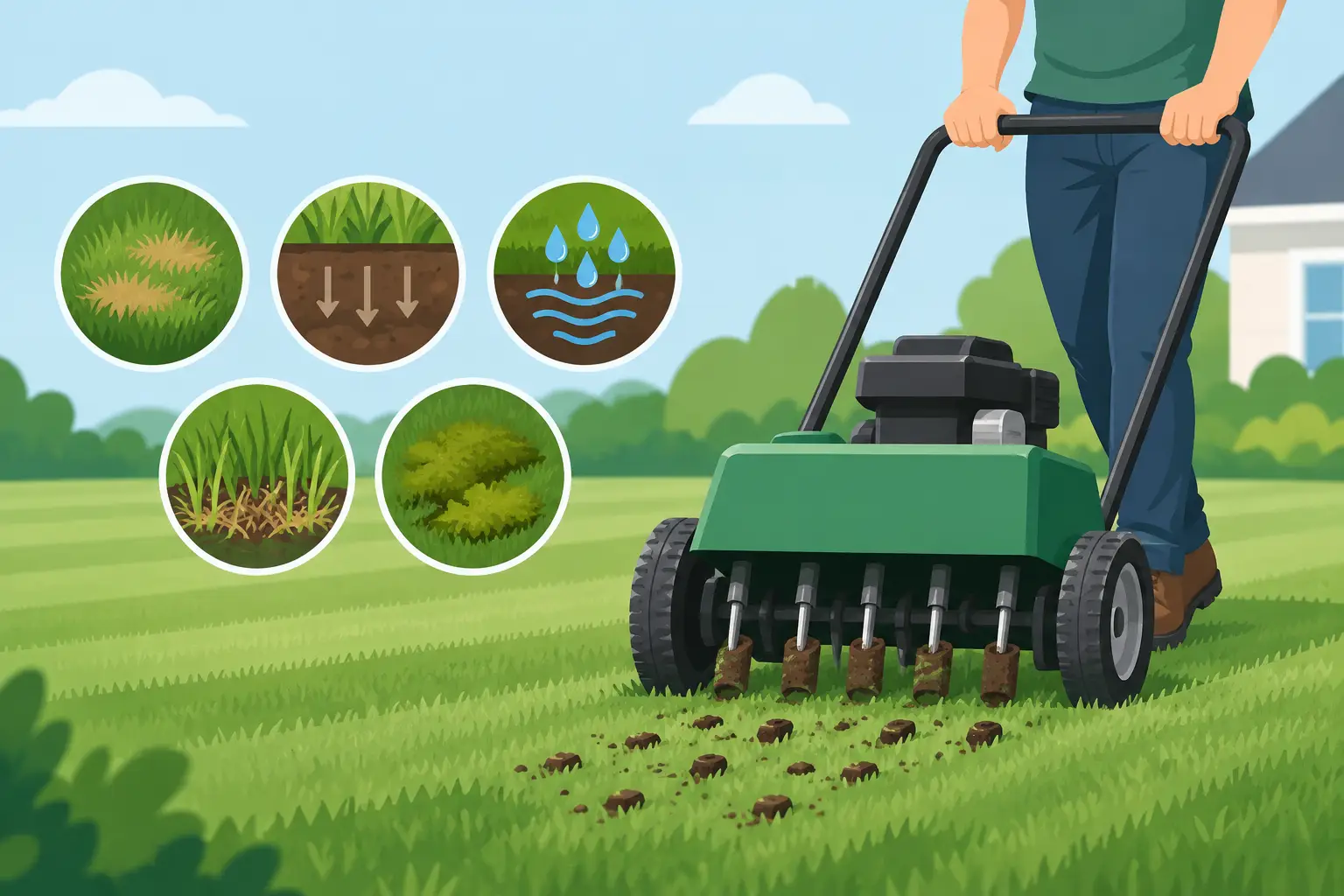
A lawn can look green from the street and still struggle below the surface. If you are seeing thin grass, puddles that linger, or soil that feels almost impossible to press with a finger, the five signs lawn needs aeration may already be showing up in your yard. Aeration is one of those practical services that helps grass use the water, air, and nutrients you are already giving it.
For homeowners and property managers, the goal is not simply a lawn that looks better for a week. It is healthier turf that stands up to summer heat, foot traffic, mowing, and the dense soils common across Louisville, Oldham County, and Shelby County.
What Aeration Actually Does for a Lawn
Core aeration removes small plugs of soil and thatch from the lawn. Those openings give air and water a better path into the root zone, reduce soil compaction, and make room for roots to grow deeper. The plugs left on the surface are temporary. They break down naturally and return valuable soil material to the lawn.
Aeration is different from poking shallow holes with spike shoes or a rolling tool. Spikes can create openings, but they may also press already compacted soil tighter around the hole. Core aeration physically removes soil, which provides more meaningful relief where a lawn is compacted or covered with excessive thatch.
Not every lawn needs aeration every year. A lightly used lawn with loose, healthy soil may only need it occasionally. But lawns with clay-heavy soil, regular traffic, construction stress, pets, or years of routine use often benefit from a more consistent schedule.
Five Signs Your Lawn Needs Aeration
1. Water puddles or runs off instead of soaking in
After a normal rain, take a look at where the water goes. If puddles remain long after the storm, or water flows across the lawn toward the driveway or street, compacted soil may be blocking infiltration. The grass may be thirsty even when the surface appears wet.
Aeration opens channels through the soil so rainfall and irrigation can move toward the roots. It will not correct a serious grading or drainage issue on its own, especially when water is collecting in one low area. Still, it is often an essential first step for a lawn where compaction is causing widespread runoff.
2. The ground feels hard underfoot
A lawn should have some give when you walk across it. If it feels like packed dirt, especially in paths between the driveway, gate, patio, mailbox, or play area, the soil may be compacted. This is common in yards where children play, dogs follow the same route, vehicles have crossed the turf, or crews have worked on nearby construction projects.
You can do a simple check with a screwdriver or soil probe after watering. If it is difficult to push several inches into the ground, your root zone may be too tight for grass to develop properly. Aeration relieves that pressure and helps the lawn establish a stronger foundation.
3. Grass looks thin, weak, or stressed despite regular care
When a lawn receives reasonable mowing, watering, and fertilizer but still looks sparse, compacted soil could be part of the problem. Grass roots need oxygen as much as they need moisture. In dense soil, roots tend to stay shallow, making turf more vulnerable when Kentucky weather turns hot and dry.
Thin grass can also result from shade, insects, disease, poor seed selection, or inadequate watering, so aeration is not a cure-all. The pattern matters. If thinning is most noticeable in high-traffic areas or across a lawn with hard soil, aeration is a sensible next move. It is especially helpful when paired with overseeding, since seed has a better chance to reach soil and establish roots.
4. Thatch is thicker than about half an inch
Thatch is the layer of dead and living plant material that builds up between green grass blades and the soil. A small amount is normal and can even provide some cushioning. Too much thatch, however, can keep water, fertilizer, and air from reaching the roots where they are needed.
Part the grass with your fingers and look at the layer above the soil. If it feels springy and measures more than about half an inch, it may be time for core aeration. Severe thatch sometimes calls for additional treatment, but aeration helps introduce beneficial soil organisms into the layer and encourages healthier breakdown over time.
5. Your lawn has heavy traffic or a history of stress
Some lawns tell their story through how they are used. A backyard that hosts gatherings, a commercial property with frequent foot traffic, or a front lawn used for parking during events can become compacted even if it still looks decent. The same goes for turf that has been affected by drought, renovation work, heavy equipment, or repeated standing water.
Rather than waiting for bare spots to spread, treat these conditions as an early warning. Preventive aeration can protect the investment you make in mowing, weed control, fertilizer, irrigation, and seed. Healthy soil supports every other part of a lawn-care plan.
When to Aerate in Kentucky
Timing depends on the type of grass and the condition of the property. Most area lawns are cool-season grasses such as tall fescue and Kentucky bluegrass. For these lawns, early fall is usually the best time for core aeration because the soil is still warm, air temperatures are milder, and grass has time to recover before winter.
Fall aeration also works well with overseeding. The openings made by the aerator help seed make contact with soil, while lower weed pressure gives new grass a better opportunity to establish. Early spring can be a good alternative when fall scheduling is not possible, though spring-seeded lawns may face more heat and weed competition as summer approaches.
Avoid aerating during extreme heat, drought stress, or when the lawn is saturated. Soil should be moist enough for the machine to pull clean plugs, but not muddy. If the ground is bone-dry, watering lightly the day before can make a noticeable difference.
What to Do Before and After Core Aeration
Preparation is straightforward. Mow the lawn to its normal height, clear sticks, toys, hoses, and lawn furniture, and flag shallow irrigation heads, invisible fence lines, or other buried features. Let the service team know about any areas that need special attention.
After aeration, leave the plugs where they land. They may look messy for a short time, but they will break down with rainfall and mowing. Continue watering as needed, particularly if you overseed. Keep foot traffic light while new grass is establishing, and avoid applying weed-control products that could interfere with germination if seed has been added.
Aeration creates a window of opportunity, not a substitute for basic lawn care. Consistent mowing at the proper height, smart watering, soil-appropriate fertilization, and timely weed control all help the results last. If irrigation coverage is uneven or runoff persists, it may also be worth evaluating the sprinkler system, drainage, or the overall condition of the soil.
A Healthier Lawn Starts Below the Surface
The best-looking lawns are usually not the ones receiving the most products. They are the ones with roots that can access what is already in the soil. When compaction and thatch are holding your turf back, professional core aeration can be a simple, cost-effective way to reset the conditions beneath the grass.
MowAction Lawn Care Services can help assess whether aeration makes sense for your property and coordinate it with overseeding or ongoing lawn maintenance. A few small soil plugs today can make a real difference in how your lawn handles the season ahead.