

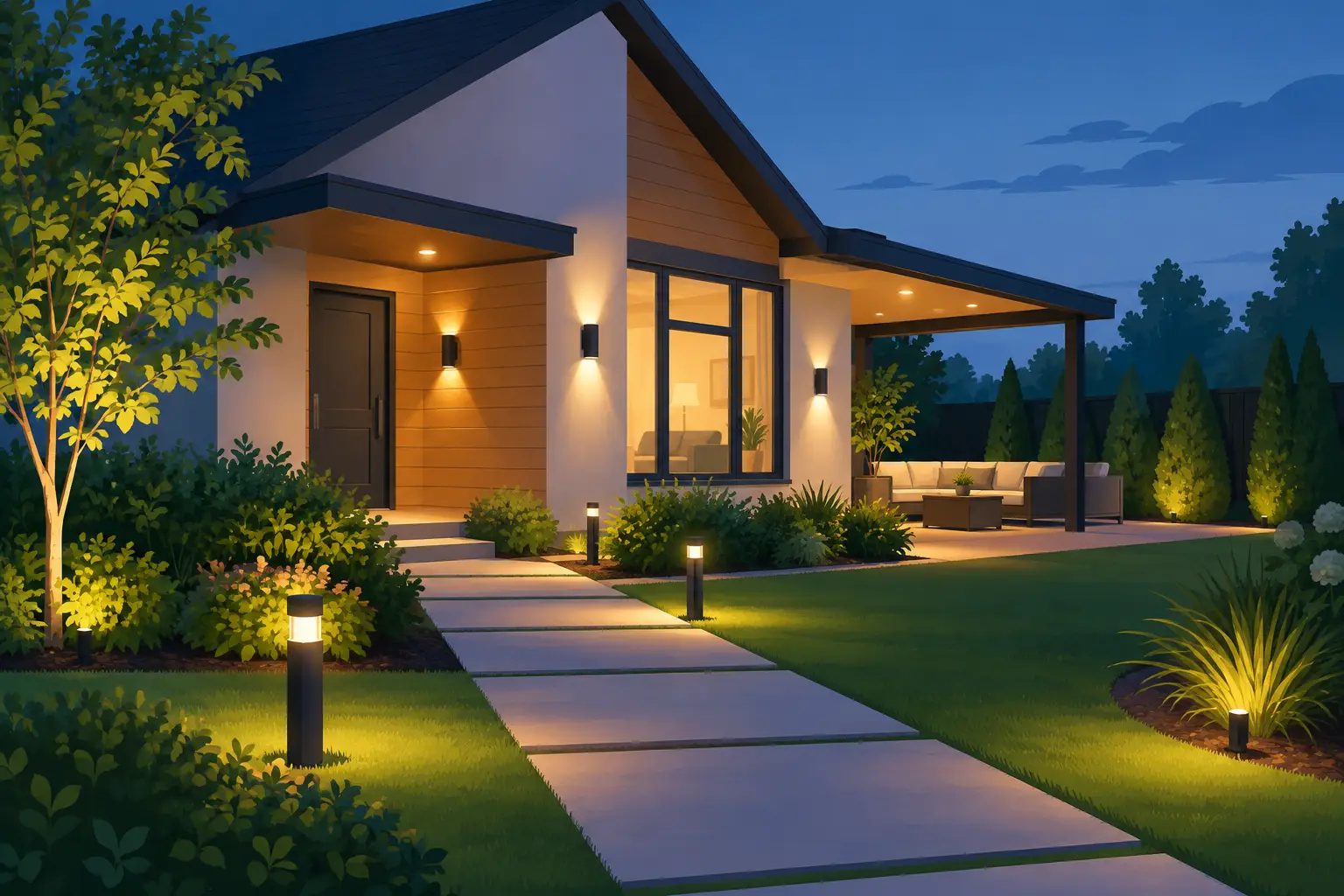
A dark front walk, a shadowy set of steps, or a patio that goes unused after sunset can make an otherwise well-kept property feel unfinished. Knowing how to plan outdoor lighting helps you solve those practical problems while bringing out the best features of your home, landscaping, or commercial property. The goal is not to put a light on every tree and surface. It is to create a safe, welcoming space with layers of light that feel natural after dusk.
For homeowners and property managers, a good lighting plan starts before fixtures are purchased. It considers how people move through the property, which areas deserve attention, where power is available, and how the landscape will change through the seasons.
Start With How the Property Is Used at Night
Walk your property after dark before deciding where lighting belongs. Bring a flashlight if needed, but take time to notice what disappears once the sun goes down. The route from the driveway to the front door may be difficult to follow. A change in elevation may be hard to see. A beautiful patio, stone wall, or mature tree may be completely lost in the dark.
Think about the people using each area. Front-entry lighting should make guests feel comfortable and help them see the door, house numbers, and steps. Side-yard and backyard lighting may need to support pets, trash pickup, grilling, entertaining, or a walk to the garage. Commercial properties often need a stronger focus on parking areas, entrances, sidewalks, signage, and employee safety.
This first walk-through helps separate essential lighting from decorative lighting. Both matter, but safety and access should come first. Once the important routes are covered, you can add lighting that creates curb appeal and extends the use of outdoor living areas.
Build Your Plan in Layers
The best outdoor lighting does more than one job. Rather than relying on a single bright floodlight, use several types of fixtures at lower levels. This creates depth, reduces harsh glare, and makes the property easier to navigate.
Use path and step lighting for safe movement
Path lights guide people along walkways, garden paths, and driveway edges. They should define the route without shining directly into someone’s eyes. Place them where the path changes direction, near transitions, and around areas where someone could trip.
Steps deserve special attention. Low lights built into stair risers, wall caps, or nearby hardscaping can clearly show each tread. If fixtures are placed only at the top or bottom of a staircase, the middle steps can still disappear into shadow. For aging homeowners, frequent guests, or commercial visitors, this small detail can make a meaningful difference.
Add ambient light where people gather
Ambient lighting creates the overall glow that makes a patio, deck, porch, or pool area comfortable after dark. It may come from wall sconces, post lights, string lights, recessed deck lights, or carefully aimed downlights mounted in trees or structures.
Brightness should match the space. A dining patio needs enough light to see food and faces, but it should still feel relaxed. A large gathering area may benefit from several dimmer fixtures instead of one powerful fixture. If you entertain often, ask about zoning so the patio, fire pit, and perimeter can be controlled separately.
Use accent lighting to show off the landscape
Accent lighting is where a lighting plan gains personality. Uplighting can highlight a mature tree, textured stone, architectural columns, or a specimen planting. Downlighting can create a soft moonlit effect over a lawn, sitting area, or garden bed.
Choose focal points carefully. One well-lit ornamental tree often has more impact than five fixtures competing for attention. Lighting can also emphasize the details you have invested in, such as a paver patio, retaining wall, water feature, or fresh landscape installation.
Decide What Deserves Light and What Should Stay Dark
A common mistake is treating outdoor lighting as a brightness contest. Too much light can flatten the landscape, create glare, waste energy, and spill into neighboring properties. Darkness has a purpose. It gives the eye a place to rest and makes illuminated features stand out.
Prioritize entrances, walking routes, grade changes, gathering spaces, and major focal points. Then look for areas that should remain quieter, such as the far edge of the yard, bedroom-facing windows, or a neighbor’s property line. This balance is especially important in established neighborhoods where homes are close together.
Also consider sightlines from indoors. A fixture that looks great from the street may shine directly through a living room or bedroom window. Test placement from the driveway, sidewalk, patio, and inside the house before finalizing the design.
Choose Fixtures and Light Color for the Setting
Outdoor fixtures need to withstand moisture, temperature swings, mowing equipment, and routine landscape maintenance. Quality matters, especially for fixtures near walkways or in planting beds where they can be bumped, buried by mulch, or exposed to irrigation.
LED lighting is the practical choice for most properties. It uses less energy, produces less heat, and generally lasts much longer than older bulb types. It also gives you more control over brightness and color temperature.
For homes, warm white light usually creates the most inviting result. Look for a color temperature around 2700K to 3000K for patios, entries, stonework, and planting beds. Cooler white light can look stark against natural materials and may feel more appropriate for task-oriented commercial areas than a residential outdoor space.
Fixture finish should also complement the property. Dark bronze, black, copper, and natural metal finishes tend to work well with a wide range of exterior styles. Still, appearance should not outweigh performance. A beautiful fixture is not helpful if it produces glare, cannot be aimed correctly, or is too fragile for its location.
Plan Power, Controls, and Drainage Before Installation
Low-voltage landscape lighting is a popular option because it is energy-efficient, flexible, and well suited to many residential projects. It uses a transformer to reduce standard household current and sends power through buried low-voltage cable. The transformer must be properly sized for the total fixture load, including room for future additions.
Line-voltage fixtures may be appropriate for certain permanent installations, such as wall-mounted entry lights, larger commercial applications, or specific architectural features. These installations require careful electrical planning and should be handled according to local codes by qualified professionals.
Controls make a good system easier to use. A timer is simple and dependable. Photocells turn lights on at dusk, while smart controls can allow scheduling and zone adjustments from a phone. Motion sensors are useful near service doors, side yards, and security-sensitive areas, but they are not always ideal for patios where frequent activation can become distracting.
Do not overlook drainage and irrigation. Fixtures installed too low in a bed can collect water or become covered with mulch. Cables should be protected from edging, aeration, planting, and future digging. If you are planning sprinkler work, new sod, hardscaping, or landscape renovations, coordinate the lighting plan early. Installing lighting after every surface and bed is finished can add unnecessary disruption and cost.
Account for Seasons and Ongoing Maintenance
Kentucky properties look different in July than they do in January. Trees leaf out, perennials grow, mulch gets refreshed, and seasonal decorations may change how people move around the property. A fixture that performs perfectly in early spring may be hidden behind shrubs by midsummer.
Leave room for maintenance in the plan. Fixtures may need occasional realignment, lens cleaning, trimming around plants, and replacement after accidental damage. During routine lawn and landscape service, crews should know where wires and fixtures are located so they can avoid damaging them with mowers, trimmers, edgers, or aeration equipment.
For commercial properties, include lighting checks as part of regular exterior maintenance. A single burned-out entry fixture or dark sidewalk can affect both appearance and safety. Consistent upkeep protects the investment and supports a professional first impression.
When a Professional Lighting Plan Makes Sense
A small path-light project may be manageable for a handy homeowner, particularly if the layout is simple and power needs are modest. More detailed projects benefit from professional planning when they involve multiple zones, electrical work, mature trees, retaining walls, irrigation, patios, or large commercial grounds.
A professional can help determine fixture spacing, transformer capacity, beam angles, cable routes, and the best way to highlight your property without overlighting it. They can also coordinate the lighting with landscape design, hardscaping, and ongoing maintenance, so the finished project works as one complete outdoor space.
MowAction Lawn Care Services helps property owners throughout Louisville, Oldham County, and Shelby County create landscape lighting plans that are attractive, practical, and built around how the property is actually used. A thoughtful plan today can make every evening outside feel safer, more useful, and more inviting.