

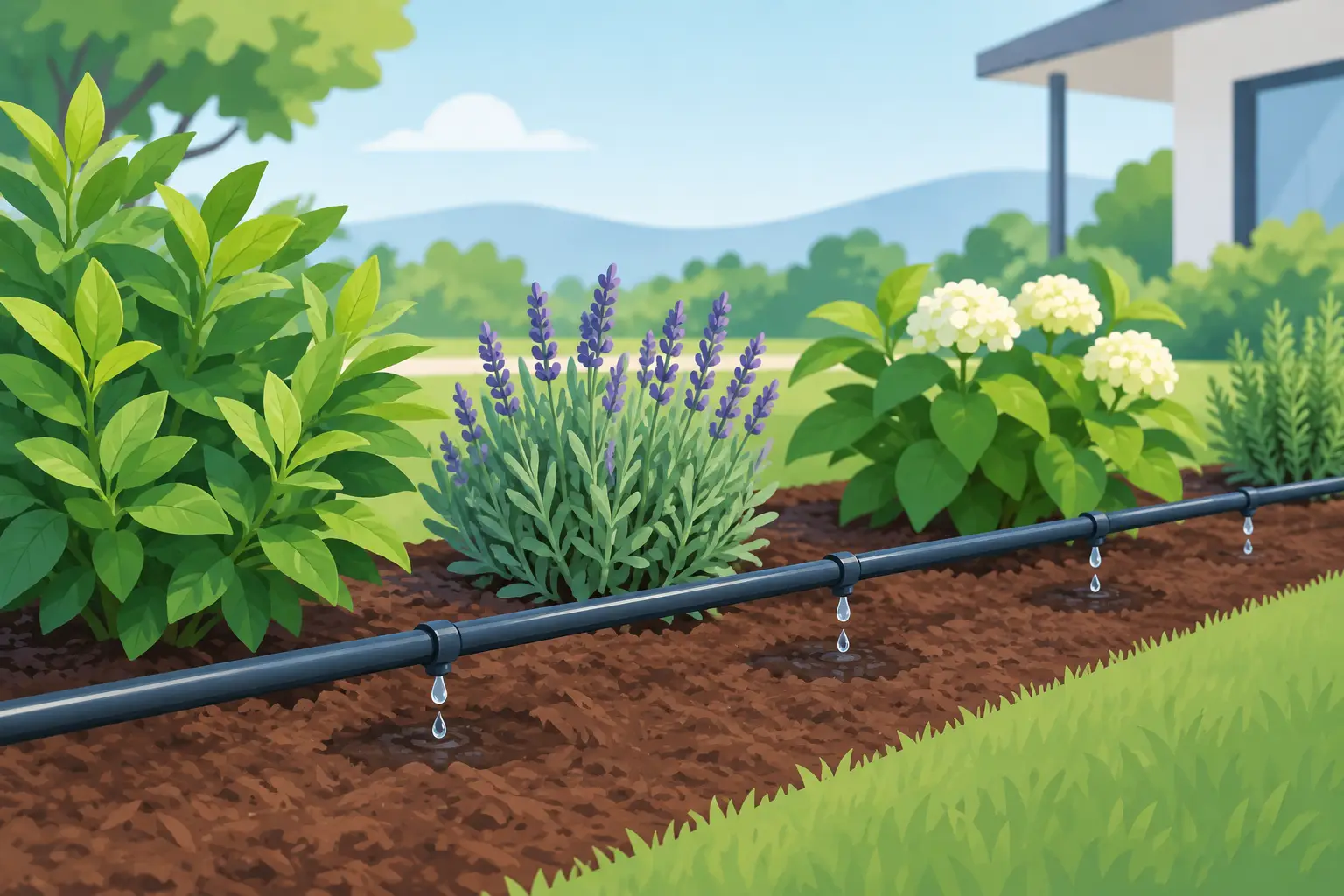
A brown spot in the lawn may get all the attention, but thirsty planting beds, stressed shrubs, and newly installed trees often need water even more. Drip irrigation systems put water where those plants can actually use it: slowly, consistently, and close to the root zone. For homeowners and property managers, that means less guesswork with a hose, less water landing on sidewalks or mulch, and a landscape that has a better chance of holding its color through Kentucky summer heat.
How Drip Irrigation Systems Work
Unlike a conventional sprinkler that sprays water through the air, drip irrigation sends water through flexible tubing to emitters, dripline, or small soaker-style lines. The system releases a measured amount of water at the soil surface or just beneath mulch. Rather than wetting every inch of an area, it targets the plants that need moisture.
This approach makes particular sense for foundation beds, annual flower displays, vegetable gardens, hedges, shrub rows, containers, and recently planted trees. These areas usually have different watering needs than turf. A lawn often benefits from broad, even coverage, while landscape plants do better when water reaches their roots without soaking their leaves or the open ground around them.
A well-designed system typically includes a connection to the water supply, a backflow prevention device, a filter, a pressure regulator, distribution tubing, and emitters. A timer or smart controller can automate the schedule. Each part has a job. The filter keeps debris from clogging the emitters, while the pressure regulator protects the tubing and helps ensure water is delivered evenly from one end of a bed to the other.
Where Drip Irrigation Makes the Biggest Difference
Drip irrigation is not automatically the right solution for every part of a property. It is especially valuable where plant material is grouped in beds and rows. A shrub border along a driveway, for example, can be watered efficiently with dripline beneath the mulch. Water goes to the roots instead of splashing cars, pavement, and foliage.
It is also a smart choice for new landscaping. Fresh sod needs a different watering approach, but new trees, shrubs, and perennials need steady root-zone moisture while they establish. A drip zone can help prevent the common problem of watering too lightly and too often. Shallow daily watering encourages shallow roots. Slower, deeper watering at appropriate intervals helps plants develop a stronger foundation.
Commercial properties can benefit as well. Entry landscaping, monument signs, office planting beds, apartment common areas, and retail frontages all need to look cared for without requiring someone to drag hoses around the property. With the right layout and controller settings, irrigation becomes more predictable and easier to manage.
Drip also helps limit leaf moisture, which can be useful in dense beds where wet foliage may contribute to fungal issues. It does not eliminate disease concerns, but it avoids adding unnecessary moisture to leaves during the hottest, most humid stretches of the season.
The Real Benefits: Water Savings and Better Plant Care
The biggest advantage of drip is precision. Spray heads can lose water to wind, evaporation, overspray, and poor aim. Drip applies water at a low rate, which gives the soil time to absorb it. That can reduce runoff on slopes and prevent water from racing across compacted ground.
Water savings depend on the property, soil type, plant selection, and how the system is scheduled. A drip system will not save water if it runs too long or too frequently. But when the flow rate and schedule match the landscape, it can be a more efficient option than hand watering or running a traditional sprinkler zone for planting beds.
There is a labor benefit, too. Busy homeowners should not have to remember every bed, basket, shrub, and young tree during a dry week. Property managers have enough to oversee without worrying whether a crew member moved a hose to the right location. Automation brings consistency, and consistency is one of the most valuable parts of good plant care.
Mulch works especially well with drip irrigation. Tubing can be tucked below the mulch layer, keeping the installation less visible while reducing evaporation from the soil. The mulch should not be piled against plant stems or tree trunks, but a proper layer helps hold moisture where it belongs.
A Good Design Matters More Than More Water
A dependable irrigation system starts with an honest look at the landscape. Plants with similar needs should be grouped together whenever possible. A sunny annual bed cannot share the same schedule as established shade shrubs and be expected to thrive equally. Separate zones allow the watering plan to fit the plants instead of forcing every area into one setting.
Soil also matters. Clay-heavy soil, common in many local properties, absorbs water slowly. If a drip zone runs for too long at once, water can still puddle or move away from the intended area. In those conditions, a cycle-and-soak schedule may work better: shorter watering periods with a pause between them so moisture can settle into the ground.
Emitter spacing and flow rate deserve the same attention. A mature shrub may need several emitters placed around its root area, while a narrow row of annuals may be better served by evenly spaced dripline. Too few emitters can leave dry pockets. Too many can keep the soil overly wet and create problems of their own.
For properties with changes in elevation, pressure management becomes even more important. Water naturally favors lower areas. The wrong tubing or emitter selection can leave plants at the top of a slope under-watered while the bottom stays too wet. This is where professional planning protects both the landscape and the investment in irrigation equipment.
Installation and Seasonal Care
Drip systems can range from simple garden setups to fully integrated irrigation zones tied into a property’s controller. A small container garden may use a basic timer and micro-tubing. Larger residential and commercial installations should be planned with water pressure, available flow, zoning, drainage, backflow requirements, and future landscape changes in mind.
The tubing needs to be secured so it stays in place, yet it should remain accessible for service. Landscapes change over time. Plants grow, beds expand, patios are added, and annual displays are redesigned. A system that is buried too deeply or installed without thoughtful access can be harder to adjust later.
Maintenance is straightforward, but it should not be ignored. Filters need periodic cleaning, emitters should be checked for clogs, and tubing should be inspected for cuts, pinches, or damage from lawn equipment and animals. A quick inspection early in the growing season can prevent a weak-performing zone from going unnoticed for weeks.
Winterization is particularly important in Louisville, Oldham County, and Shelby County. Freezing temperatures can damage lines, fittings, valves, and backflow components if water is left in the system. Professional seasonal service helps protect the system before winter and gives it a clean start when spring arrives.
When Drip Is Not the Best Answer
Drip irrigation is excellent for beds and plantings, but it is not usually the best primary solution for a large turf lawn. Lawn roots need even moisture across a broad surface, which is typically handled more effectively with properly designed spray or rotor zones. In some cases, the strongest setup is a combination: conventional sprinkler coverage for turf and drip irrigation for beds, shrubs, and trees.
It may also be less practical for beds that are completely reworked several times each year. If annual plants are replaced often, the drip layout may need regular adjustments. That is manageable, but it should be part of the plan from the start.
The right answer depends on the property, the plant material, the water source, and how much ongoing attention the landscape will receive. A good irrigation plan should make maintenance easier, not create another item on the to-do list.
For a landscape that looks cared for through dry weather, watering should be deliberate rather than automatic. MowAction Lawn Care Services can help property owners evaluate irrigation needs, install or repair the right components, and build a practical plan around the way their landscape actually grows.