

A thirsty lawn, a newly planted landscape bed, and a row of shrubs do not need water in the same way. That is why the decision between drip irrigation versus sprinklers should start with your property, not a one-size-fits-all recommendation. The right system can keep your landscape healthier, reduce wasted water, and make weekly maintenance far more manageable.
For homeowners and property managers, irrigation is about more than avoiding brown grass in July. It protects the investment you have made in sod, trees, planting beds, and curb appeal. The best choice often involves both systems, installed and adjusted with each area’s needs in mind.
Drip Irrigation Versus Sprinklers: The Core Difference
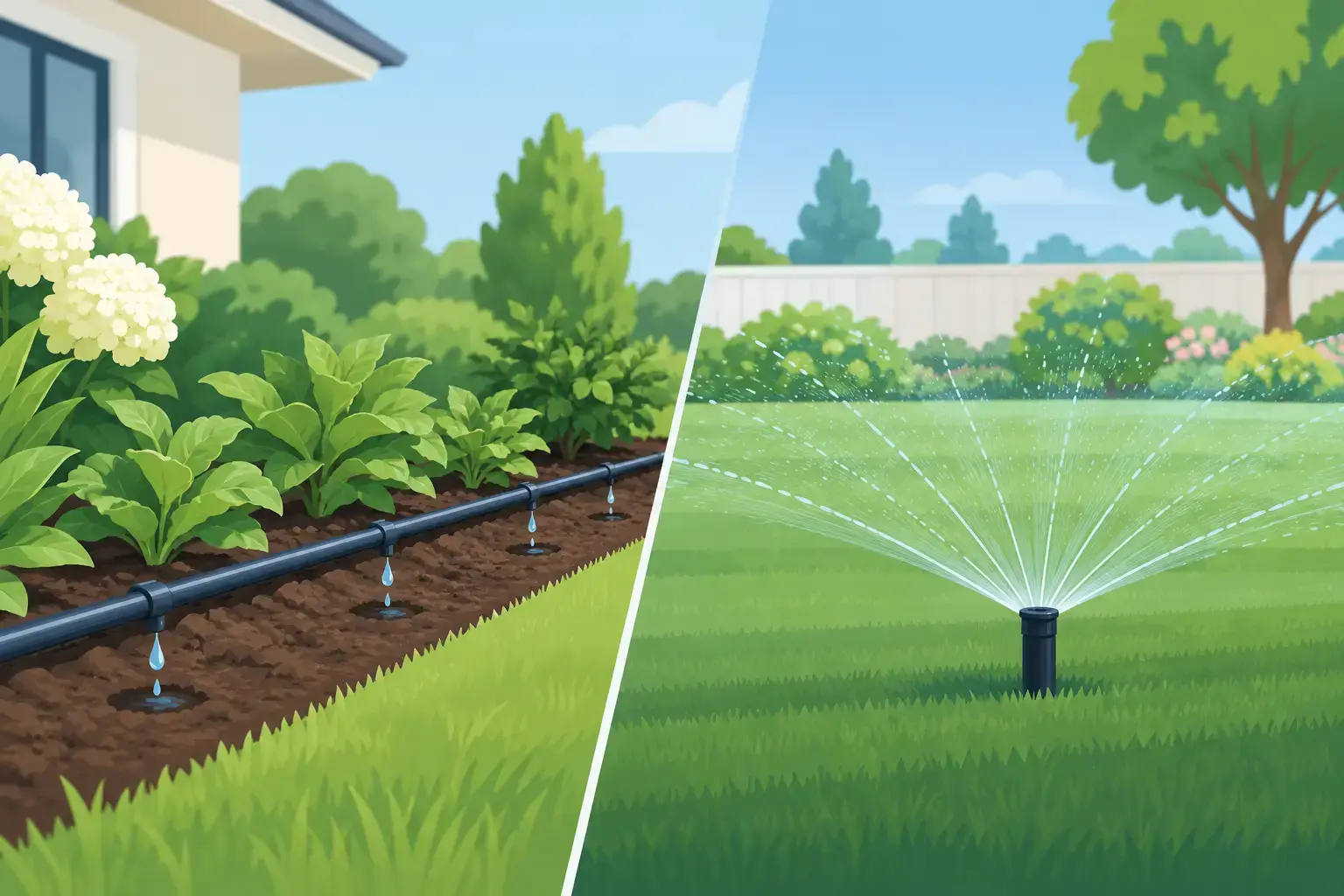
Sprinkler systems deliver water through the air across a broad area. They are designed to imitate rainfall, using spray heads or rotary heads to cover turf and larger open spaces. A properly designed sprinkler zone can water a lawn evenly and efficiently, especially when it is scheduled for the early morning.
Drip irrigation sends water slowly and directly into the soil near a plant’s root zone. It typically uses flexible tubing with emitters placed along the line or at individual plants. Instead of wetting everything above ground, drip concentrates moisture where roots can use it.
Neither approach is automatically better. Sprinklers are generally the practical choice for broad lawn areas. Drip irrigation is usually the stronger option for landscape beds, foundation plantings, vegetable gardens, shrubs, and young trees. Trying to use one system for every part of a property can create uneven watering, extra maintenance, or unnecessary water use.
Where Sprinklers Make the Most Sense
Turfgrass needs fairly even coverage across a wide surface, which is where sprinklers do their best work. Whether you have a front lawn that needs to look sharp for guests or a commercial property where appearance affects first impressions, sprinkler heads can cover the area efficiently when they are spaced and calibrated correctly.
Sprinklers are also useful when a lawn has established roots and needs a deep, consistent soak. In Kentucky’s summer heat, shallow daily watering can encourage weak roots. A properly programmed sprinkler system can apply water less often but more thoroughly, helping turf grow deeper roots that handle dry stretches better.
The trade-off is exposure. Wind can push spray off target, especially from fixed spray heads. Water can land on sidewalks, driveways, siding, or parked vehicles rather than the lawn. Watering late in the evening can also leave grass blades wet overnight, creating conditions that may contribute to fungal issues.
Sprinkler performance depends heavily on design and maintenance. A tilted head, a broken nozzle, or a shrub that has grown in front of a spray pattern can leave dry patches behind. Seasonal inspections and adjustments keep a sprinkler system from quietly wasting water while parts of the lawn struggle.
Sprinkler systems are a good fit for
Sprinklers are usually the best match for open lawns, sports turf, large common areas, and newly installed sod that requires uniform moisture during establishment. They can also be a smart choice for properties with expansive grass areas where drip tubing would be impractical to install and maintain.
When Drip Irrigation Is the Better Choice
Landscape beds are rarely flat, open spaces. They often include mulch, perennials, shrubs, ornamental grasses, and trees with very different water needs. Drip irrigation allows water to reach the soil below the mulch without soaking foliage, hardscapes, or nearby windows.
This targeted delivery is especially valuable around foundation plantings and in narrow beds where spray from a sprinkler would overshoot its target. Drip can reduce evaporation because the water is delivered at ground level. It also helps keep weeds under control by avoiding the broad, shallow watering that encourages weed seeds between plants.
For gardens, drip irrigation brings another advantage: consistency. Vegetables and annual flowers respond better when soil moisture stays more stable. Large swings from dry soil to heavy soaking can stress plants and affect production. A drip system can provide slower watering that has time to soak into the root zone rather than running off compacted ground or sloped beds.
Drip does require attention. Emitters can clog, tubing can be damaged by edging or digging, and mulch can hide leaks. It is also easy to assume drip is working because it is out of sight, even when an emitter has stopped delivering water. A quick inspection at the beginning and middle of the growing season helps catch issues early.
Drip irrigation is a good fit for
Drip works particularly well in planting beds, vegetable gardens, containers with dedicated lines, hedges, young trees, slopes, and areas with water restrictions or runoff concerns. It is also a practical choice when you want to water plants without wetting the exterior of a building or a nearby patio.
Water Use, Cost, and Maintenance
Many property owners choose drip because it can reduce wasted water. That benefit is real when the system is designed well and used for the right purpose. Water goes into the soil near roots, rather than drifting through the air or landing on pavement. But a neglected drip system with leaks or poorly placed emitters can still waste plenty of water.
Sprinkler systems can also be efficient. Modern controllers, rain sensors, properly matched nozzles, and correct run times make a major difference. A sprinkler system should not run simply because the calendar says it is Tuesday. Rainfall, temperature, soil type, shade, and recent landscaping changes all affect how much water a property needs.
Installation costs depend on the size of the area, access to water, the number of zones, plant material, and whether an existing irrigation system can be expanded. Sprinklers can involve more trenching, heads, valves, and coverage planning for large turf areas. Drip may cost less in a small garden bed but can become more involved when serving extensive planted areas with varied water needs.
Maintenance should be part of the budget for either option. Sprinklers need head adjustments, nozzle cleaning, leak repairs, and seasonal winterization. Drip lines need flushing, filter checks, emitter inspections, and careful attention when mulch is refreshed or beds are redesigned. The lowest upfront price is not always the best value if a system cannot be serviced easily later.
The Best Answer Is Often a Hybrid System
For most well-landscaped residential and commercial properties, the strongest plan is not drip irrigation or sprinklers alone. It is a system that uses sprinklers for grass and drip irrigation for beds, shrubs, and trees.
This approach lets each zone run according to its actual needs. Lawns can receive deeper, less frequent watering, while flower beds can receive slower, more targeted moisture. Separating those needs helps prevent a common problem: overwatering plants just to keep nearby grass green, or underwatering grass because the schedule was set for shrubs.
A hybrid design also makes future landscape improvements easier. If you add a patio, replace turf with a planting bed, install sod, or expand a garden, irrigation zones can be adjusted so water follows the new layout. That flexibility protects your property’s appearance and avoids the patchwork look caused by hand watering after every project.
How to Choose for Your Property
Start by looking at what you are watering. If the space is mostly lawn, sprinklers will likely carry most of the workload. If it is mostly beds, shrubs, and gardens, drip may be the smarter foundation. If you have both, separate zones are worth considering.
Then consider sunlight, soil, and slope. A sunny slope may need slower application to prevent runoff. Heavy clay soil may need shorter watering cycles with time in between for water to soak in. Shaded areas often need less water than full-sun turf, even when they sit only a few feet apart.
Finally, think about how much time you want to spend monitoring the system. Automation is helpful, but it does not replace observation. Walk your property occasionally while each zone runs. Look for pooling water, dry spots, overspray, damaged heads, and stressed plants. Small adjustments can prevent expensive landscape repairs later.
If you are planning an irrigation upgrade in Louisville, Oldham County, or Shelby County, a professional assessment can identify the areas where sprinklers, drip, or a combined system will provide the best long-term value. MowAction Lawn Care Services can help evaluate your landscape, install or repair irrigation components, and keep the system working alongside your overall lawn and landscape plan.
The goal is not to install the most equipment. It is to give every part of your property the water it needs, in the right amount and at the right time, so your lawn and landscape can look cared for without becoming another item on your weekly to-do list.