
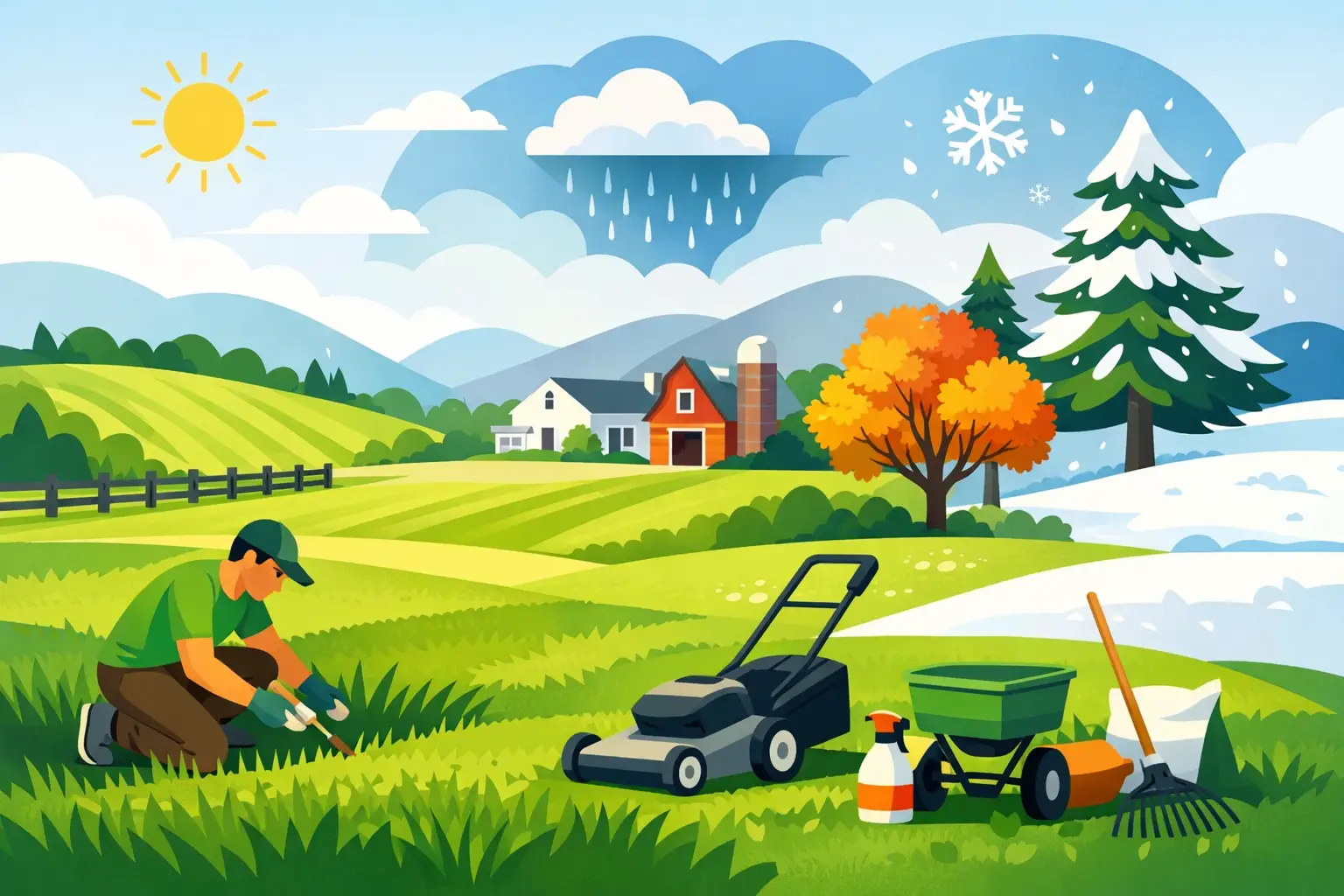
A lawn usually tells on itself before the calendar does. Thin spots in March, stubborn weeds in May, dry patches in July, and a blanket of leaves in November all point to the same thing - timing matters. A solid annual lawn maintenance guide helps you stay ahead of those problems instead of reacting after the damage is done.
For homeowners and property managers, that matters because lawn care is rarely just about grass. It affects curb appeal, drainage, safety, and the overall impression your property makes. The good news is that most lawns do not need complicated treatment plans. They need the right work at the right time, done consistently.
What an annual lawn maintenance guide should actually do
A useful plan does more than list chores by month. It should help you understand how your lawn grows, when stress shows up, and where small problems can turn into bigger, more expensive ones. Kentucky lawns often deal with a mix of cool-season grass performance, summer heat stress, clay-heavy soils, and fast weed growth. That means the schedule matters, but so does adjusting for rainfall, shade, foot traffic, and irrigation.
That is why one-size-fits-all advice can fall short. A sunny front lawn may need a different mowing height and watering rhythm than a shaded backyard. A residential yard with kids and pets wears differently than a commercial property with constant visibility and heavy edge maintenance. The goal is not perfection every week. The goal is a lawn that stays healthy, attractive, and manageable across the full year.
Spring: Set the pace early
Spring is when a lot of lawn issues either get corrected or get hidden for a few weeks before showing up worse in summer. Early mowing, cleanup, and inspection matter more than many people realize.
Start by clearing sticks, leaves, and winter debris so the turf can breathe and warm up evenly. If the lawn feels matted down, a light cleanup helps new growth come through without tearing up the soil. This is also the time to check for drainage issues, snow mold damage, compacted areas, and bare spots that may need attention later.
Mowing should begin as soon as the grass is actively growing, but not so aggressively that you scalp the yard. Taking too much off early can stress cool-season grasses and open the door to weed pressure. A steady mowing schedule usually does more good than one dramatic cut after the lawn gets overgrown.
Spring is also the window when weed control can make the biggest difference. Preventing crabgrass and reducing broadleaf weeds early often means less chasing problems later. Fertilization can support green-up, but the amount and timing should match the grass type and soil condition. More fertilizer is not always better. In some lawns, too much spring feeding creates fast top growth without building stronger roots.
Summer: Protect the lawn from stress
Summer lawn care is less about pushing growth and more about preventing decline. Heat, humidity, and dry periods can all take a healthy lawn and make it look worn down quickly.
The biggest mistake in summer is treating the lawn like it is still in peak spring growth. Mowing too short, fertilizing too heavily, or watering too lightly and too often can all create trouble. Grass generally does better when it is cut high enough to shade the soil and support deeper roots. That extra height helps hold moisture and reduce heat stress.
Watering depends on the season and soil, but deep, less frequent watering usually beats shallow daily watering. Light sprinkler use can leave roots near the surface, where they are more vulnerable when temperatures climb. On the other hand, overwatering can invite fungus and waste money. If parts of the lawn stay soggy while others dry out, the issue may be coverage or drainage rather than how much water you are using.
Summer is also when traffic damage shows up. Backyards used for entertaining, pet areas, and commercial entry zones often thin out first. If your lawn struggles in the same spots every year, it may need more than routine mowing. Aeration, grading correction, irrigation repair, or even sod installation may be the better long-term fix.
Fall: The most valuable season for lawn improvement
If spring gets the attention, fall usually delivers the best payoff. Cooler temperatures and more consistent moisture create ideal conditions for recovery and root development.
This is the time to repair summer damage, strengthen the lawn, and prepare it for winter. Aeration is especially helpful in compacted soils because it improves air, water, and nutrient movement into the root zone. For many properties, this is one of the most beneficial services of the year because it supports healthier growth without forcing the lawn unnaturally.
Overseeding also makes more sense in fall than during hot weather. New seed has a better chance to establish before the next summer arrives. If your lawn has thinned over time, this is when you can restore density and improve appearance in a lasting way.
Fall fertilization can be valuable too, especially for cool-season lawns, because it supports root growth and helps the grass store energy. Weed control should not stop just because summer is over. In fact, some broadleaf weeds are particularly responsive in fall, which makes treatment more effective.
And then there are leaves. A few scattered leaves are not a problem, but heavy coverage can smother turf, trap moisture, and create disease issues. Regular leaf removal is one of the simplest ways to protect the lawn going into winter.
Winter: Use the quiet season wisely
Winter may look like the off-season, but it still affects the condition of your lawn when spring returns. Frozen or saturated turf is easy to damage with repeated foot traffic, parked vehicles, and equipment use. Ruts and compaction created in winter often show up months later.
This is also a good time to think beyond the lawn itself. If your property has drainage problems, worn landscape beds, poor edging, or irrigation issues, winter is a practical season to plan upgrades. The same goes for hardscaping, retaining walls, lighting, and other improvements that shape how the property functions year-round.
For commercial properties and busy households, winter services like snow and ice management also protect the investment you have made outdoors. Lawn care does not happen in isolation. A property works best when maintenance is coordinated across seasons.
The annual lawn maintenance guide most properties really need
An effective annual lawn maintenance guide usually comes down to a few essentials done consistently: mowing at the right height, seasonal cleanup, weed control, timely fertilization, aeration where needed, and smart watering. The challenge is not knowing those tasks exist. The challenge is doing them on schedule while juggling work, family, tenants, or business operations.
That is where professional support can save both time and frustration. Not every property needs every service, and that is an important distinction. Some lawns just need reliable mowing and seasonal touch-ups. Others need broader maintenance because the issues are tied to irrigation, soil compaction, drainage, or landscape wear. It depends on how the property is used and what standard you want to maintain.
For example, a homeowner getting ready to sell may care most about fast curb appeal and clean presentation. A property manager may be more focused on consistency, safety, and dependable communication. A business owner may need the grounds to look sharp every week without having to manage multiple contractors. Those are different goals, but they all benefit from having one clear plan.
Working with a full-service company can make that easier because lawn care often overlaps with other outdoor needs. If the grass is thinning because sprinkler heads are failing, mowing alone will not solve it. If runoff is washing out a slope, weed treatment is not the main issue. If leaves keep piling into beds and clogging drainage, cleanup has to be part of the plan. Looking at the whole property usually leads to better results than treating every symptom separately.
In areas like Crestwood, Middletown, and Prospect, weather patterns can shift quickly enough that flexibility matters just as much as routine. A rainy spring, a dry August, or a hard freeze can all change the right timing by a week or two. That is why dependable service is not just about showing up. It is about noticing conditions, making smart adjustments, and keeping the property moving in the right direction.
If your lawn has felt like a recurring problem instead of a point of pride, the answer is usually not more guesswork. It is a yearly plan that fits your property, your schedule, and the way your outdoor spaces are actually used. A good lawn does not happen by accident. It comes from steady care, practical timing, and a team that treats your property like it matters.