

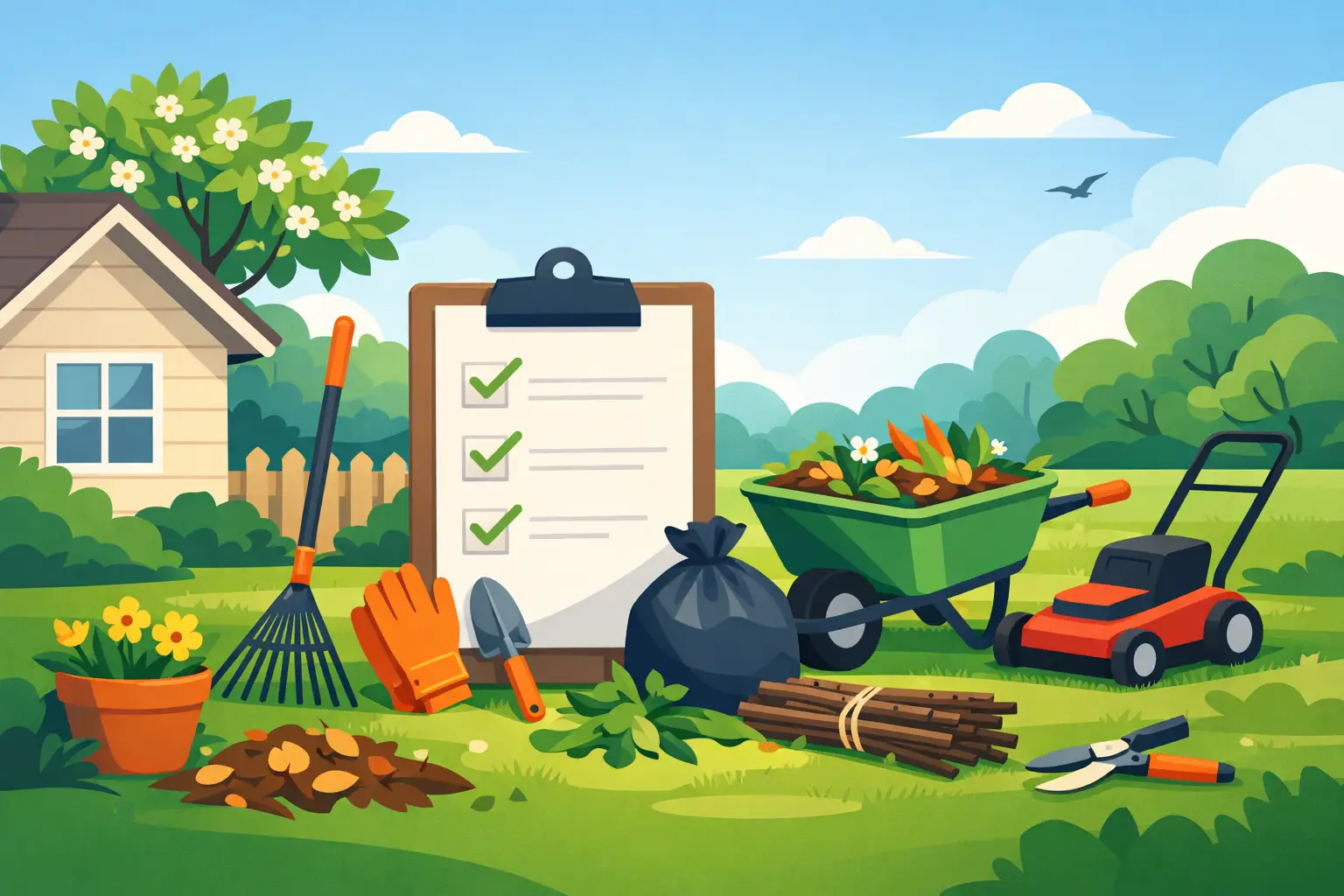
The first warm weekend of spring has a way of making every stick, soggy leaf pile, and patch of matted grass stand out at once. A solid spring yard cleanup checklist helps you tackle the mess in the right order, so your lawn and landscape recover faster and look better heading into the busy growing season.
Around Crestwood, Middletown, and Prospect, spring cleanup is not just about appearance. Winter leaves behind compacted soil, broken branches, salt residue, and plant debris that can slow lawn growth and make beds look tired well into April. If you handle the early work well, the rest of your lawn care season gets easier.
Why a spring yard cleanup checklist matters
A lot of homeowners wait until the grass starts growing fast and then try to catch up all at once. That usually leads to rushed mowing, uneven cleanup, and missed problems like drainage issues, winter damage, or early weed pressure. Spring cleanup works best as a reset.
It also helps you spot what your property actually needs this year. Some yards mainly need debris removal and a clean edge. Others need more attention, especially if tree cover is heavy, snow piles sat too long, or landscape beds were neglected in the fall. A checklist keeps the work practical instead of overwhelming.
Start with a full walk-through
Before you rake a single leaf, walk the entire property. Look at the lawn, beds, shrubs, trees, hardscapes, and drainage areas. Check for broken limbs, low spots, fence damage, washed-out mulch, and signs that turf did not make it through winter evenly.
This step matters because cleanup is easier when you know what is just surface debris and what points to a larger issue. For example, bare spots near downspouts may need grading or drainage attention, not just seed. A patio covered in mud may suggest runoff problems that should be corrected before spring rains pick up.
Clear branches, leaves, and winter debris first
The first hands-on job in any spring yard cleanup checklist is removing what winter left behind. Pick up fallen limbs, pinecones, trash, and any heavy leaf buildup. In lawn areas, this is about more than neatness. Wet debris blocks sunlight and airflow, which can encourage disease and delay green-up.
Be gentle if the ground is still soft. Raking aggressively over saturated turf can pull up healthy grass crowns and create more damage than it fixes. If your yard is still holding water, it is better to wait a little than to leave deep footprints and tear up the lawn.
For larger properties or commercial sites, debris cleanup often takes more time than people expect. Tree lines, fence rows, and parking lot edges collect material all winter. Getting those areas cleaned early improves curb appeal right away.
Cut back dead plant material in beds
Once the loose debris is gone, turn to flower beds and planting areas. Trim back dead perennial growth, remove annuals that were never cleared out, and cut away any obvious winter-killed foliage from ornamental grasses or small shrubs.
This is where judgment matters. Not every brown stem should come out the moment temperatures rise. Some plants need a little more time before you can tell what is dead and what is simply late to wake up. If you are unsure, wait for new growth to appear before making hard cuts.
Cleaning beds now gives your landscape a sharper, maintained look and makes room for fresh mulch, seasonal color, or new plantings. It also reduces hiding places for pests and keeps old material from smothering emerging growth.
Check trees and shrubs for winter damage
Shrubs and small trees often show spring damage in subtle ways. Look for split branches, broken tips, deadwood, or rubbing limbs. Light pruning can improve appearance and plant health, but timing depends on the species.
For spring-flowering shrubs, heavy pruning too early may remove this season's blooms. For summer-flowering plants or non-blooming hedges, cleanup pruning is usually more straightforward. If a branch is cracked, hanging, or clearly dead, remove it promptly. If the shape of the plant is at stake, a more careful pruning plan is worth it.
This is also a good time to look at staking, ties, and supports. Anything left too tight over winter can start to damage bark as growth resumes.
Rake lawn areas the right way
A light rake helps lift matted grass, remove leftover leaves, and improve airflow at the soil surface. The key word is light. You are not trying to scrape the lawn bare.
Cool-season turf common in Kentucky can benefit from gentle loosening after winter, especially in shaded or heavily leaf-covered areas. But if the lawn is thin or already stressed, aggressive raking can make recovery slower. If you see thick thatch, compaction, or widespread thinning, that points to bigger lawn care needs such as aeration, overseeding, or soil improvement rather than more force.
Edge beds and redefine borders
One of the fastest ways to make a yard look cleaned up is to sharpen the bed edges. Crisp borders between turf and mulch beds instantly make the property look maintained, even before everything fully greens up.
This step is often skipped because it feels cosmetic, but it has practical value too. Defined edges help keep mulch in place, reduce grass creep into planting beds, and make mowing easier throughout the season. On commercial properties, clean lines also improve first impressions for tenants, visitors, and customers.
Inspect the lawn for bare spots, weeds, and compaction
After debris removal, you can finally see what shape the turf is in. Look for bare patches, snow mold damage, muddy areas, and places where the grass is thin from shade or foot traffic. Early weeds may also already be showing around edges, sidewalks, and sunny spots.
This is where spring cleanup starts to overlap with lawn care strategy. A few bare spots can be repaired fairly easily. A lawn with widespread thinning may need a more complete plan. Compacted soil is another common issue, especially where kids, pets, or regular foot traffic kept pressure on the same areas all winter.
It depends on the condition of the yard, but many properties benefit from pairing cleanup with fertilization, weed control, and aeration planning. Cleanup alone makes things look better. Follow-up care is what helps the lawn fill in strong.
Refresh mulch without overdoing it
Fresh mulch gives beds a finished appearance and helps retain moisture as temperatures rise. It also suppresses weeds and protects roots from temperature swings. But more is not always better.
If old mulch is still thick, fluffing and redistributing it may be enough. Piling on too much can hold excess moisture against stems and trunks, which creates avoidable plant stress. In most beds, a clean, even layer looks better and performs better than a deep mound.
Color matters too, but consistency matters more. Using one mulch type across the property often creates a cleaner look than mixing products bed by bed.
Clean hard surfaces and outdoor features
Spring yard cleanup is not limited to grass and planting beds. Patios, walkways, driveways, retaining walls, and landscape lighting all collect grime over winter. Sweeping off surfaces, clearing edges, and washing away buildup helps the entire property feel ready for the season.
Take a close look at pavers, steps, and wall blocks while you are there. Frost movement and winter moisture can shift materials slightly. Catching a loose paver or drainage problem now is easier than waiting until summer storms make it worse.
If your property has an irrigation system, inspect sprinkler heads and visible lines before regular watering begins. A damaged head or leak can waste water and create soggy patches quickly.
Know when cleanup becomes a bigger project
Some spring jobs are simple weekend tasks. Others are signs that the yard needs professional attention. If you are dealing with heavy leaf buildup, storm debris, large bed overgrowth, drainage trouble, or turf that did not recover well from winter, cleanup can turn into a much bigger job than expected.
That is especially true for busy homeowners and property managers trying to prepare a property quickly. A full-service crew can handle cleanup, mowing, bed maintenance, weed control, mulch, pruning, and broader landscape improvements in one plan instead of stretching the work across several weekends. For many local properties, that convenience is what keeps spring from turning into a backlog.
A practical spring yard cleanup checklist to follow
If you want to keep the process organized, handle spring cleanup in this order:
- Walk the property and note damage, debris, and drainage concerns
- Remove branches, leaves, and trash from lawn and beds
- Cut back dead perennial and annual plant material
- Inspect shrubs and trees for breakage or deadwood
- Lightly rake matted lawn areas if soil conditions allow
- Edge landscape beds and redefine borders
- Check turf for bare spots, weeds, and compaction
- Refresh mulch where needed
- Clean patios, walks, and other hardscape features
- Inspect irrigation and outdoor lighting before regular use
That order keeps you from doing the same work twice and helps you see what needs follow-up care.
A good yard does not happen because spring finally showed up. It happens because someone put in the work early, paid attention to the details, and handled the property in the right sequence. If your lawn and landscape need a strong start this season, MowAction Lawn Care Services is here to help make that first round of work easier and a lot more effective.