

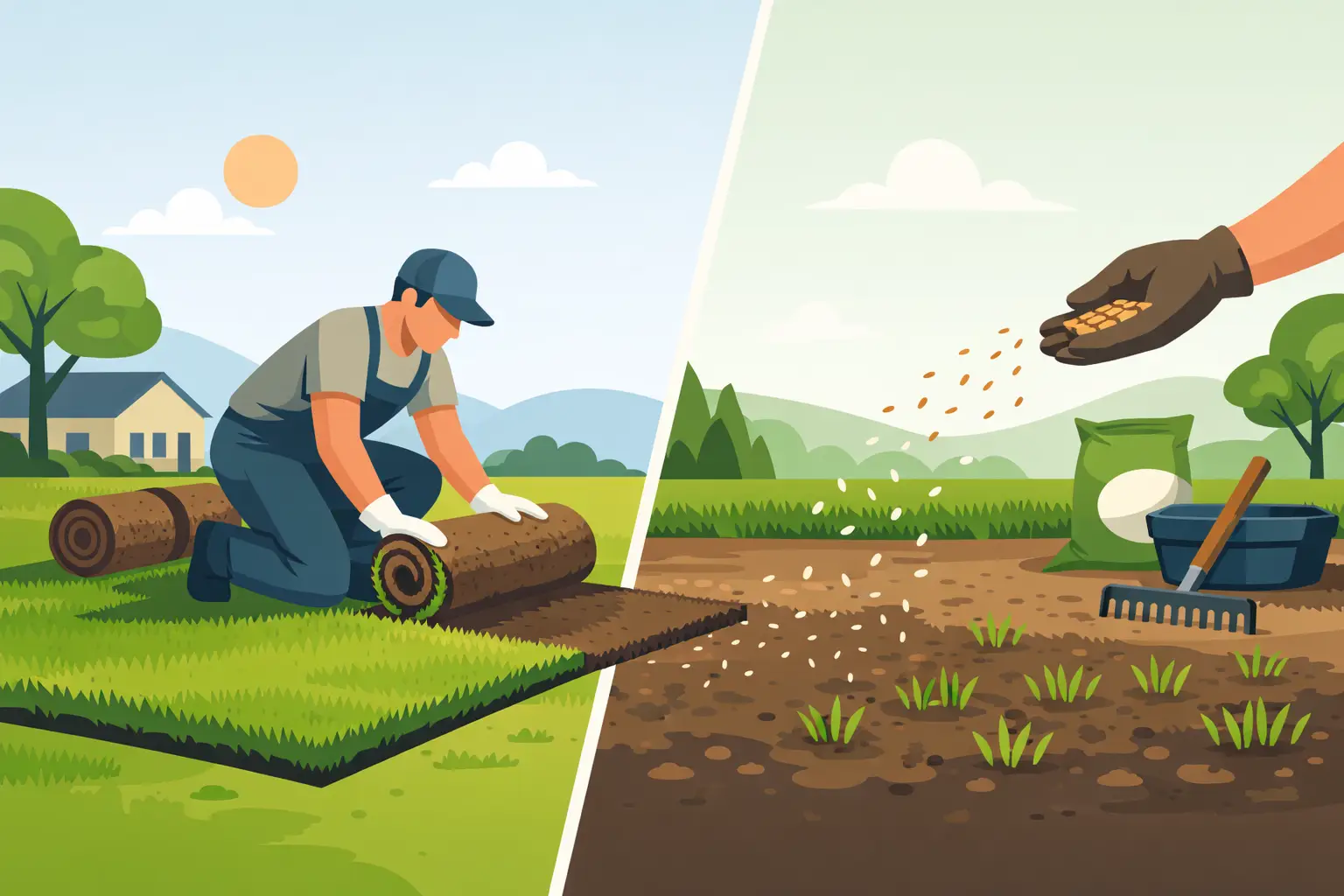
A patchy yard can make the whole property feel unfinished. When homeowners and property managers start weighing sod installation vs seeding, they are usually trying to solve the same problem fast: how to get a healthy, good-looking lawn without wasting time or money.
The truth is that both options can work well in Crestwood, Middletown, Prospect, and nearby Kentucky communities. The better choice depends on your timeline, budget, traffic levels, and how much risk you are willing to take during the grow-in period. A new lawn is not just about green grass. It affects curb appeal, drainage, mud control, usability, and the first impression your home or commercial property makes.
Sod installation vs seeding: the biggest difference
The simplest way to look at sod installation vs seeding is this: sod gives you an instant lawn, while seeding asks you to wait for results. Sod is mature grass that has already been grown elsewhere, cut into rolls or sections, and installed over prepared soil. Seeding starts from scratch, which means more patience and more dependence on weather, watering, and timing.
That speed matters more than many people expect. If your property is heading into listing season, opening for business, recovering from construction, or dealing with erosion and bare soil, sod can solve a visual and practical problem right away. Seeding, on the other hand, usually makes more sense when keeping upfront costs lower is the top priority and you have time to let the lawn establish properly.
When sod makes the most sense
Sod is the stronger option when you need fast, consistent results. Once installed correctly on prepared ground, it can transform a bare yard in a day. That is a major advantage for busy property owners who do not want to stare at dirt for weeks while hoping the seed comes in evenly.
Sod is also helpful on slopes or areas where loose soil is a problem. Because it covers the surface immediately, it can reduce erosion far better than seed during the early stage. For properties with drainage issues, runoff, or exposed areas near driveways and patios, that immediate coverage can protect the investment around it.
Another benefit is predictability. With seed, you may end up with thin spots, weed pressure, washout after hard rain, or uneven germination if watering is inconsistent. Sod tends to provide a more uniform look from the start, which is why many homeowners choose it for front yards and many commercial clients choose it where appearance matters right away.
That said, sod costs more upfront. It also still needs proper watering and follow-up care after installation. Instant green does not mean zero maintenance. New sod can fail if the soil is poorly prepared, irrigation is inconsistent, or foot traffic starts too soon.
When seeding is the smarter choice
Seeding is often the better fit when the budget is tighter or the lawn area is large. If you are covering a broad residential lot or a commercial property where total square footage matters, seed can lower installation cost significantly.
It also gives the grass time to establish directly in your native soil. In some cases, that can lead to strong long-term adaptation, especially when the right grass type is selected for local conditions. Seeding can be a practical approach for backyards, open common areas, and projects where the look does not need to be finished overnight.
There is a trade-off, though. Seed takes longer, and the process is less forgiving. Rain can wash seed away. Hot weather can dry it out. Birds can take some of it. Weed competition can creep in before the grass gets established. For property owners who are not ready to stay on top of watering and timing, seeding can become more expensive in the long run if sections need to be redone.
Cost matters, but so does risk
For most people, the first question is price. Seed almost always wins on initial cost. Sod almost always wins on speed. But the real comparison should include risk, labor, and how soon you need the lawn to function.
If seeding goes smoothly, it can be a very cost-effective way to build a lawn. If weather turns against you or upkeep slips, you may be dealing with bare spots, weeds, and reseeding work. Sod costs more at the start, but it reduces the odds of a long, uneven establishment period and gives you a cleaner finished result much faster.
That is why the best choice is rarely just about the cheapest line item. It is about what the property needs now and what kind of follow-through is realistic after installation.
Kentucky timing can make or break the project
In this part of Kentucky, timing matters a lot. Cool-season grasses generally perform best when planted in the right seasonal window, especially in late summer into fall. That is often the sweet spot for seeding because soil temperatures are still warm enough for germination while air temperatures are becoming less stressful.
Spring can also work, but it usually comes with more weed pressure and less margin for error before summer heat arrives. If you seed too late and a dry, hot stretch shows up, the young grass may struggle before it has built a strong root system.
Sod gives you a little more flexibility because it starts with mature turf, but even then, weather still affects success. Installing sod during extreme heat means watering becomes even more critical. The lawn can establish well, but only if the schedule and aftercare are handled properly.
Watering and maintenance after installation
This is where many lawn projects succeed or fail. Both sod and seed need attention early on, just in different ways.
Seed needs consistent moisture near the surface so germination can happen evenly. That usually means light, frequent watering at first, followed by adjustments as the grass starts to grow and root. Miss that window, and germination can become spotty.
Sod needs enough water to knit its roots into the soil below. It should not dry out during establishment, but it also should not sit in soggy conditions. The goal is to encourage root growth downward, not just keep the top layer wet.
Mowing also starts at different times. Seeded lawns need to grow to the proper height before the first cut, and cutting too early can damage tender grass. Sod may be ready for mowing sooner, but only after it has begun rooting and the soil is stable enough to support the equipment.
For busy owners who want a straightforward path, professional installation and follow-up service often make the difference. A lawn is only as good as the prep work, watering plan, and maintenance that come after day one.
Which option is better for high-traffic properties?
If the area is going to see foot traffic soon, sod usually has the edge. Families with kids, pets, and active outdoor routines often prefer sod because the yard starts looking usable right away, even though it still needs time to establish fully. Commercial properties also benefit from that quick improvement, especially where appearance affects tenant satisfaction or customer impressions.
Seeded lawns need more protection for a longer period. Too much foot traffic during germination and early growth can damage progress quickly. If people or pets are likely to use the space before the grass is established, seed becomes a harder route to manage.
The right choice depends on the property
There is no one-size-fits-all answer to sod installation vs seeding. A front yard with visibility from the street, a backyard with drainage concerns, and a commercial lawn near an entrance may all call for different decisions. Sometimes a property even benefits from using both methods in different areas.
A dependable lawn plan starts with the real conditions on site: soil quality, slope, sun exposure, irrigation, budget, and timeline. That is where local experience matters. A team that understands Kentucky conditions can help you avoid the common mistakes that turn a lawn project into a second project a few months later.
At MowAction Lawn Care Services, we see this decision through the same lens our customers do - what will look good, last well, and make life easier to manage. If you are deciding between sod and seed, the smartest next step is not guessing. It is choosing the option that fits your property, your schedule, and the way you actually use the space. A good lawn should not just grow. It should work for you.