

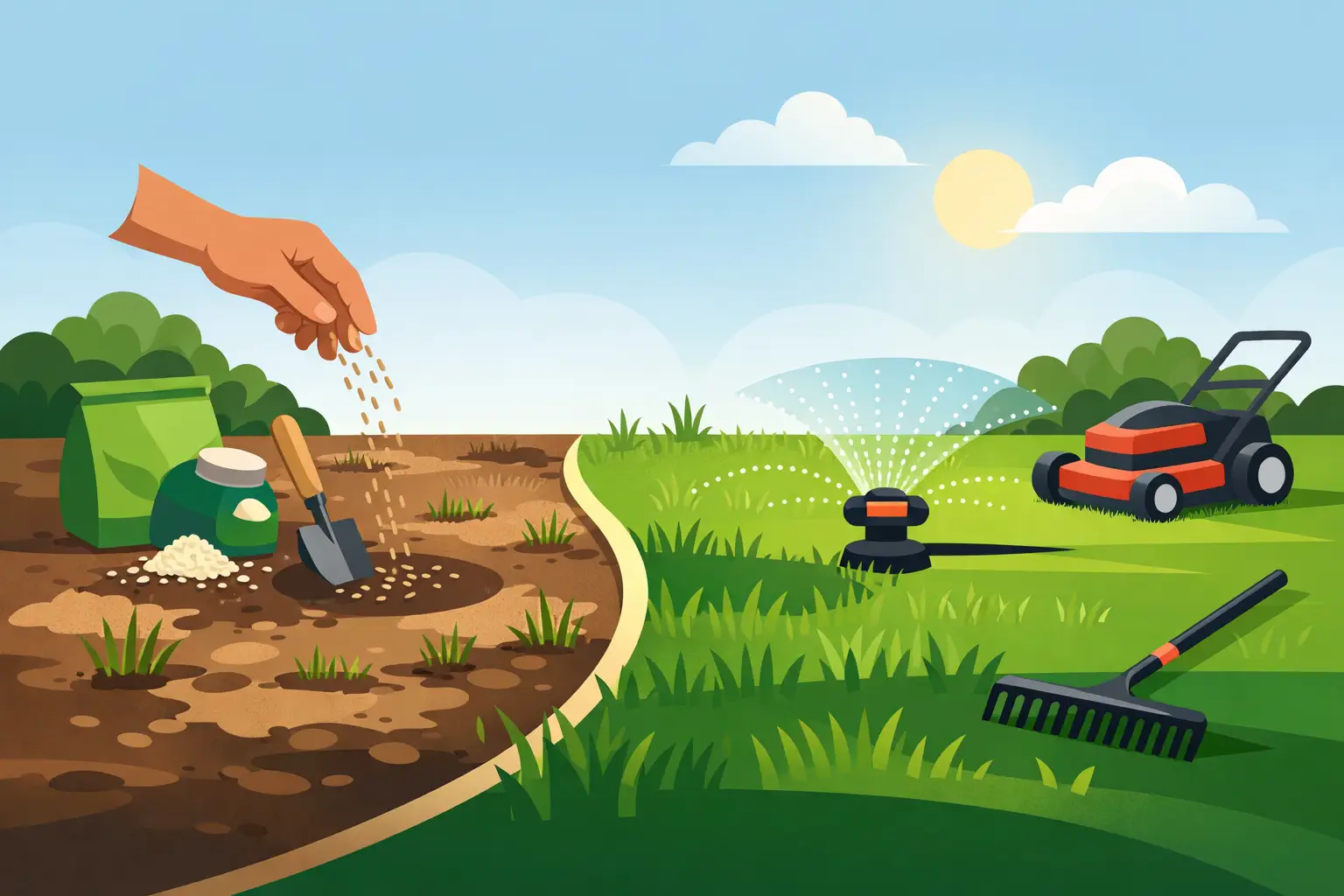
A lawn usually tells on itself. If one area stays thin while the rest greens up, or you keep reseeding the same bare spots every spring, the problem usually is not bad luck. If you want to know how to revive patchy lawn areas for good, the real job is figuring out why the grass is struggling in the first place.
Patchy lawns are common across Kentucky properties because weather swings, compacted soil, shade, pet traffic, mower stress, and weed pressure can all pile on at once. The good news is that most patchy turf can recover. The catch is that throwing down seed without fixing the cause often leads right back to the same uneven lawn a few weeks later.
How to revive patchy lawn areas starts with the cause
A patchy lawn is a symptom, not the whole problem. Bare and thin spots can come from heavy foot traffic, dull mower blades, disease, poor drainage, shallow watering, grubs, or soil compaction. Sometimes it is a mix of two or three issues, which is why a quick look matters before you buy seed or fertilizer.
Start by looking at the pattern. If the lawn is thin in high-traffic paths, compaction is likely part of the issue. If the damage is in circles or odd-shaped patches, disease or pet urine may be involved. If grass struggles under trees but grows fine in open sun, shade is probably the main limit. When the lawn pulls up easily like loose carpet, grubs may be feeding on the roots.
This is also the point where timing matters. Cool-season lawns, which are common in this region, usually respond best to repair in late summer through fall. Spring can work, but young grass often has to compete with weeds and summer heat before it has a strong root system.
Fix the soil before you fix the grass
Healthy grass depends on what is happening below the surface. If the soil is compacted, dry on top and hard underneath, new seed will have a tough time establishing. That is why some lawns look better for a few weeks after seeding, then thin right back out.
If the ground feels hard and water runs off instead of soaking in, aeration may be needed. Core aeration opens the soil and gives air, water, and nutrients a better path to the roots. It also creates better seed-to-soil contact if you are overseeding. On many properties, this one step makes a bigger difference than adding more fertilizer.
Soil quality matters too. If the area is low, muddy, or full of construction debris, you may need to add quality topsoil or compost before seeding. If the patchy areas are widespread and you have tried repeated fixes, a soil test can save time and money. It tells you whether pH or nutrient imbalance is holding the lawn back.
When patchy grass is really a drainage problem
Some bare spots are not caused by lack of care. They are caused by too much water sitting in the same place. If an area stays soggy after rain, seed can wash away, roots can rot, and turf will keep failing.
That kind of patch needs more than grass seed. It may need grading, improved drainage, or irrigation adjustments. This is one of those cases where the right repair depends on the property. A low spot in the yard, a downspout problem, or a sprinkler head that floods one section can all create the same result.
Reseed or sod? It depends on the size and urgency
Once the cause is under control, you can decide how to bring the grass back. For small to moderate thin areas, reseeding is usually the most practical route. It costs less, blends well with existing turf, and works especially well after aeration.
For larger bare sections or places where you need a faster visual improvement, sod may make more sense. It gives you an immediate finished look and can be the better option on slopes or heavily damaged areas where seed is likely to wash out. The trade-off is cost and the need for careful watering while the sod roots in.
If the lawn has patchy spots all over, overseeding the full yard often gives a more even result than treating each spot as a separate project. That approach helps new grass blend with the older turf instead of leaving you with obvious repair islands.
Use the right grass seed for the site
Not every seed mix belongs in every yard. That is one reason lawn repairs sometimes fail even when the homeowner did everything else right. If the area gets full sun, choose a mix built for sunny conditions. If it sits under mature trees for much of the day, use a shade-tolerant blend.
For many Kentucky lawns, cool-season grasses such as tall fescue are a dependable choice because they handle seasonal swings reasonably well and develop good color and density with proper care. In high-shade or specialty situations, the best answer may vary. Matching the seed to the site gives you a better chance at long-term success.
Before seeding, rake out dead material and loosen the top layer of soil. Spread seed evenly, then lightly cover it with soil or compost so it stays in place and does not dry out too quickly. Seed that sits on top of hard ground without good contact often becomes bird food or dries out before it can establish.
Watering is where many lawn repairs go wrong
New grass needs consistent moisture, but not constant puddling. Right after seeding, the top layer of soil should stay lightly moist until germination. That usually means lighter, more frequent watering at first. Once the new grass starts growing, shift toward deeper, less frequent watering to encourage stronger roots.
A lot of patchy lawns come from inconsistent irrigation habits. Some areas get soaked, others barely get hit, and the lawn never grows evenly. Sprinkler coverage should be checked if the same spots keep failing. Hand-watering can work for small repairs, but larger lawns usually need a more reliable routine.
If you have an irrigation system, make sure it is helping rather than hurting. Misaligned heads, clogged nozzles, or poor scheduling can create dry stripes and soggy patches in the same yard.
Mowing habits can either help recovery or slow it down
Freshly repaired turf is vulnerable, and mowing too soon can tear out young grass. Wait until the new grass is tall enough to cut without stressing it, and make sure the mower blade is sharp.
For established lawns, mowing too short is one of the fastest ways to create thin, stressed turf. Short grass dries out faster, struggles more in heat, and leaves room for weeds to move in. Keeping the lawn at an appropriate height helps it shade the soil, hold moisture, and grow thicker over time.
Bagging clippings is not always necessary, but clumps should be avoided. Heavy clippings can smother seedlings and create uneven growth in repaired areas.
Weed control and fertilizing need the right timing
If you are trying to revive patchy lawn sections, be careful with weed control around new seed. Some weed products can interfere with germination or damage young grass. That is why the repair plan should be coordinated instead of handled in random steps.
Fertilizer can help, but more is not automatically better. Newly seeded areas often benefit from a starter fertilizer, while established thin lawns may need a broader feeding plan based on the season and soil condition. Overfertilizing can burn tender grass or push weak top growth instead of healthy rooting.
This is one of the biggest trade-offs in lawn repair. People want fast green color, but long-term recovery usually comes from better soil, proper mowing, and steady watering, not from dumping extra product on the yard.
When patchy lawn problems keep coming back
If you have repaired the lawn more than once and the same spots keep failing, step back and look for a deeper issue. Tree roots may be stealing moisture. Pets may be damaging one repeated area. Heavy traffic may be too much for that section to support turf without a walkway or design change.
Sometimes the most practical fix is not forcing grass where grass does not want to grow. A troublesome strip might do better with landscape beds, mulch, edging, drainage correction, or a hardscape solution. That kind of adjustment can save ongoing frustration and make the whole property easier to maintain.
For homeowners and property managers who want a cleaner, more reliable result, it often helps to have the lawn evaluated as part of the bigger landscape. A patchy lawn may be connected to irrigation, grading, mowing patterns, or overall property use. Companies like MowAction often see that overlap because lawn care problems rarely stay in just one category for long.
A better lawn usually comes from a simple mindset: do not just cover the patch, correct the reason it showed up. Once you handle that part, the grass has a fair shot to come back thicker, healthier, and a lot easier to keep looking good.