

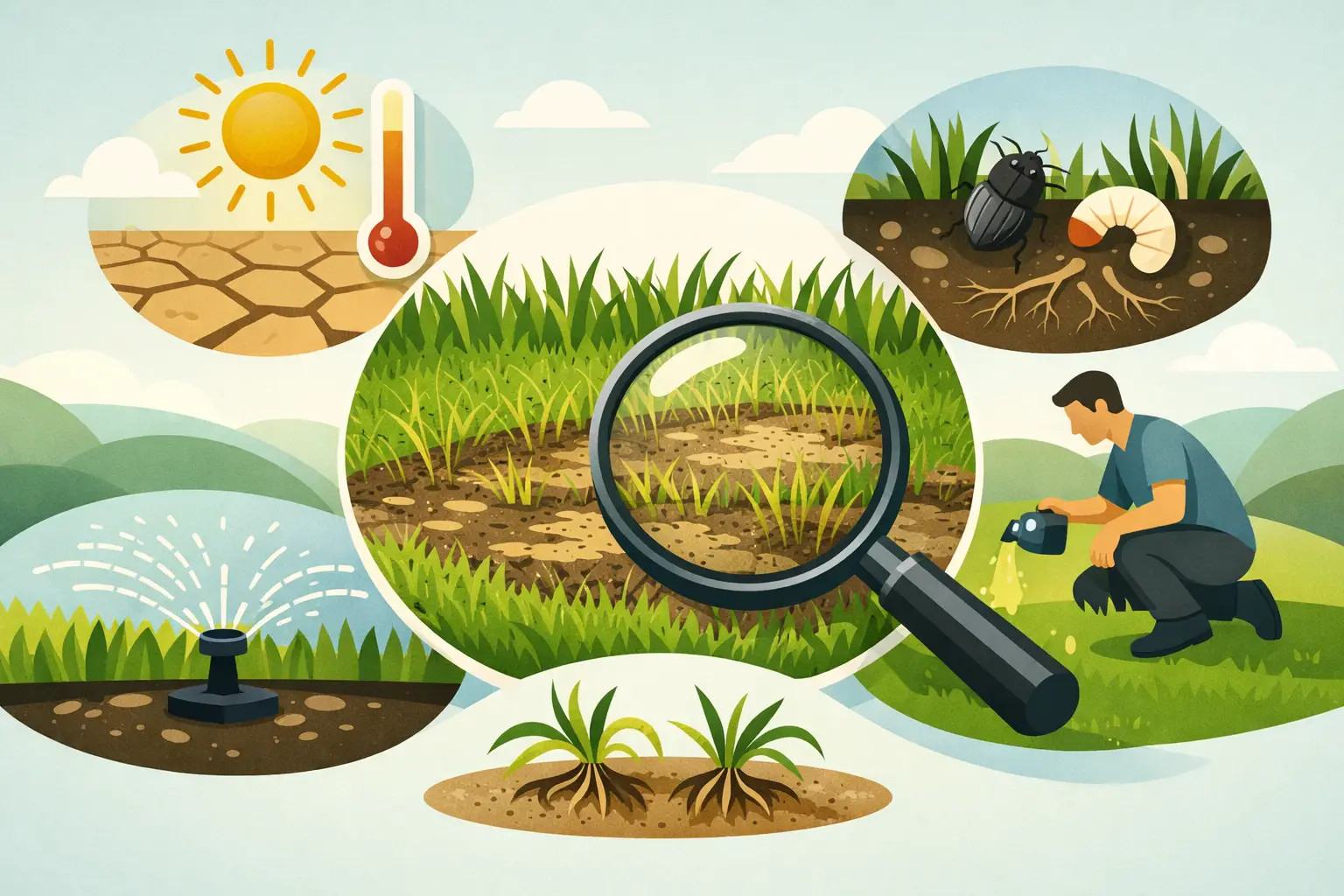
You mow like usual, keep an eye on the yard, and then one day it hits you - the lawn just does not look as full as it used to. If you have been asking, "why is my grass thinning," the answer is usually not one single problem. Thinning grass is often the result of stress building up over time, whether that comes from mowing habits, soil issues, drainage, disease, heat, shade, or plain old wear and tear.
The good news is that thinning grass can often be corrected. The key is figuring out what is weakening the lawn before the problem spreads or bare spots start to take over.
Why Is My Grass Thinning in Some Areas?
When grass thins in patches instead of across the whole yard, the pattern matters. A lawn that is weak only under trees points to a different issue than a lawn thinning along a walkway, in low soggy areas, or across sunny slopes.
Localized thinning usually comes from one of a few common causes. Heavy foot traffic can wear down the same path again and again. Tree roots compete hard for water and nutrients. Poor sprinkler coverage leaves some sections dry while others get enough moisture. Pet damage can also create small weak zones that expand over time.
If the whole yard looks thinner, that often points to a broader issue like compacted soil, poor fertility, drought stress, insect activity, or mowing too short. In many Kentucky lawns, several of these show up at once, especially during hot stretches followed by heavy rain.
The Most Common Reasons Grass Starts to Thin
One of the biggest culprits is mowing too low. Scalping the lawn weakens the blade, stresses the root system, and gives weeds an opening. Grass needs enough leaf surface to produce energy. When it gets cut too short over and over, it spends more time recovering than growing thicker.
Watering is another common issue, and this is where homeowners often get mixed results. Too little water causes shallow roots and drought stress. Too much water can lead to disease, soft growth, and weak root development. Lawns usually do better with deeper, less frequent watering than with quick daily watering.
Soil compaction is another major factor. If the ground feels hard, drains poorly, or gets a lot of traffic, roots may not be getting the air and space they need. Compacted soil makes it difficult for grass to spread and fill in. Instead of thickening up, the turf slowly loses density.
Nutrient imbalance can also thin a lawn. Grass needs nitrogen for active growth, but it also needs the right overall soil conditions to use nutrients properly. If the soil pH is off, or if nutrients are depleted, the lawn may turn pale, grow slowly, and fail to recover from stress.
Then there is shade. A lot of yards have areas where the grass never really thrives because sunlight is too limited. Even healthy turf varieties struggle in heavy shade, especially when those same areas also deal with root competition and moisture inconsistency.
Pests and Disease Can Make a Healthy Lawn Look Weak Fast
Sometimes thinning is not about maintenance at all. Insects and lawn disease can take a good-looking lawn and knock it back quickly.
Grubs are one example. They feed on roots, which means the grass may start to thin, wilt, or pull up easily. Surface-feeding insects can also damage blades and crowns, especially during warm weather. If birds are pecking at the lawn more than usual, that can be a clue that insects are active below the surface.
Fungal disease is another possibility, especially when humidity is high and airflow is poor. Lawns that stay wet too long, get watered late in the day, or have thick thatch can be more vulnerable. Disease damage does not always show up as dramatic dead circles right away. Sometimes it starts as subtle thinning, discoloration, or weak-looking patches that do not bounce back.
This is one of those situations where timing matters. If a lawn is dealing with pests or disease, the right treatment depends on identifying the actual cause. Throwing down random products can waste money and sometimes add more stress.
Why Is My Grass Thinning After Summer?
Summer is tough on cool-season lawns. Heat, dry spells, compacted soil, and foot traffic all add up. Even a lawn that looked full in spring can start thinning by late summer if the root system is shallow or the turf has been stressed for months.
This shows up a lot in areas with reflected heat from driveways, sidewalks, and patios. Slopes can dry out faster too. If the lawn was already cut too short in June or watered inconsistently in July, August may be when the damage becomes obvious.
That does not always mean the lawn is permanently failing. In many cases, summer thinning is a sign that the grass needs relief and recovery. Aeration, overseeding, smarter watering, and adjusted mowing height can make a real difference when done at the right time.
Shade, Trees, and Root Competition
Lawns under mature trees often thin for reasons that stack on top of each other. The obvious one is reduced sunlight, but that is only part of it. Tree roots compete aggressively for water and nutrients, and the canopy can block rainfall from reaching the soil evenly.
Many homeowners try to solve this by watering more or fertilizing harder, but that only helps so much if the grass variety is not suited for those conditions. In some shaded spots, the better long-term answer may be selective pruning, changing maintenance practices, or reconsidering whether turf is the best fit there at all.
That is not what everyone wants to hear, but it is better than forcing grass to survive in an area where it will always struggle. A practical plan usually works better than repeating the same treatment every season and hoping for a different result.
How to Tell What Your Lawn Is Trying to Tell You
A thinning lawn gives clues if you know where to look. Yellowing and slow growth can point to nutrient problems. Thin grass with hard soil underfoot often suggests compaction. Wilting in the afternoon that does not recover by morning may mean drought stress. Mushy areas may indicate drainage trouble. Grass that pulls up easily can suggest grub damage.
Look at where the problem starts and how it spreads. Check whether thinning is happening in sunny spots, shady spots, high-traffic paths, or low areas that stay wet. Think about recent weather, mowing habits, irrigation patterns, and whether the lawn has been aerated or overseeded in the last year or two.
This kind of simple observation helps narrow down the cause. It also makes it easier to decide whether the fix is a maintenance adjustment or something more involved.
What Helps Thin Grass Recover
The right solution depends on the reason the lawn is thinning, but a few approaches consistently help. Raising the mowing height is often one of the quickest wins. Taller grass shades the soil, supports deeper roots, and handles stress better.
Aeration can help if compaction is part of the problem. It opens the soil so water, air, and nutrients can move where they need to go. Overseeding can help fill in thin areas, especially when combined with better soil contact and proper timing.
Watering should be corrected if it has been too light or too frequent. Fertilization may also help, but only when it matches the lawn's actual needs. If insects or disease are involved, those need to be addressed directly before expecting the turf to rebound.
There is also a patience factor here. Grass does not usually go from thin to thick overnight. Recovery takes consistency, especially if the lawn has been under stress for a while.
When It Makes Sense to Call a Professional
If thinning keeps coming back despite your efforts, or if large sections of the lawn are losing density fast, it is worth getting a closer look. The challenge is that several lawn problems can look similar from a distance. What seems like drought stress might actually be irrigation coverage issues, compaction, disease, or insect activity.
A professional can evaluate the pattern, soil condition, turf type, and maintenance history to pinpoint what is really happening. That saves time and often prevents spending money on the wrong fix. For busy homeowners and property managers, that kind of clear direction matters.
If you are in Crestwood, Middletown, Prospect, or nearby areas, a local team like MowAction Lawn Care Services also understands how regional weather swings, clay-heavy soil, and seasonal stress affect lawns here.
A thinning lawn is frustrating, but it is also fixable more often than not. The sooner you identify what is stressing the grass, the better chance you have of bringing back a fuller, healthier yard that holds up through the season.