

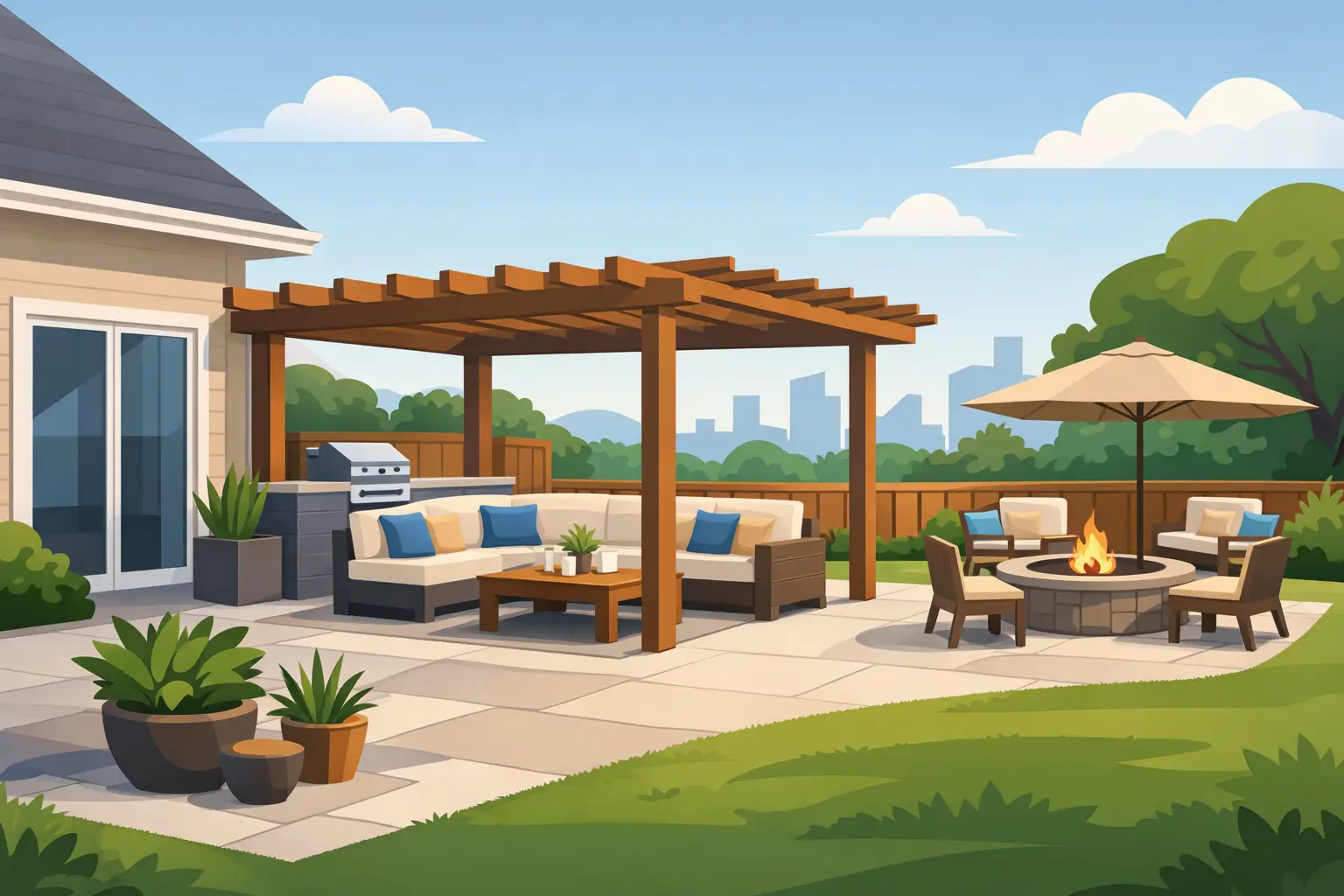
A great patio changes the part of the yard that gets avoided after rain into a place where people actually want to gather. The right patio builders Louisville homeowners choose do more than install pavers or pour concrete. They look at how water moves across the property, how the space connects to the house, and what will make the finished area useful for years.
For homeowners, property managers, and business owners, a patio project is a practical investment in outdoor living, appearance, and easier property maintenance. The goal is not simply to add hardscape. It is to build an outdoor space that fits the property, stands up to Kentucky weather, and feels like it has always belonged there.
What Patio Builders in Louisville Should Plan First
The best patio projects begin before a material is selected. A contractor should walk the site, ask how the space will be used, and pay attention to the existing grade. A patio that looks good on installation day but sends water toward the foundation is not a successful project.
Drainage is especially important in this area. Heavy rain can expose weak base preparation, poor slopes, and patios built too close to the home without a drainage plan. A well-built patio needs a stable foundation and a subtle pitch that directs water away from structures. In some yards, that also means adjusting surrounding landscaping, adding drainage solutions, or tying the patio into a retaining wall plan.
Access matters, too. A patio should make it easier to move from the kitchen, living room, pool area, or back entrance into the yard. If grills, outdoor furniture, or a fire feature are part of the plan, the layout needs enough room for people to move comfortably around them. Building a patio that is technically large enough, but feels crowded after furniture arrives, is a common and avoidable disappointment.
Start With How You Want to Use the Space
A patio can serve very different purposes, and the intended use should shape its size, location, and material. A quiet morning coffee area may only need a modest footprint with a little shade and privacy. A family that hosts cookouts will likely need a larger surface, clear paths to the house, and room for seating, dining, and grilling.
Commercial patios require another level of planning. A restaurant, office, multifamily property, or community space may need durable materials, accessible routes, traffic flow, and a design that remains attractive with regular use. Property managers also benefit from materials and edging details that make nearby mowing, cleanup, and seasonal maintenance simpler.
Think through the details early. Where will guests enter? Will there be steps? Does the space need landscape lighting for evening use? Is a pergola, fire pit, outdoor kitchen, or sitting wall a future possibility? A thoughtful plan can leave room for later upgrades without forcing the patio to be removed or rebuilt.
Choosing Patio Materials That Fit Your Property
There is no single best patio material for every Louisville property. The right choice depends on the look you want, the expected use, your budget, and how much variation in color and texture you prefer.
Concrete patios can be a sensible choice for clean, functional outdoor surfaces. They are often cost-effective for larger areas and can be finished in several ways. Plain concrete is straightforward and durable, while stamped or colored concrete can offer a more decorative appearance. The trade-off is that concrete can crack over time, particularly when the soil moves or drainage is not handled correctly. Proper base work and control joints help manage that risk, but they do not make it disappear.
Paver patios offer flexibility and a finished look that works well with many homes. Individual pavers can be arranged in different patterns and colors, and repairs are often more manageable because a damaged area can be addressed without replacing a whole slab. Pavers require careful excavation, compaction, edge restraint, and joint sand. Without those installation steps, even attractive pavers can shift, settle, or allow weeds to become a nuisance.
Natural stone has a character that is hard to duplicate. Flagstone and similar materials can create a traditional, high-end outdoor setting, especially alongside landscape beds and established trees. However, stone costs more than many manufactured options, and the irregular shapes may not suit every modern or highly structured design.
The material should complement the home and solve a real need. A beautiful surface is not worth much if it is slippery in a shaded location, too rough for patio furniture, or out of scale with the property. An experienced contractor can explain the practical differences without pushing every project toward the same product.
The Work Below the Patio Determines the Result
Most patio problems start underneath the finished surface. The visible pavers, stone, or concrete get the attention, but excavation depth, base material, compaction, and grading determine whether the patio stays level.
For a paver patio, the crew typically removes soil, establishes the proper slope, installs and compacts a crushed-stone base, then adds bedding material before placing pavers. Edging locks the field of pavers in place, while joint material helps limit movement and discourages weed growth. Each stage has a purpose. Skipping one to reduce the price can lead to a surface that sinks or separates after a few seasons.
Concrete also depends on preparation. The subgrade must be stable, the thickness must suit the application, and the finish must allow water to drain correctly. Reinforcement, joints, and transitions near the house all deserve attention. These are not glamorous parts of the job, but they are the difference between a patio that stays dependable and one that becomes a repair project.
Connect the Patio to the Rest of the Landscape
A patio rarely looks complete when it ends abruptly at a lawn. The strongest designs create a transition between hardscape and the surrounding yard. That may include planting beds, a retaining wall, fresh sod, steps, mulch, shrubs, or landscape lighting that makes the space safer and more inviting after sunset.
This is where working with one outdoor team can save time and prevent mismatched decisions. Rather than hiring separate companies for patio construction, drainage, landscape design, lighting, irrigation adjustments, and ongoing lawn care, property owners can coordinate the work through a provider that understands how each element affects the others.
MowAction Lawn Care Services helps clients plan and complete outdoor improvements with that full-property perspective. A new patio should not create mowing obstacles, damage sprinkler coverage, or leave bare soil around the finished work. The surrounding landscape deserves the same care as the patio itself.
Questions Worth Asking Before You Hire
Before choosing a contractor, ask how the patio will be graded for drainage and what base preparation is included in the estimate. Ask whether the crew handles necessary demolition, soil removal, edging, steps, and cleanup, or whether those items carry additional costs. You should also ask about the proposed material, expected project schedule, and how existing irrigation lines, landscaping, or underground utilities will be protected.
Communication is just as valuable as craftsmanship. A reliable contractor should explain the plan in plain language, set realistic expectations, respond to questions, and keep the property orderly while work is underway. The lowest estimate is not always the best value if it leaves out essential prep work or creates costly surprises later.
It also helps to discuss future maintenance. Pavers may need occasional joint-sand attention, natural stone may benefit from cleaning or sealing depending on the product, and nearby beds will need regular care to keep the patio looking finished. A good builder will be honest about those needs rather than promising a completely maintenance-free outdoor space.
A patio should make your property easier to enjoy, not give you one more thing to worry about. If you are considering a new outdoor living area in Louisville, Oldham County, or Shelby County, start with a clear conversation about your yard, your goals, and the work required to build it right. A free estimate can turn that unused stretch of lawn into a space with a purpose.