

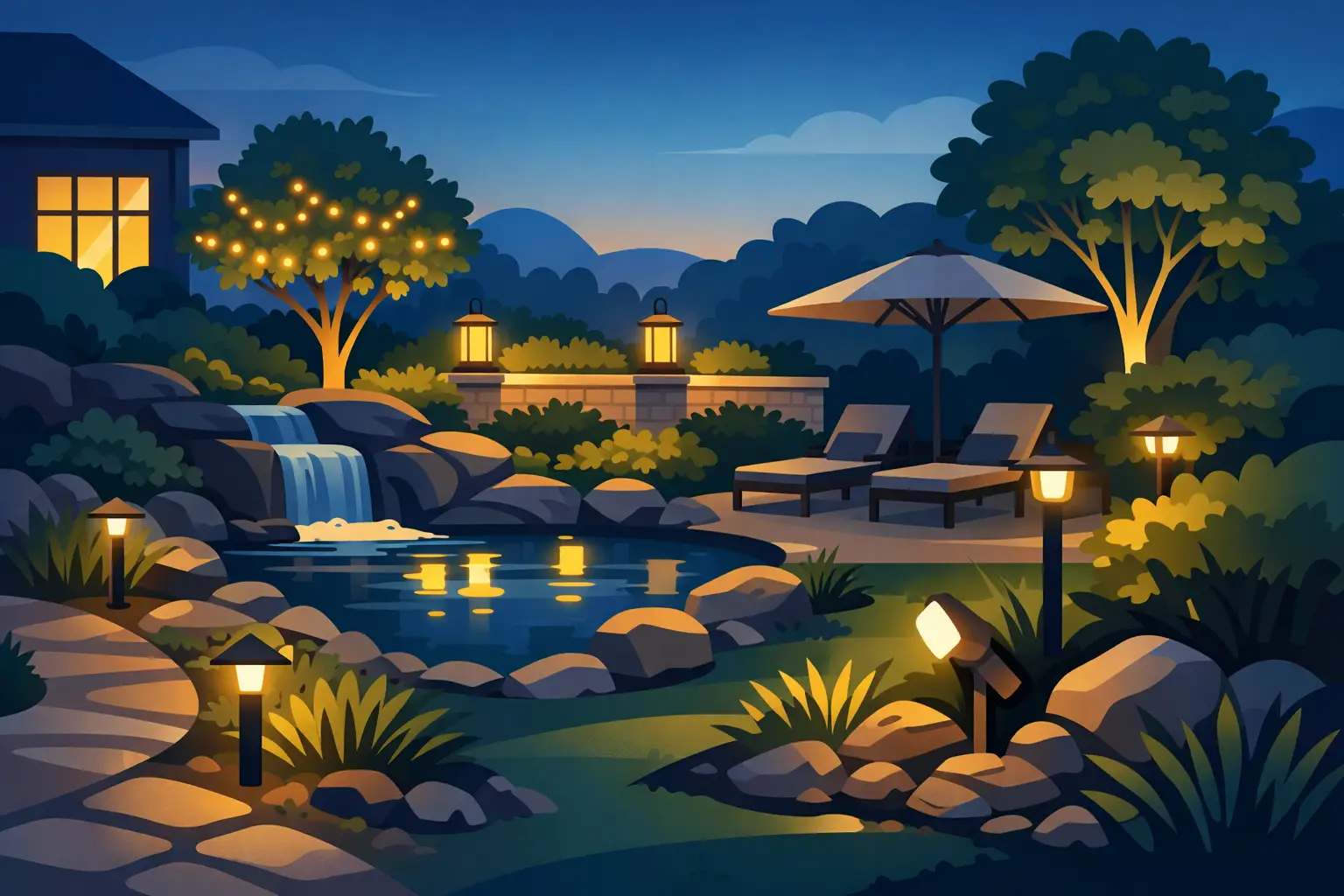
A beautiful landscape should not disappear when the sun goes down. The best landscape lighting ideas make a property safer to use, easier to navigate, and far more welcoming from the street without turning the yard into a floodlit parking lot. The goal is simple: place light where people need it, then use softer accents to show off the details that make the property yours.
For homes, businesses, and managed properties, a well-planned system can improve first impressions year-round. The right fixtures also help homeowners enjoy patios, walks, gardens, and entryways long after daylight fades. Start with the areas that affect safety and daily use, then build outward toward curb appeal and architectural character.
Best Landscape Lighting Ideas for Safety and Curb Appeal
1. Light walkways without creating glare
Path lights are one of the most useful additions to a landscape, especially along front walks, side-yard gates, and routes from a driveway to the door. Rather than lining up fixtures like runway lights, stagger them from side to side. This creates a gentle pool of light that helps guests see changes in grade, edging, and steps.
Keep fixtures low enough to direct light downward. A bright bulb at eye level can make a walkway harder to see, not easier. For most residential paths, subtle illumination every few feet is more effective than a small number of overly powerful fixtures.
2. Make steps and grade changes easy to see
Outdoor steps deserve dedicated lighting. Recessed step lights, lights mounted beneath a stair tread, or carefully aimed downlights from a nearby structure can define each step without shining directly into someone’s eyes.
This is especially valuable where patios connect to sloped yards or where a front entry includes several steps. Safety lighting does not have to look industrial. When fixture finishes and color temperature match the rest of the system, it becomes part of the landscape design.
3. Use uplighting to feature mature trees
A healthy mature tree is often the strongest feature in a Kentucky yard, and uplighting lets it remain a focal point after dark. Place a fixture several feet from the trunk and angle it into the canopy. The branches, bark texture, and leaves create natural shadow patterns that add depth without requiring a lot of fixtures.
Large shade trees may need two lights placed at different angles. Ornamental trees generally need only one carefully aimed fixture. Avoid placing a light so close to the trunk that it creates a harsh bright spot with no canopy detail.
4. Add soft light around patios and outdoor living areas
A patio should feel comfortable at night, not exposed. Warm, low-level lighting around seating walls, planters, pergola posts, and outdoor kitchens gives the area definition while preserving a relaxed atmosphere. Downlighting from a pergola or nearby tree can also create a natural moonlight effect over a dining table or lounge area.
The trade-off is that entertaining spaces need more flexibility than a front walkway. Brighter task lighting may be helpful near a grill or serving station, while seating areas benefit from lower output. Separating these zones on different controls makes the space more useful.
5. Highlight stonework, retaining walls, and pavers
Hardscaping looks different at night, and that is an opportunity. Grazing light across a retaining wall, paver patio, stone column, or textured veneer brings out the material’s shape and color. Small fixtures tucked under a wall cap can cast a clean wash of light down the face of a retaining wall while also making its edge visible.
This approach works well for properties with patios, walkways, and raised landscape beds. It is also a practical way to make an investment in pavers or masonry visible after sunset instead of limiting its appeal to daylight hours.
6. Create a stronger front-entry welcome
The front door should be easy to find, easy to reach, and pleasant to approach. Porch fixtures handle part of that job, but landscape lighting can complete the picture by illuminating the walk, the house number, and key planting beds near the entry.
Consider a restrained combination of path lights and small uplights on foundation plantings or a statement tree. The home will have more depth from the street than it would with a single bright porch fixture. Keep the light directed away from windows and neighboring properties.
7. Bring foundation plantings into the evening view
Evergreens, ornamental grasses, hydrangeas, and layered shrubs can give a home a finished appearance after dark when lit selectively. A few well-placed spotlights can reveal plant form and add contrast against the home’s exterior. This is more effective than trying to light every bed evenly.
Choose the plants with year-round structure first. Deciduous perennials can look great in season, but a lighting plan should still make sense during winter when many beds are dormant. In Louisville-area landscapes, evergreens, stone edging, and architectural features often carry the look through the colder months.
8. Use downlighting for a natural effect
Downlighting is installed above the area being lit, often in a tree, on a pergola, or along an eave. When aimed carefully, it resembles soft moonlight filtering down from above. It is ideal for a patio, a broad path, a backyard seating area, or a play space where low fixtures could be in the way.
Installation matters here. Trees grow, branches move, and fixtures need periodic adjustment to avoid shining into windows. A professional installation can account for plant growth, access for future maintenance, and wiring that remains protected from mowers, edging, and seasonal work.
9. Define driveways and parking areas carefully
Driveway lighting makes arrivals safer, especially on properties with long drives, tight turns, or limited street lighting. Low fixtures near the edge, downlighting from trees, or understated lights on stone columns can establish the boundary without making the driveway look overbuilt.
For commercial properties, visibility and pedestrian safety should lead the design. Entrances, parking transitions, curbs, and walkways need clear illumination. Decorative accents can support the property’s appearance, but they should never interfere with safe movement or distract drivers.
10. Choose warm LED lighting and quality fixtures
LED landscape lighting is the practical choice for most properties because it uses less energy and requires fewer bulb changes. Look for a warm color temperature, usually around 2700K to 3000K, for homes and hospitality-focused outdoor spaces. Cooler light can make stone, plants, and brick look harsh or bluish.
Fixture quality matters as much as bulb type. Metal fixtures with durable finishes tend to hold up better than lightweight plastic options, particularly through Kentucky rain, humidity, fallen leaves, and winter temperature swings. A less expensive system may look acceptable on installation day but require frequent repairs or replacement later.
11. Plan lighting in layers, not fixture by fixture
The strongest lighting designs use layers. First, cover safety needs at entries, stairs, paths, and driveways. Next, add task lighting where people cook, gather, work, or unload a vehicle. Finally, add accent lighting for trees, architecture, water features, and hardscaping.
This order prevents a common mistake: spending the entire budget on dramatic uplights while leaving a dark, awkward route to the front door. It also helps control costs. A system can be installed in phases, beginning with the most useful zones and adding accents as the landscape develops.
12. Add controls that fit how the property is used
Timers, photocells, and zone controls keep a landscape lighting system dependable without requiring daily attention. A photocell can turn lights on at dusk, while a timer turns them off at a reasonable hour. Zoned controls let homeowners keep entry and path lights on while shutting off patio accents after guests leave.
Smart controls can be convenient, but they are not necessary for every property. The best choice depends on how often the space is used and who manages it. For rental, commercial, or high-traffic properties, simple automatic controls are often the most reliable option.
Avoid the Common Lighting Mistakes
More light is not always better. Overlighting washes out plant textures, creates glare, wastes energy, and can spill into neighboring homes. Aim fixtures carefully, shield the light source when possible, and use only enough output to accomplish the job.
Another frequent issue is ignoring maintenance. Leaves can cover fixtures, mulch can bury them, and plants can block the beam as they grow. Lighting should be checked during seasonal cleanups and after major landscape changes. A clean, properly aimed fixture can make a bigger difference than adding another one.
A thoughtful lighting plan connects the front entry, landscape beds, patio, and walkways into one usable property after dark. If you are considering an upgrade in Crestwood, Middletown, Prospect, or nearby communities, MowAction Lawn Care Services can help plan lighting that works with your existing landscape, hardscaping, and outdoor routines. Start with the route you use most often at night, then let the rest of the design grow from there.