

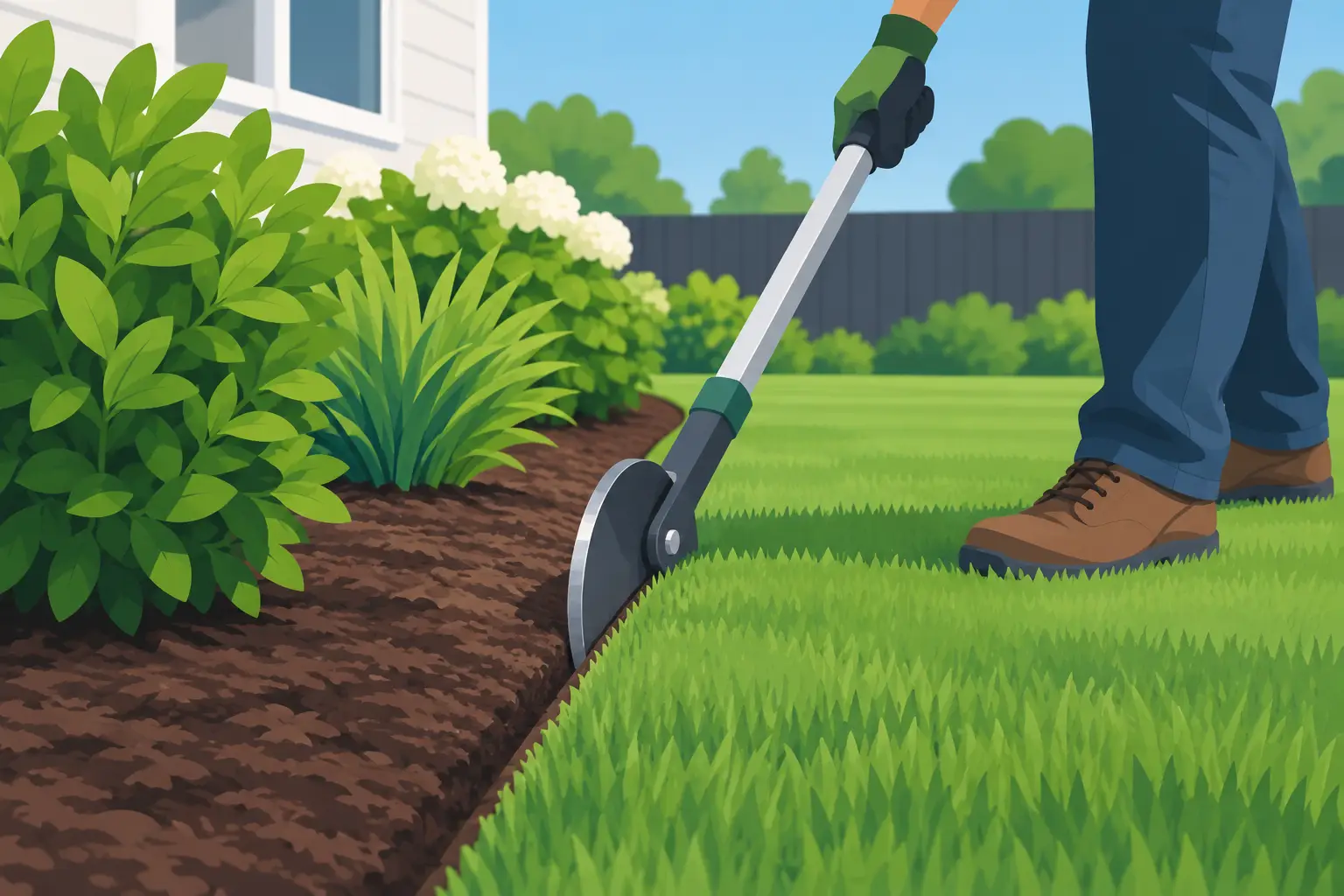
A freshly mowed lawn can still look unfinished when grass spills over the driveway, flower beds, and sidewalks. Knowing how to edge lawn properly is what creates that clean, intentional line between healthy turf and the hard surfaces or planting areas around it. Done well, edging gives your property the polished curb appeal people notice from the street. Done too aggressively, it can leave bare trenches, damaged grass roots, and an uneven border that needs constant repair.
For homeowners and property managers, the goal is not to cut the deepest possible line. It is to create a consistent, neat edge that is easy to maintain throughout the growing season.
Start With the Right Edging Tool
The best tool depends on the type of border you are maintaining and how much ground you need to cover. A string trimmer is often the practical choice along sidewalks, driveways, curbs, and patios. Held vertically, its line cuts back grass that has grown across the edge. It is fast and effective, but it takes a steady hand. Holding it in one spot too long can scalp the turf or nick concrete, fencing, and landscape features.
A dedicated powered edger makes a more defined groove along long straight runs. Its guide wheel helps hold a consistent line, which is useful for commercial properties, wide driveways, and formal lawn borders. A manual half-moon edger is slower, but it gives excellent control around flower beds and curved landscape borders where a deep, crisp separation is wanted.
For most residential lawns, a string trimmer handles routine upkeep, while a manual or powered blade edger is useful when restoring a bed edge that has disappeared. The equipment matters, but the operator’s control matters more. A sharp blade or fresh trimmer line will cut cleanly with less effort and reduce the temptation to force the tool into the soil.
How to Edge Lawn Properly Along Concrete
Mow first, then edge. Cutting the lawn before you define the border makes it easier to see where the grass ends and prevents tall blades from hiding the pavement line. It also keeps the finished height looking consistent from the lawn to the edge.
Walk the area before starting. Look for sprinkler heads, shallow irrigation lines, landscape lighting wire, pavers that have shifted, and loose debris. These details are easy to miss when you are focused on the cutting path, and they can turn a quick touch-up into an unnecessary repair.
Along a sidewalk or driveway, use the existing concrete line as your guide. With a string trimmer, position the head vertically and move in a smooth, controlled direction. Keep the trimmer line just inside the pavement edge rather than swinging it deeply into the lawn. Your job is to remove grass that has crossed onto the concrete, not carve a wide channel beside it.
Work at a steady pace. Fast, uncontrolled passes often leave wavy edges. Slow, repeated passes in one place can expose soil and weaken the turf. If the grass is especially overgrown, make one light pass, clear the clippings, and then make a second pass only where needed.
A narrow soil gap is acceptable along a hard edge, especially when restoring an overgrown lawn. But a deep trench is usually a sign that too much material has been removed. In Kentucky’s summer heat, exposed soil dries quickly and creates an opening for weeds. A clean edge should frame the lawn, not make it look like it has been cut away from the property.
Create a Strong Edge Around Flower Beds
Bed edging calls for a different approach because there is no concrete line to follow. First, decide whether you want a natural curved bed or a more formal shape. Use a garden hose or marking paint to lay out broad curves before cutting. Small, choppy curves are difficult to mow and rarely look natural. Smooth arcs are easier to maintain and make the landscape look more deliberate.
For a new or badly overgrown bed edge, cut straight down with a half-moon edger or bed-edging spade. A depth of about 2 to 3 inches is usually enough to separate the turf from the mulch bed without disturbing more roots than necessary. Lift out the strip of grass that falls inside the bed, then pull any remaining runners or roots by hand.
Once the edge is cut, refresh the mulch if needed. Keep mulch slightly below the lawn line so it stays in the bed during rain and does not spill onto the grass. Do not pile mulch against tree trunks, shrubs, or the crowns of perennials. A neat edge and correctly placed mulch work together to make a landscape bed look clean, healthy, and easier to care for.
If you already have metal, plastic, stone, or paver edging installed, trim grass back from the material rather than cutting another deep trench beside it. Landscape edging can reduce maintenance, but it does not eliminate it. Grass still creeps, mulch still shifts, and borders still need attention to stay sharp.
Keep the Cut Shallow and Consistent
The biggest edging mistake is treating every border the same way. Grass next to a driveway may only need a light vertical trim. A mulched bed may need a defined cut edge. A lawn beside a retaining wall, fence, or irrigation component may require careful hand trimming to avoid damage.
Consistency is what creates the professional look. Keep the width and depth of the edge uniform as you move along the border. Step back every so often, especially on curved beds, to check the overall line from a distance. A border can look fine when you are standing over it but appear uneven from the street or parking area.
Avoid edging when soil is extremely dry and hard if you are using a blade edger. You may have to force the tool, which produces jagged cuts and strains the equipment. After light rain or a normal watering cycle, the soil is often firm enough to hold its shape while still being easier to cut. On the other hand, wait if the ground is muddy. Wet soil tears instead of slicing cleanly, and heavy equipment can leave ruts.
Clean Up the Border Before You Call It Finished
Edging sends clippings, soil, and small stones onto pavement and into beds. Blow or sweep hard surfaces as soon as you finish. Leaving debris on sidewalks or driveways makes even a well-edged lawn look incomplete, and grass clippings can be slippery when wet.
Check the lawn edge one final time for missed tufts, exposed irrigation heads, and spots where the cut is too deep. If you accidentally scalp a small area, do not keep widening it in an attempt to make it match. Lightly rake the area, keep it watered, and let the surrounding grass recover. Correcting a mistake with more cutting usually makes it more noticeable.
For commercial properties, cleanup is especially important near entryways, walkways, and parking areas. A crisp edge supports a better first impression, but clear paths and tidy surfaces also show that the property is being cared for with attention to detail.
Set a Schedule That Matches Your Lawn
During active spring and summer growth, most lawns benefit from edging every one to two mowing visits. Fast-growing turf near irrigated beds or shaded sidewalks may need touch-ups more often. In slower growth periods, you can extend the schedule and avoid unnecessary cutting.
Do not wait until grass has covered several inches of pavement or spread well into your mulch beds. Restoring a neglected edge takes longer, removes more turf, and can make the border look harsh afterward. Regular light maintenance is faster, healthier for the lawn, and more cost-effective than a major reset.
If routine mowing, edging, bed care, and seasonal cleanup are competing for your weekend, MowAction Lawn Care Services can keep the details handled with dependable property maintenance. The right edge is a small feature, but it is often the line that makes the whole property look cared for.