
A lawn can look thin, tired, and patchy for two very different reasons. One yard may be struggling because the soil has been pressed tight by foot traffic, mowing, and heavy clay. Another may have a dense, matted layer of old grass material blocking water and nutrients near the surface. Understanding aeration versus dethatching lawn care helps you choose the service that fixes the real problem instead of spending money on the wrong one.
For many properties in Louisville, Oldham County, and Shelby County, fall is the best time to address both concerns. Kentucky’s common cool-season grasses have time to recover in the milder weather, and the lawn can head into winter with stronger roots. The right recommendation, however, depends on what is happening below your grass blades.
Aeration versus dethatching lawn care: the key difference
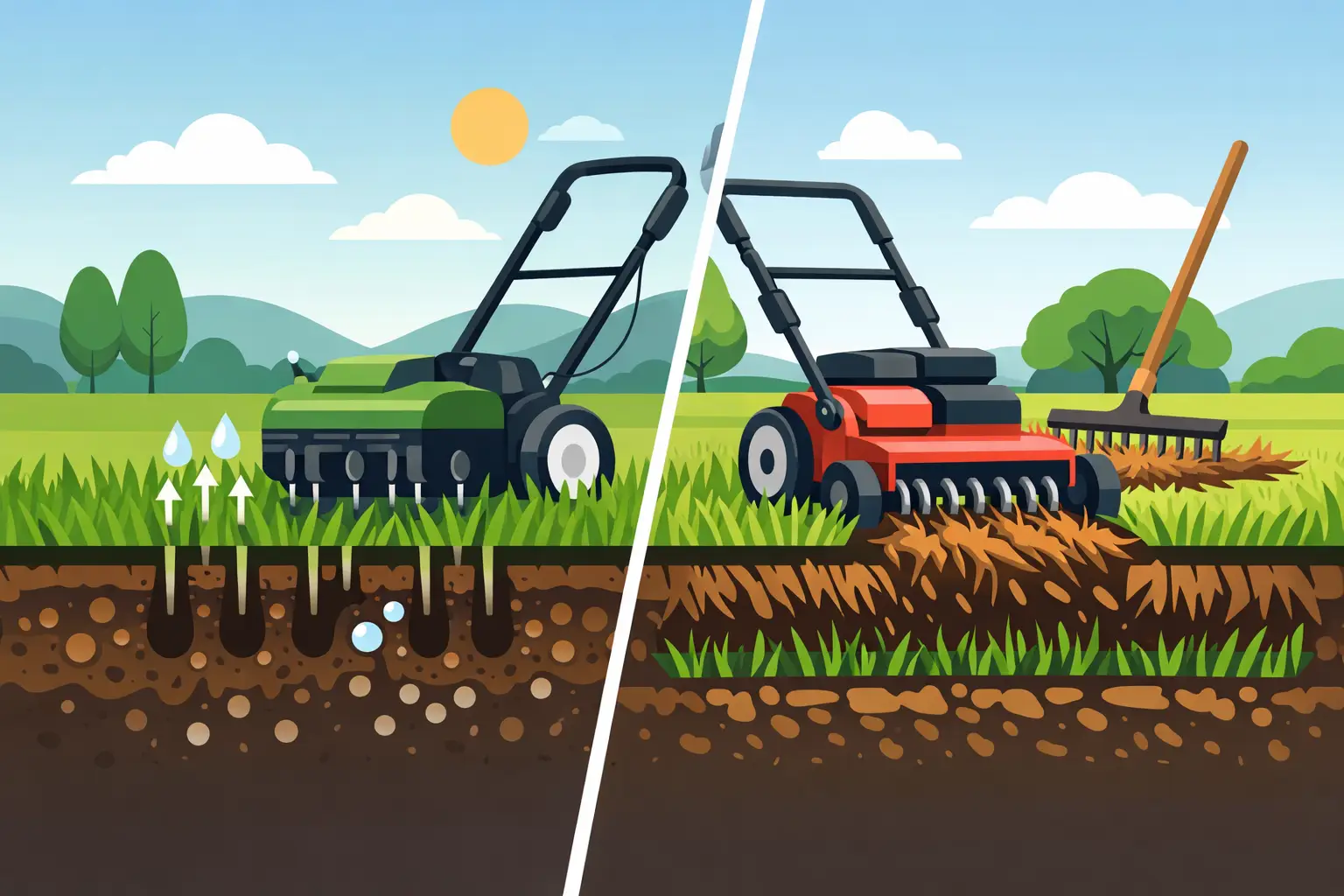
Aeration works on the soil. Dethatching works at the soil surface.
Core aeration removes small plugs of soil and turf across the lawn. Those openings relieve compaction and create direct paths for air, water, and nutrients to reach the root zone. The soil plugs left on top of the lawn break down naturally over the next week or two, returning beneficial organic material to the surface.
Dethatching, sometimes called power raking, removes excess thatch. Thatch is the brown, fibrous layer made up of stems, roots, and other organic material between the green grass and the soil. A little thatch is healthy. It cushions the lawn and helps protect the soil. Trouble starts when it becomes thick enough to keep moisture, fertilizer, and air from reaching the roots.
Both services can make a lawn healthier, but they are not interchangeable. Aerating a heavily thatched lawn may not solve the surface barrier. Dethatching a compacted lawn may remove material without giving roots the room they need to grow deeper.
When your lawn needs aeration
Compaction is common in active yards, commercial green spaces, and lawns with clay-heavy soil. It can develop slowly, so property owners often see the symptoms before they realize the cause.
A lawn may benefit from core aeration if water puddles or runs off instead of soaking in, the ground feels unusually hard, or grass thins out in high-traffic areas. You may also notice that the lawn struggles during summer heat even when it receives regular watering. Weak roots cannot access enough moisture when the soil is dense.
Aeration is especially useful after a season of frequent use. A backyard where children play, a lawn with pets, a community common area, or turf near a busy entrance can all become compacted. Heavy mowing equipment and construction activity can also press the soil tight.
For many fescue lawns in this area, annual fall aeration is a smart maintenance step. Lawns with less traffic and lighter soil may only need it every other year. There is no benefit to aerating on a rigid schedule if compaction is not a concern, but many established lawns respond well to the added root-zone access.
What to expect after core aeration
An aerated lawn will temporarily have visible soil plugs across the surface. That is normal and a sign that the machine has removed cores rather than simply poking shallow holes. The plugs usually disappear with rainfall, irrigation, mowing, and natural breakdown.
Aeration pairs well with overseeding because seed can settle into the openings and make better contact with soil. It also makes fertilizer and water more effective. If your lawn is thin but otherwise healthy, aeration and overseeding may be the practical combination that brings it back.
When your lawn needs dethatching
Thatch is not the same as leaves, grass clippings, or ordinary surface debris. A layer of fallen leaves needs seasonal cleanup. Thatch sits down at the base of the grass and has a springy, spongy feel when it gets too thick.
To check for it, cut a small wedge from the lawn with a shovel or trowel. Look between the green grass blades and the soil. A thin, loose layer is normal. If you find more than about one-half inch of dense, matted brown material, dethatching may be appropriate.
Signs of excessive thatch include a lawn that feels bouncy underfoot, water that seems to sit near the surface, shallow roots, and grass that looks dry even after watering. You may also find that fertilizer produces limited results because it cannot move through the buildup effectively.
Dethatching is more aggressive than aeration. A power rake uses steel tines to pull out accumulated material, and it can leave a lawn looking rough for a short period. That is why it should be performed when grass is actively growing and has enough time to recover. For cool-season turf, early fall is often the preferred window. Early spring can work in the right conditions, but it may also create more opportunity for weeds before the lawn fills back in.
Not every lawn should be power raked
Many lawns do not have enough thatch to justify dethatching. In fact, frequent or unnecessary power raking can stress healthy turf, disturb roots, and create bare spots. This is one reason a proper inspection matters.
Some grass types also handle dethatching differently. Warm-season lawns may require a more aggressive approach at a different point in their growing cycle. Cool-season Kentucky lawns need a measured approach, particularly if they are already thin, drought-stressed, or dealing with disease pressure.
What if your lawn needs both services?
A lawn can have compacted soil and excessive thatch at the same time. In that case, the typical order is dethatching first, then core aeration. Removing the heavy surface layer allows the aerator to work more effectively, while the aeration holes help the lawn recover and improve access to the root zone.
This combination is often followed by overseeding and a starter fertilizer plan. The sequence gives new grass seed a better place to settle, improves soil contact, and helps the existing turf build stronger roots. It is more labor-intensive than either service alone, but it can be worthwhile when a neglected lawn needs a real reset rather than another quick treatment.
The trade-off is timing. Dethatching, aeration, and seeding all need favorable weather and consistent aftercare. Starting too late in fall can leave seedlings without enough time to establish before cold weather. Starting during summer heat can place added stress on turf. A professional service plan should account for grass type, soil conditions, irrigation, and the lawn’s current health.
How to protect results after aeration or dethatching
The days after service matter. Keep the lawn consistently moist if you have overseeded, but avoid soaking it to the point of runoff or standing water. New seed requires frequent light watering at first, then deeper and less frequent watering as roots develop.
Hold off on heavy foot traffic while the lawn recovers, especially after seeding. Mow only when the grass is ready, and avoid cutting more than one-third of the blade height at a time. Sharp mower blades also matter because torn grass tips can make a recovering lawn more vulnerable to stress.
For the long term, mow at the correct height, water deeply instead of lightly every day, and avoid overfertilizing. Too much quick-release nitrogen can encourage rapid top growth and contribute to future thatch problems. Regular leaf removal is also worthwhile, since thick leaf cover can smother grass and hold excess moisture against the surface.
Get the service that matches your lawn
A struggling lawn does not always need more fertilizer or more water. Sometimes it needs room for roots to breathe. Other times, it needs a dense surface layer removed so the care you are already providing can reach the soil.
MowAction Lawn Care Services can evaluate the condition of your turf and recommend aeration, dethatching, overseeding, or a practical combination that fits your property and budget. A healthy lawn starts with addressing the layer where the problem actually lives, whether that is on the surface or deeper in the soil.