

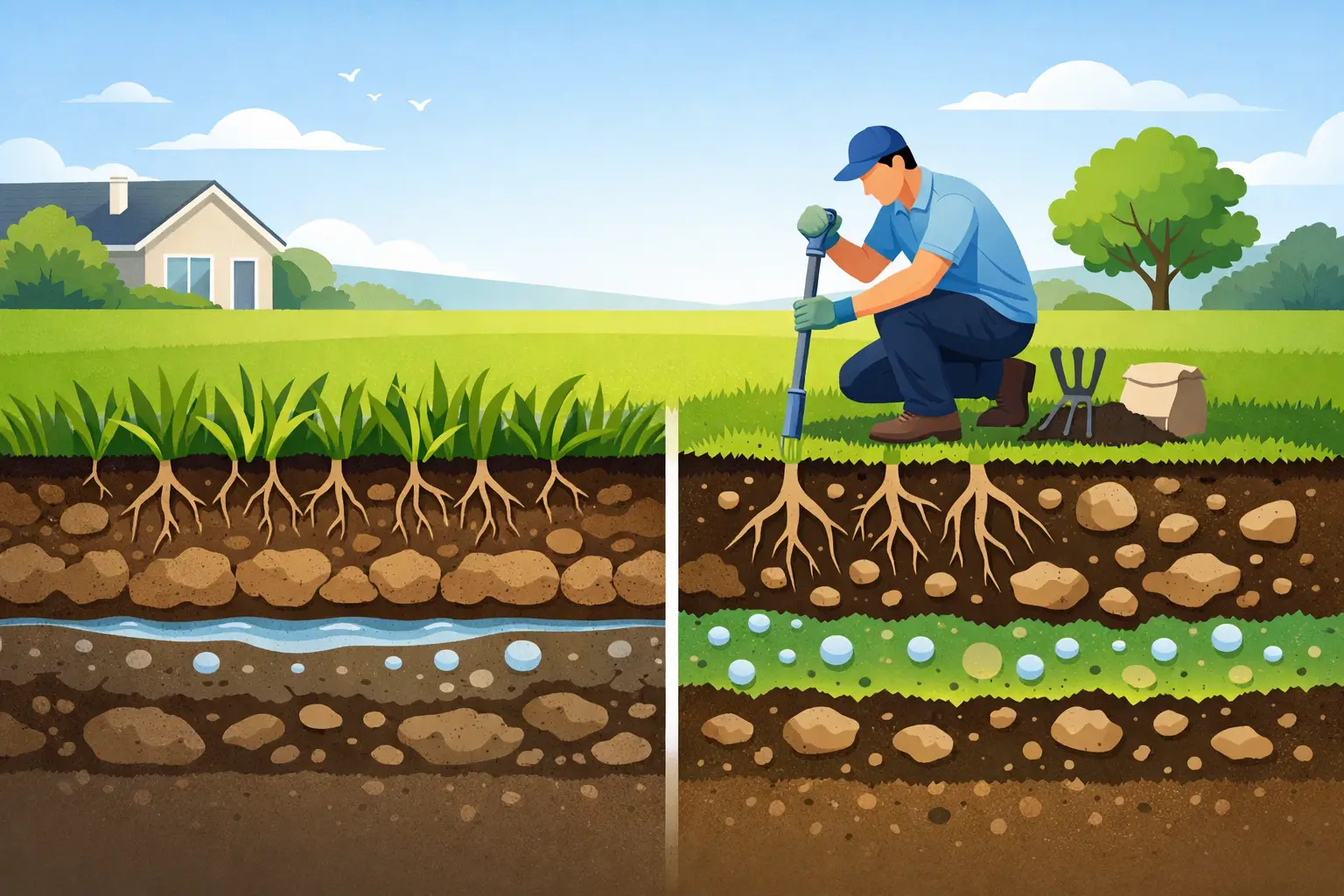
A lawn can look thirsty even after rain, stay thin despite regular mowing, and develop puddles that linger for days. Often, the problem is not the grass itself. Learning how to fix compacted soil helps you address what is happening below the surface, where grass roots need air, water, and room to grow.
Compaction is common in Kentucky lawns, especially where clay-heavy soil, foot traffic, pets, parked equipment, and repeated mowing all press the ground tighter over time. The good news is that most compacted lawns can improve with the right timing and a steady care plan.
What Compacted Soil Does to Your Lawn
Healthy soil contains tiny spaces between soil particles. Those spaces hold water, oxygen, and nutrients that roots need. When soil becomes compacted, those spaces collapse. Water may run off instead of soaking in, roots stay shallow, and grass struggles during summer heat or dry spells.
You may be dealing with compaction if your lawn feels hard underfoot, a screwdriver is difficult to push into the ground, or water pools in low spots after a normal rainfall. Thin grass in high-traffic areas is another common clue. Along walkways, near driveways, around play areas, and in spots where pets regularly run, compaction can be especially noticeable.
Compacted soil can also make other lawn problems look worse. Weed seeds take advantage of thin turf, while shallow-rooted grass is less able to compete. Fertilizer and water may not deliver the results you expect because they cannot move effectively into the root zone.
How to Fix Compacted Soil Without Damaging Your Lawn
The most reliable solution is to relieve pressure below the surface, then support the soil as it recovers. Aeration is usually the starting point, but it works best as part of a larger plan rather than a one-time fix.
Start with core aeration
Core aeration removes small plugs of soil from the lawn. This creates openings that allow air, water, and nutrients to move down into the root zone. It also gives roots room to expand, which is exactly what a compacted lawn needs.
For cool-season lawns common across Louisville, Oldham County, and Shelby County, fall is often the best time for core aeration. Grass is actively growing, summer stress is easing, and the lawn has time to build stronger roots before winter. Spring aeration can also help, particularly if the soil is severely compacted, but it may create open space for summer weeds to establish.
Avoid aerating when the ground is bone dry or muddy. Soil should be slightly moist so the equipment can pull clean plugs without tearing up the turf. A professional core aerator provides deeper, more consistent results than spiked shoes or rolling spike tools. Spikes make holes, but they can press soil tighter around the opening instead of removing compaction.
Apply compost to improve soil structure
After aeration, a light topdressing of screened compost can make a meaningful difference. Compost adds organic matter that helps clay soil form a better structure over time. It improves drainage when the ground stays wet and helps soil retain moisture when conditions turn dry.
The key is keeping the layer light, generally about one-quarter inch across the lawn. Heavy piles can smother grass and create an uneven surface. Rake or brush the compost so it settles into the aeration holes and reaches the soil rather than sitting on top of the blades.
Compost is not a quick cosmetic fix. Its benefit builds over repeated applications. For compacted clay soil, annual aeration and topdressing can gradually make the lawn easier to manage, more drought-tolerant, and noticeably thicker.
Overseed thin areas while the soil is open
Aeration creates excellent seed-to-soil contact, making it a smart time to overseed thin or bare sections. Choose a grass seed blend suited to the amount of sun the area receives and the way the lawn is used. A sunny front yard and a shaded backyard under mature trees may need different seed choices.
Keep newly seeded areas consistently moist until germination, then transition to deeper, less frequent watering as the grass establishes. Do not expect every compacted lawn to become dense overnight. Grass seed needs time, and the strongest results usually come from correcting the soil issue while maintaining good watering and mowing habits.
Water deeply, not constantly
Frequent light watering encourages shallow roots, which leaves turf less prepared for heat and dry weather. Once established grass is growing, water deeply enough to moisten the root zone, then allow the surface to dry somewhat before watering again. This encourages roots to reach deeper into the soil.
The exact schedule depends on rainfall, temperatures, soil type, and shade. Clay soil absorbs water slowly, so a long watering cycle may cause runoff. In that case, use cycle-and-soak watering: run the sprinkler for a shorter period, let the water absorb, then repeat. This gives the soil time to take in moisture without sending it down the driveway or into a storm drain.
Mow at a height that protects roots
Cutting grass too short puts extra stress on an already struggling lawn. Taller grass develops deeper roots, shades the soil, and helps reduce moisture loss. For many cool-season lawns, keeping the mowing height around 3 to 4 inches during the active growing season is a practical target.
Use sharp mower blades and avoid mowing when the lawn is saturated. Heavy equipment on wet ground can worsen compaction, especially on clay soil. Changing your mowing pattern from week to week also helps prevent repeated tire tracks from creating compacted lanes.
Reduce the Causes of Future Compaction
Aeration treats the current problem, but preventing repeat compaction protects your investment. Look at how people, vehicles, and water move across the property. If everyone takes the same shortcut through the yard, consider a walkway, stepping stones, or a designated path. If a service vehicle or trailer regularly crosses turf, creating a better access route may save the lawn from repeated damage.
For commercial properties, entry points, dumpster areas, sidewalks, and common gathering spaces often need extra attention. These locations receive far more foot traffic than open lawn areas. Aerating them on a regular schedule and improving drainage before problems grow can help keep the property looking professional.
Poor drainage can also contribute to compaction. If water routinely settles near a foundation, at the bottom of a slope, or beside a patio, aeration alone may not solve the issue. Grading adjustments, drainage improvements, or a well-designed landscape bed may be needed to direct water properly and protect the lawn.
When Compacted Soil Needs More Than Aeration
Some lawns have deeper issues than a standard aeration service can handle. Construction traffic, newly built homes, repeated equipment use, and heavily compacted fill soil can create dense layers well below the surface. In these situations, grass may continue to fail even after aeration, seeding, and proper watering.
A soil test can help identify whether nutrient levels or pH are also working against the lawn. It is worth remembering that fertilizer is not a cure for compaction. Adding more fertilizer to soil with poor airflow and drainage can waste product and may increase stress on the turf.
If the ground is extremely hard, drainage is poor, or bare areas keep returning, a more involved renovation may be the better value. That can include deeper soil preparation, adding organic material, regrading, and installing new sod or seed. The right approach depends on the condition of the site, the size of the area, and how quickly you need a finished lawn.
A Better Lawn Starts Below the Grass
Compacted soil is frustrating because the symptoms show up above ground while the cause sits beneath your feet. Still, the fix is straightforward when you start with core aeration, improve the soil with organic matter, and give grass the conditions it needs to root deeply.
For homeowners and property managers who want dependable help with aeration, overseeding, drainage concerns, or lawn recovery, MowAction Lawn Care Services can evaluate the property and recommend work that fits the lawn instead of applying a one-size-fits-all treatment. A little attention below the surface can turn a hard, thin lawn into a healthier space that holds up better through every season.