

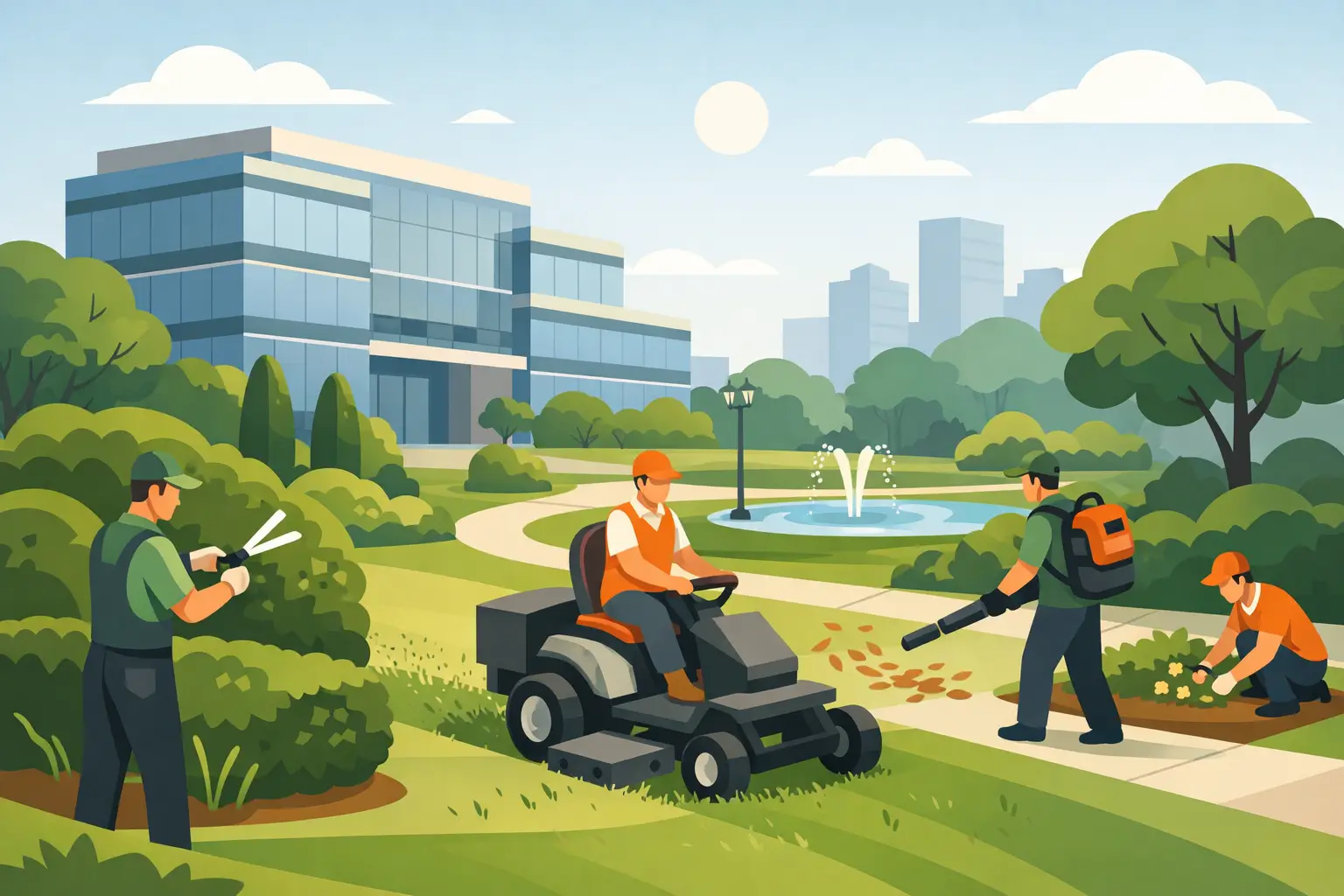
A commercial property can have a clean lobby, reliable staff, and great signage, but an overgrown entrance or weed-filled parking lot edge still makes visitors question the care behind the business. This commercial landscape maintenance guide helps property owners and managers build a practical plan that protects curb appeal, safety, and long-term landscape value without creating more work for their team.
Commercial grounds are rarely judged as a collection of separate tasks. Tenants, customers, employees, and prospective clients see the whole property at once: turf, planting beds, sidewalks, drainage areas, lighting, and seasonal conditions. Consistent care matters because it keeps small issues from becoming visible problems or expensive repairs.
Start With the Property’s Real Priorities
Every site needs a maintenance plan, but the right plan depends on how the property is used. A medical office, retail center, apartment community, warehouse, and professional office park do not face the same traffic patterns or presentation standards. The goal is not to schedule every possible service. It is to invest in the work that keeps the property safe, attractive, and functional.
Begin with a walk-through of the site from the perspective of someone arriving for the first time. Look at entry drives, monument signs, sidewalks, parking areas, building entrances, common spaces, and the views from the street. These are high-visibility areas where uneven mowing, dead shrubs, fallen limbs, or loose mulch can stand out quickly.
Then look for operational concerns. Low spots can collect water and create muddy turf. Trees or shrubs may block signs, windows, cameras, or walkways. Failing irrigation can waste water in one area while leaving another dry. A dependable maintenance provider should identify these concerns early and explain what needs immediate attention versus what can be planned for a later improvement project.
Build a Reliable Weekly Maintenance Schedule
For most commercial properties in Kentucky, regular mowing and cleanup are the foundation of a professional appearance during the growing season. Frequency should follow turf growth, weather, site use, and the property’s expectations. A highly visible retail or office site may need weekly service throughout the season, while a lower-traffic property may be able to adjust during slower growth periods.
Quality mowing is more than making grass shorter. Crews should maintain an appropriate cutting height, avoid scalping slopes and dry areas, trim around obstacles, edge defined hardscape borders, and remove clippings from sidewalks and entrances. Dull mower blades can tear grass rather than cut it cleanly, leaving a faded appearance and increasing stress on the turf.
Weekly visits should also include a quick check for litter, fallen branches, storm damage, weeds in pavement cracks, and landscape bed conditions. This routine attention prevents the property from looking neglected between larger seasonal services. It also gives the maintenance team a chance to flag concerns before a tenant or customer has to report them.
Keep Landscape Beds Intentional
Beds around entrances, signs, and buildings often create the strongest visual contrast on a commercial site. They need consistent weeding, edging, pruning, and mulch management. When these details are ignored, even well-mowed turf can look unfinished.
Pruning should be purposeful, not aggressive. Shrubs need room to grow naturally, while sight lines, walkways, doors, and signage must remain clear. Over-pruning may create a tidy look for a short time, but it can weaken plants and make a landscape look sparse. The best approach balances a neat appearance with plant health.
Fresh mulch can improve color, reduce weeds, and help retain soil moisture. Still, more is not always better. Excessive mulch piled against tree trunks or shrub stems can trap moisture and invite damage. A properly maintained bed has a clean edge, manageable weed pressure, and mulch applied at a sensible depth.
Treat Irrigation and Drainage as Maintenance Issues
A lush commercial lawn does not necessarily mean the irrigation system is working efficiently. Broken heads, misdirected spray, leaking valves, and poorly timed controllers can lead to high water bills, dry patches, slippery sidewalks, and stressed plants. Irrigation should be inspected before peak summer demand, monitored through the season, and winterized when freezing weather arrives.
Watering needs will change with rainfall, heat, soil type, sun exposure, and plant maturity. A fixed schedule that runs the same way every week can waste water. Smart adjustments matter, especially for properties with mixed turf, trees, annual color, and foundation plantings.
Drainage deserves the same attention. Standing water near entrances or parking areas is not only unattractive. It can soften turf, damage plant material, contribute to mosquito activity, and create winter icing risks. Sometimes the solution is as simple as clearing a drain or correcting a downspout discharge. Other situations may call for grading, drainage improvements, retaining walls, or new plant selections that tolerate wet conditions.
Plan Seasonal Work Before It Becomes Urgent
Commercial landscape maintenance is a year-round responsibility, even when mowing stops. Seasonal planning helps property managers avoid rushed decisions and keeps the site ready for changing conditions.
Spring is the time to remove winter debris, refresh beds, inspect turf damage, address weeds, prepare irrigation, and evaluate plants that did not survive winter. It is also a good time to schedule aeration, overseeding, sod repair, or landscape upgrades before the busiest part of the growing season.
Summer requires close attention to mowing, weed control, irrigation performance, storm cleanup, and plant stress. Heat can expose weak spots in turf and irrigation systems quickly. Prompt adjustments often cost less than replacing large sections of damaged lawn later.
Fall cleanup is especially valuable on commercial properties with mature trees. Leaves left on turf can block light, hold moisture, and create slippery conditions on walks and parking areas. This is also a practical season for pruning, planting, mulch work, and preparing irrigation for winter.
Winter planning should include snow and ice response well before the first forecast. Property managers need clear expectations for priority areas, service triggers, communication, and where snow will be placed. Entrances, accessible parking, sidewalks, loading areas, and emergency access routes should be addressed first. A low price is not helpful if a provider cannot respond when conditions affect tenant access and safety.
Know When Maintenance Should Lead to Improvement
Routine service keeps a landscape in order. It does not always solve underlying design or infrastructure problems. If a property repeatedly has muddy turf, bare areas, poor visibility, drainage trouble, or plant material that struggles in its location, an improvement project may be the more cost-effective answer.
Sod installation can restore worn entrance areas faster than waiting for seed to establish. Landscape lighting can improve visibility and curb appeal around walks and signs. A retaining wall may stabilize a slope that cannot be maintained safely with routine mowing. Patios, pavers, and defined outdoor spaces can make a multifamily or office property more usable for tenants and visitors.
The trade-off is budget. Larger projects require upfront investment, but repeatedly paying to repair the same failing area can add up. Ask for a clear explanation of the problem, recommended options, expected maintenance needs, and the likely lifespan of the solution. Good advice should help you choose the right scope, not push unnecessary work.
Choose a Partner Who Communicates Clearly
Commercial property managers need more than a crew that arrives with equipment. They need a provider who follows the schedule, respects the property, reports issues, and responds when conditions change. Communication is especially important when several stakeholders are involved, including owners, tenants, facility teams, and leasing staff.
Before selecting a maintenance company, discuss service frequency, the exact work included at each visit, weather delays, after-hours access, seasonal transitions, irrigation support, and snow response. Ask how concerns are documented and how quickly the company addresses a missed detail or unexpected problem. The answers reveal whether the provider is organized enough for recurring commercial work.
A single provider that can handle mowing, bed care, irrigation repairs, cleanups, hardscaping, and snow service can simplify coordination. That does not mean every property needs every service. It means you have a familiar team that understands the site when a routine maintenance need becomes a larger project.
For commercial owners and managers across Louisville, Oldham County, and Shelby County, MowAction Lawn Care Services brings that practical, responsive approach to exterior property care. The right maintenance plan should make your property easier to manage, not add another item to your weekly follow-up list.
A well-maintained landscape quietly tells people that the property is cared for before they ever walk through the door. When the plan is consistent, seasonal, and built around the way your site actually operates, that first impression becomes one less thing you have to worry about.