

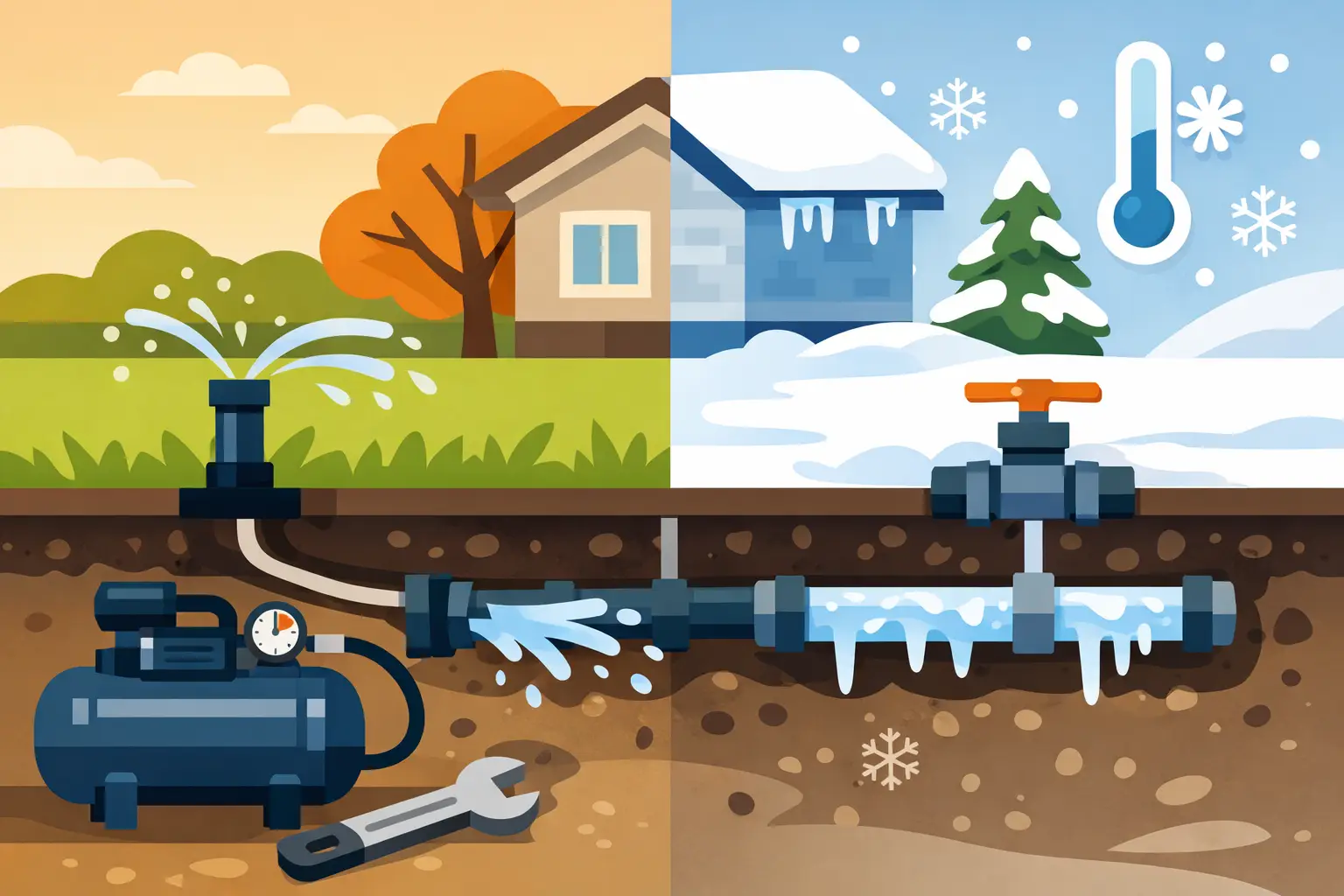
A single hard freeze can turn a well-performing irrigation system into an expensive spring repair. If you are looking up how to winterize sprinkler system equipment before cold weather arrives, the goal is simple: remove water from every part that could freeze, expand, and crack. In Louisville, Oldham County, and Shelby County, the right timing can vary from year to year, but waiting until the first overnight freeze is a gamble not worth taking.
Winterization is more than shutting off the controller. Water can remain in underground lateral lines, sprinkler heads, valves, backflow assemblies, and above-ground piping long after the system stops running. A careful shutdown protects the investment you have already made in your lawn, landscape beds, and irrigation equipment.
Why Sprinkler Winterization Matters
Water expands when it freezes. Inside an irrigation system, that expansion can split PVC pipe, damage fittings, break sprinkler heads, and harm costly backflow prevention equipment. Some damage stays hidden underground until spring, when a zone will not hold pressure or a soggy area suddenly appears in the lawn.
The risk is highest for exposed components, but buried lines are not automatically safe. Soil offers some insulation, yet shallow lines, poorly drained areas, and pipe near driveways, retaining walls, or foundation edges can still freeze. Commercial properties can face an added concern: a damaged irrigation system may create muddy common areas, unsafe walkways, or an unpolished appearance when spring maintenance begins.
A proper winterization helps prevent repairs, preserves water efficiency, and gives your system a clean start when warm weather returns. It is one of those seasonal jobs that is far less expensive than dealing with a break after the fact.
When to Winterize a Sprinkler System in Kentucky
Plan to winterize before consistently freezing nighttime temperatures arrive. For many local properties, that means scheduling service during the fall rather than responding after the first cold snap. The exact week depends on the forecast, your property’s exposure, and whether your irrigation system has above-ground components.
Do not base the decision on whether the grass is still growing. Your lawn may need mowing well into fall, while irrigation lines are already vulnerable to a surprise freeze. It is better to turn off automatic watering a little early than to risk a damaged line because the forecast changed overnight.
If your property has a backflow preventer installed outside, treat that as a priority. These assemblies are particularly exposed and often costly to replace. Insulation can help with mild weather, but insulation alone is not a substitute for removing water and protecting the device properly.
What You Need Before You Start
The method used to winterize an irrigation system depends on its design. Most systems are cleared using one of three approaches: manual draining, automatic draining, or a compressed-air blowout. The first two work only when the system was designed with drain valves that allow water to leave the lines. A blowout is common for systems without adequate drainage or for properties where complete water removal is the safer choice.
Before doing anything, locate the irrigation shutoff valve, controller, backflow device, zone valves, and any drain valves. If you do not know where these components are, or if the system was installed before you owned the property, professional help is often the practical choice. Guessing can lead to damaged valves, flooded boxes, or incomplete drainage.
For a blowout, use an air compressor with sufficient volume for irrigation work, a compatible connection, safety glasses, and a clear understanding of your system’s pressure limits. High pressure can damage sprinkler heads, fittings, valves, and backflow assemblies. The objective is steady airflow that moves water out - not maximum pressure.
Step 1: Shut Off the Irrigation Water Supply
Turn off the dedicated irrigation shutoff valve. This is often located near the home’s water service connection, in a basement, crawl space, utility room, or exterior valve box. Do not rely on turning off the sprinkler controller. The controller stops scheduled watering, but it does not stop water from entering the irrigation lines.
Once the water supply is off, open the test cocks or small valves on the backflow assembly if your system configuration calls for it. This relieves trapped pressure and helps prepare the device for draining. Backflow equipment varies by model, so avoid forcing any handle or screw that does not move easily.
Step 2: Turn Off and Protect the Controller
Set the irrigation controller to its rain mode or off position. Keep the controller powered if it uses a battery backup or needs power to retain programming, but make sure it cannot run a watering cycle during winter.
This is also a good time to make a quick note of any zones that had weak pressure, leaking heads, dry spots, or drainage problems during the season. Those details are useful when spring repairs or adjustments are needed. A winter shutdown is easier when you treat it as part of year-round system care, not a last-minute chore.
Step 3: Drain the Lines Using the Correct Method
If your system has manual drain valves, open them at the low points of the system after the main water supply is shut off. Water should drain from the lines through these valves. Leave the drains open through the winter only if the equipment manufacturer and system design support that practice.
Systems with automatic drain valves release water when pressure falls below a certain level. Even so, inspect the property and verify that water has actually drained. Automatic drains can clog with soil, debris, or mineral buildup, and they may not remove water from every low area.
For many residential and commercial systems, a professional compressed-air blowout provides the most reliable protection. A technician connects regulated air at the proper point and clears one irrigation zone at a time. Sprinkler heads will pop up and release water in a mist. Once a zone is mostly clear, airflow should stop rather than continuing until components overheat or run dry for too long.
Never stand over sprinkler heads during a blowout, and keep children, pets, and bystanders away from the work area. Pressurized air and debris can cause injury. More importantly, do not connect compressed air directly to the backflow preventer unless the system manufacturer and a qualified irrigation professional specifically approve that method. Backflow devices can be damaged by improper air pressure.
Step 4: Protect the Backflow Preventer and Exposed Pipes
After the system is drained, make sure the backflow assembly is protected from freezing weather. Depending on the installation, that may involve draining the device, setting its valves to the recommended position, and covering it with an insulated backflow cover. Avoid wrapping it in materials that trap moisture against metal parts or prevent proper ventilation.
Exposed pipes near the foundation, pump equipment, or outdoor spigots should also be checked. A sprinkler system may be winterized correctly while another outdoor water connection remains vulnerable. If you have a well pump, booster pump, or irrigation pump, follow the manufacturer’s shutdown guidance. Pumps often need separate attention from standard municipal-water irrigation systems.
Common Winterization Mistakes to Avoid
The most common mistake is simply turning off the controller and assuming the job is done. Other costly errors include forgetting the backflow assembly, failing to shut off the supply water, using too much air pressure, and skipping a zone during a blowout.
Another mistake is waiting for a forecast that feels certain. Kentucky weather can shift quickly, and exposed irrigation equipment can freeze even when daytime temperatures are mild. Schedule ahead, especially if you manage several properties or have a large system with multiple zones.
Finally, avoid treating every system alike. A small residential system with properly placed manual drains may need less work than a commercial property with long runs, elevation changes, multiple controllers, and extensive landscape beds. The correct method depends on the equipment and layout.
When Professional Winterization Is the Better Choice
DIY winterization can make sense for homeowners who understand their system and have a simple drainage setup. A professional service is usually the safer option for compressed-air blowouts, older systems, properties with unknown valve locations, complex commercial irrigation, or any system with a backflow device you are not comfortable servicing.
A trained irrigation team can identify concerns before winter, clear zones safely, and point out worn heads, valve issues, or leaks worth addressing in spring. MowAction Lawn Care Services helps local homeowners and property managers protect irrigation systems with dependable seasonal care, clear communication, and the same attention to detail brought to every outdoor maintenance job.
Schedule winterization before the forecast turns harsh, then enjoy the season knowing your irrigation system is resting safely beneath the lawn instead of waiting to surprise you with a repair bill next spring.