

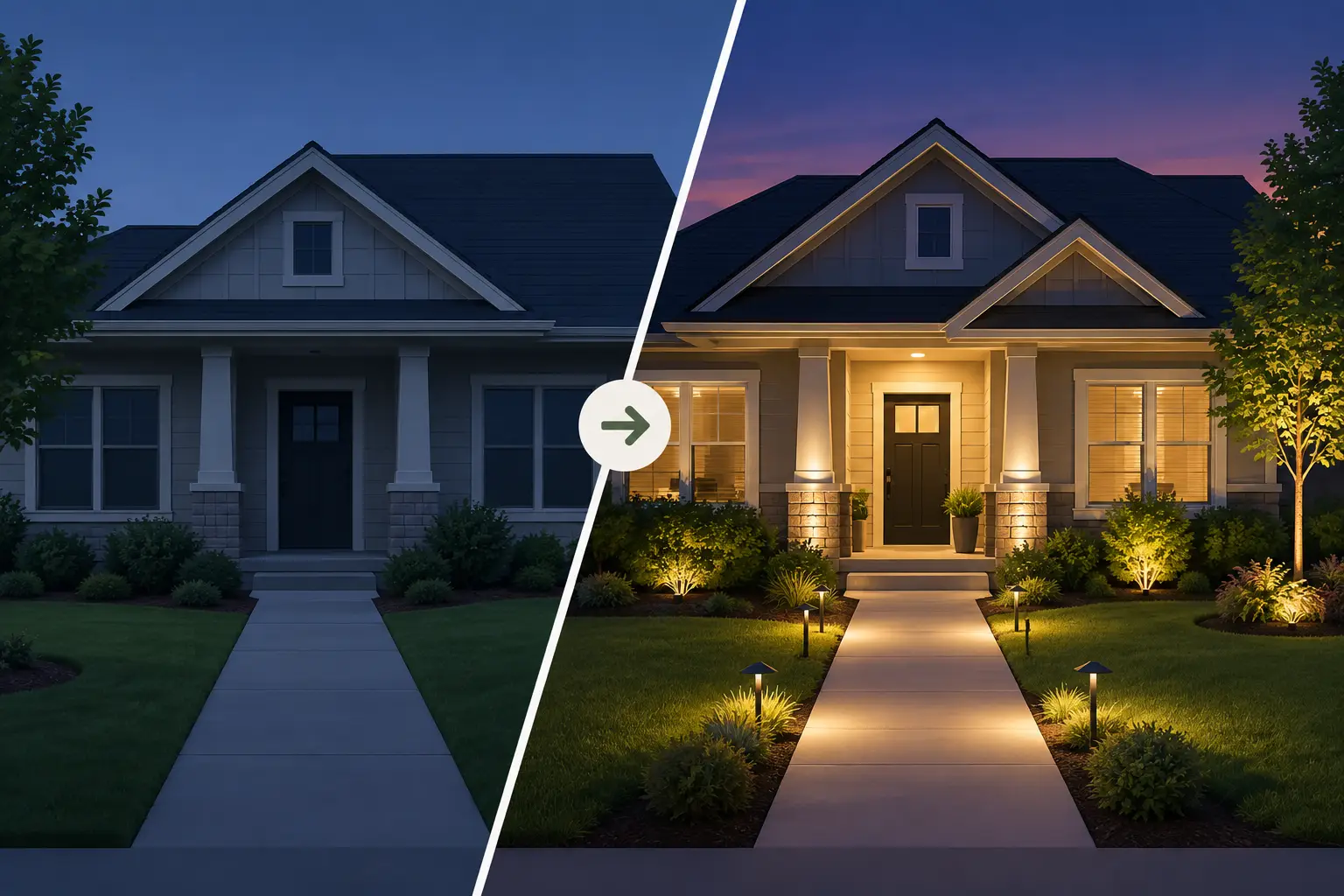
The right light can change the way a home feels before anyone reaches the front door. This front yard lighting makeover example starts with a common situation: a well-kept home with attractive landscaping that nearly disappeared after sunset, plus a dark walkway that made guests watch every step.
The goal was not to flood the property with bright fixtures or make the house look like a commercial entrance. It was to create a welcoming arrival, highlight the features the homeowner had already invested in, and make the walk from driveway to door safer. The finished result used a few purposeful layers of warm light rather than dozens of competing fixtures.
The Starting Point: A Nice Yard That Went Dark
The front yard had a clean lawn, curved planting beds, two mature ornamental trees, a stone walkway, and a covered porch. During the day, the property had strong curb appeal. At night, though, the walkway disappeared into shadow, the front door felt disconnected from the driveway, and the landscaping looked flat.
The homeowner first considered adding one bright floodlight near the garage. That would have solved part of the visibility problem, but it would also have cast harsh shadows across the yard and pulled attention away from the entry. A better design needed to guide people through the space, not simply blast it with light.
Before selecting fixtures, the plan considered where people actually moved after dark. The driveway-to-door route mattered most. Next came the house numbers, the front steps, and the planting beds that framed the entry. The mature trees were worth highlighting, but only after the safety and navigation needs were covered.
Front Yard Lighting Makeover Example: The Layered Plan
This makeover used three lighting jobs: path lighting for direction, accent lighting for depth, and entry lighting for a clear destination. Each layer was modest on its own. Together, they made the yard feel finished.
A safer path from driveway to porch
Low-voltage path lights were installed along the curved walkway, spaced to mark the route without creating a row of bright dots. The fixtures were positioned on the outer edge of the bed where possible, allowing the light to wash gently across the walking surface.
Placement matters as much as fixture count. Putting lights directly across from one another can make a pathway feel like an airport runway. Staggering them creates a more natural rhythm while still showing changes in direction and elevation. On this property, a fixture was also placed near the first step and another near the porch landing, where a missed step would be most likely.
The selected bulbs produced a warm white color, around 2700K. That warmer tone complemented the stone, mulch, and siding far better than cool white light. It also made the home look welcoming rather than overly stark.
Uplighting that gave the landscape shape
Two small spotlights were used at the base of the ornamental trees. Instead of aiming them straight upward at full power, the beams were adjusted to catch the trunk and lower canopy. This brought texture into the front bed and gave the yard some height after sunset.
A third accent light was positioned to graze a stone landscape feature near the porch. Grazing light across stone, brick, or textured masonry can bring out details that are easy to miss during the day. The key is restraint. One well-aimed fixture often creates a stronger effect than several lights aimed at the same feature.
The house itself did not need to be lit from every angle. A wide wash across the entire facade may be appropriate for some larger homes or commercial properties, but it can flatten a smaller front elevation. Here, the porch fixtures and tree uplighting provided enough reflected light to make the exterior feel visible without losing its natural shadows.
A front door that felt easy to find
The existing porch light was replaced with a properly sized fixture that provided a warm, even pool of light around the front door. The address numbers were also made visible from the street. This is a small detail, but it helps guests, delivery drivers, and emergency responders locate the home more easily.
The design avoided exposing bare, high-output bulbs at eye level. Glare is one of the most common reasons outdoor lighting feels uncomfortable. If a light source is the first thing people notice, rather than the walkway, tree, or entry it is meant to illuminate, it likely needs to be shielded, lowered, or redirected.
What Changed After Dark
The difference was immediate. From the street, the home had a gentle sense of depth: the porch created a focal point, the trees framed the property, and the walkway offered a clear invitation inward. Nothing looked overlit.
For the homeowner, the practical benefits were just as valuable. Taking out the trash, coming home late, walking a dog, and welcoming visitors all became easier. The front beds remained visible at night, so the work put into seasonal flowers, edging, and mulch continued to add value after daylight hours.
This kind of project can also support security, but landscape lighting should not be confused with a security system. Well-lit access points and walkways can reduce hiding spots and make a property feel more observed. Still, motion-activated security lighting may be a better addition around side yards, rear entries, and other areas that do not need an all-evening decorative glow.
The Design Choices That Kept It From Looking Overdone
The best outdoor lighting is often noticed as a feeling before it is noticed as equipment. In this example, the design stayed balanced because every fixture had a job. Path lights guided movement. Accent lights gave depth to key plant material and stone. The porch light welcomed people to the entry.
Fixture finish and scale were also considered. The homeowner selected low-profile fixtures in a dark bronze finish that blended with the mulch and stone. Large decorative lights might have competed with the landscaping during the day. Small, durable fixtures were less noticeable until evening, when their light became the feature.
Timers and smart controls made the system easy to live with. The lights came on around dusk and shut off later in the evening, with the option to adjust schedules by season. For many homeowners, this is more dependable than remembering to flip a switch every night. A professional installation also helps protect wiring from lawn equipment, weather, and routine maintenance.
Where the Budget Went
A front yard lighting project does not have to begin with every possible feature. If budget is limited, start with the walkway, steps, and front entry. Those improvements make the greatest difference for safety and day-to-day use.
After that, add one or two accent lights to features with real visual value, such as mature trees, a specimen shrub, a stone wall, or an attractive architectural detail. Avoid spending heavily on fixtures before the layout is settled. Good placement will do more for the final appearance than buying the most expensive light on the shelf.
Costs depend on fixture quality, the number of lights, power access, control options, and site conditions. A small front entry update may be straightforward, while a larger property with long wire runs, existing hardscapes, or multiple zones will require more planning. Low-voltage systems are a popular choice for residential landscapes because they offer flexibility and energy efficiency, but they still need thoughtful installation.
Common Mistakes to Avoid
The biggest mistake is treating every dark area as a problem that needs a brighter bulb. Outdoor lighting works best with contrast. Some shadow gives trees dimension, makes architectural accents stand out, and prevents the yard from feeling washed out.
Another mistake is placing fixtures where they will be blocked by fast-growing plants. A light that shines beautifully through a small shrub in spring can be completely hidden by midsummer. During the design stage, consider the mature size of perennials, shrubs, and ornamental grasses, along with where mulch will be refreshed and where mowing crews need clear access.
Finally, do not ignore maintenance. Lenses collect dirt, mulch can shift around fixtures, and plants grow into beams. A quick seasonal check keeps the system looking intentional. It is also a good opportunity to adjust timers as daylight hours change.
Make the First Impression Count
A front yard should not lose all of its character when the sun goes down. With a thoughtful plan, lighting can make the route to your door safer, show off the landscape you care for, and give your property a more polished evening presence.
For homeowners and property managers who want the work handled from design through installation, MowAction Lawn Care Services can help build a lighting plan that fits the property, the budget, and the way the space is used. Start with the areas that matter most, then let each carefully placed light earn its place in the yard.