

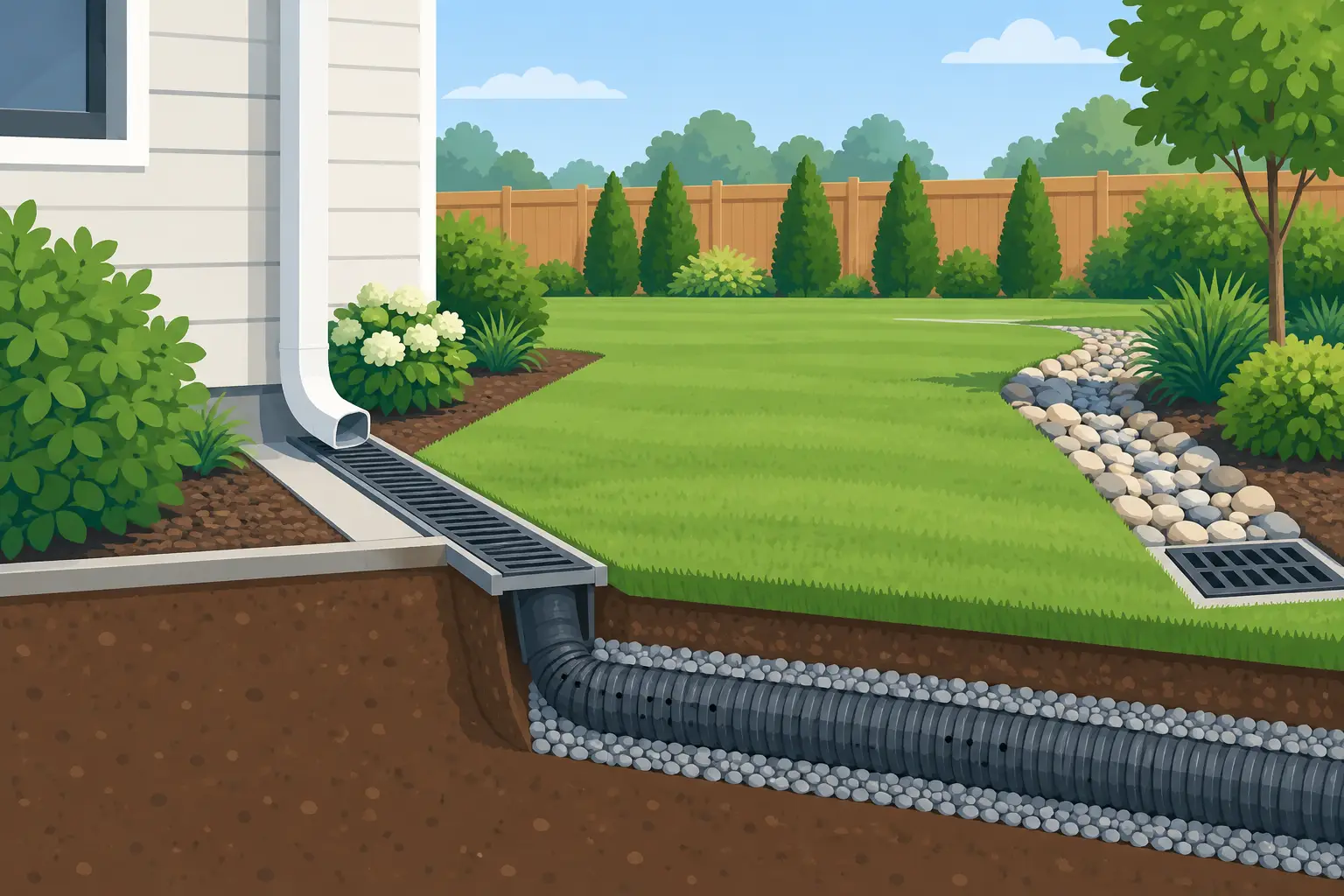
A puddle that remains two days after rain is more than a muddy inconvenience. Water that collects near a foundation, runs across a walkway, or turns part of the lawn into a soft mess can damage landscaping, limit how you use your property, and create expensive issues over time. This outdoor drainage solutions guide helps homeowners and property managers recognize the source of a water problem and choose a fix that makes sense for the property.
Drainage is not a one-size-fits-all project. A low spot in a backyard needs a different approach than roof runoff dumping beside a front entry. The right solution starts with understanding where water begins, where it travels, and where it can safely go.
Start With the Water's Path
Before installing a drain or bringing in soil, watch the property during a steady rain or shortly afterward. Look for downspouts that empty beside the house, runoff flowing toward patios, bare channels where water cuts through mulch, and standing water in turf. Note how long the area stays wet. A shallow puddle that disappears within a few hours may be normal after a hard storm. Water that remains for a day or more deserves attention.
The grade around the home is a major factor. Ideally, soil should slope away from the foundation so surface water moves outward rather than settling against the structure. Over time, mulch, settled fill, edging, and landscape renovations can flatten that slope. Even a well-built home can develop drainage trouble when the surrounding ground changes.
Do not assume the lowest point is always the real cause. Water may begin uphill, follow a compacted path beneath the lawn, and collect in a low area farther away. Roof runoff can also overwhelm an otherwise healthy yard. Identifying the full route prevents spending money on a drain that only treats the final symptom.
Common Outdoor Drainage Solutions
Regrading for Better Surface Flow
Regrading means reshaping the soil so water moves in a planned direction. It is often the best answer when the yard slopes toward the home, a patio, or a frequently used outdoor area. A contractor may add and compact soil, remove excess material, and blend the corrected grade into the rest of the landscape.
This solution is especially effective when paired with new sod, seed, mulch beds, or a larger landscape renovation. The trade-off is that regrading can disturb existing turf and plantings. It is usually smarter to correct the grade before investing in a new lawn, patio, or garden bed rather than tearing those improvements out later.
Downspout Extensions and Buried Lines
A roof collects an enormous amount of water during a Kentucky rainstorm. If downspouts release that water right beside the foundation, it can saturate the soil, wash out mulch, and contribute to basement or crawlspace moisture concerns.
A basic above-ground extension may be enough when it carries water well away from the house and onto a stable, properly sloped area. Where extensions cross walkways, mowing routes, or landscape beds, a buried solid pipe is often a cleaner, more dependable option. The outlet still matters. It needs to discharge in a suitable location without sending water toward a neighbor's property, a sidewalk, or another problem area.
French Drains for Saturated Ground
A French drain is designed to collect water moving through the soil. It typically uses a gravel-filled trench, perforated pipe, and filter fabric to move groundwater toward an outlet. This can be a practical choice for persistently wet lawn sections, water collecting behind a retaining wall, or areas where the soil stays soggy even after surface runoff has stopped.
French drains need correct depth, pitch, fabric, stone, and a reliable outlet. Installing one without a place for the water to go simply creates an underground storage area. They are also not always the best first choice for roof runoff. Solid pipe is generally better for carrying concentrated downspout water, while perforated pipe is meant to gather water from surrounding soil.
Catch Basins and Surface Drains
When water flows quickly across a driveway, patio, or paved area, a catch basin or channel drain can collect it before it reaches a building or creates a slippery surface. These systems are useful at the bottom of a slope, near garage approaches, and in hardscape areas where water cannot soak into the ground easily.
The visible grate is only one part of the system. The basin must connect to properly sized piping and be installed at the true low point. It also needs occasional cleaning. Leaves, mulch, and gravel can block a basin, so seasonal cleanup is part of keeping the system working.
Swales and Dry Creek Beds
A swale is a shallow, broad channel that guides runoff through the yard. Unlike a deep trench, it can look like a natural part of the landscape when shaped, seeded, or planted properly. It works well for moving surface water across larger lawns where there is enough room to create a gentle route.
A dry creek bed can serve a similar purpose while adding visual interest with stone and plantings. It is a good fit when homeowners want drainage to feel intentional rather than purely functional. However, stone alone does not solve a grading problem. The ground beneath it must still direct water correctly, and the creek bed must lead to a safe discharge area.
Retaining Walls and Drainage Behind Them
Retaining walls manage elevation changes, but they should never be asked to hold back wet soil without drainage. Water pressure behind a wall can lead to bulging, shifting, staining, or failure. Proper wall construction often includes drainage stone, filter fabric, perforated pipe, and a way for water to exit.
If an existing wall shows movement or water pooling behind it, do not cover the problem with extra mulch or plants. Have the drainage and structural condition evaluated. Repairs are usually simpler before movement becomes severe.
Soil, Compaction, and Lawn Health
Many yards in the Louisville, Oldham County, and Shelby County area include dense clay soils. Clay can hold water for a long time, especially when it is compacted by foot traffic, equipment, or construction activity. Aeration can help a lawn take in water more effectively, but it will not correct a major grading issue or a downspout that is flooding one location.
Healthy turf, deep roots, and well-maintained mulch beds do support better water management. Bare soil erodes more easily, while thin grass allows runoff to gain speed. Still, avoid treating lawn care as a substitute for drainage design. If water is flowing toward the house, the grade and collection system come first.
Avoid Fixes That Create New Problems
Drainage work should protect the whole property, not move trouble from one spot to another. Sending water across a sidewalk can create winter ice hazards. Directing a pipe to a property line may affect a neighbor. Connecting private drainage to public systems may require local approval, depending on the location and type of work.
Be cautious with quick fixes such as adding topsoil to a wet area without checking the surrounding grade. Extra soil may trap water against siding, cover weep holes, or cause a new low spot nearby. Likewise, decorative gravel placed over a soggy area may hide mud temporarily while the water remains underneath.
For commercial properties, drainage decisions also affect safety and appearance. Standing water near entrances, parking areas, and sidewalks can create slip risks and leave a poor first impression. A maintenance plan should include keeping drains clear, monitoring erosion, and addressing damaged curbs, edging, or pavement that changes runoff patterns.
When to Bring in a Professional
A professional drainage assessment is worthwhile when water reaches the foundation, enters a basement or crawlspace, damages hardscapes, causes recurring erosion, or makes part of the lawn unusable. It is also helpful before installing a patio, retaining wall, irrigation system, or new sod. These improvements last longer when water management is considered from the start.
MowAction Lawn Care Services can help property owners plan drainage improvements alongside grading, hardscaping, retaining walls, lawn restoration, and landscape upgrades. A site-specific plan can account for how your property is used, where water naturally wants to travel, and how to preserve the curb appeal you worked hard to build.
The best drainage solution is usually the one that quietly does its job after every storm. Address the water path early, and your lawn, foundation, walkways, and outdoor living spaces will have a much better chance to stay clean, safe, and ready to enjoy.