

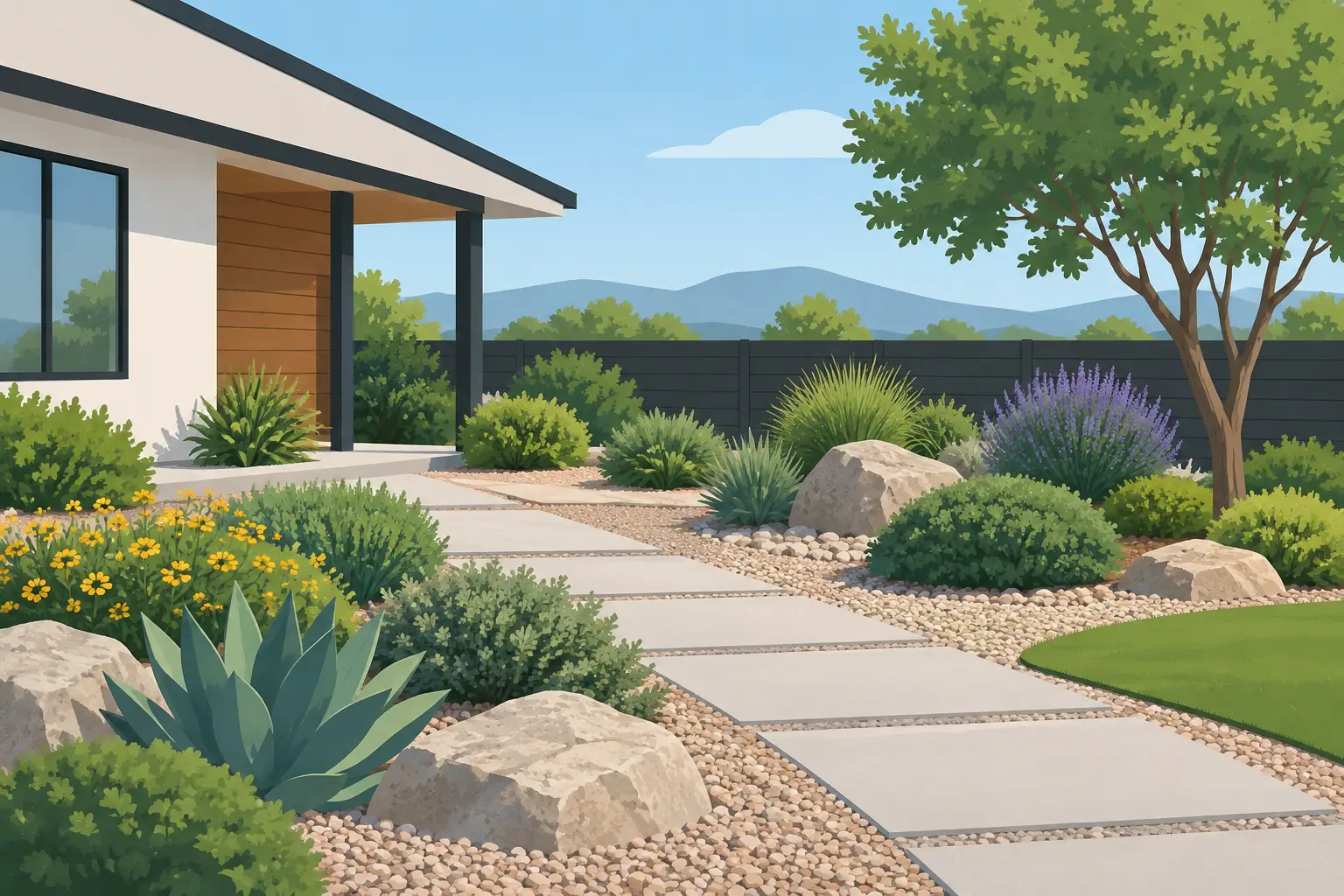
A low-upkeep yard should not look like a yard nobody cares for. It should look intentional: clean edges, healthy plants, usable outdoor space, and fewer weekends spent pulling weeds or replacing struggling shrubs. Learning how to design a low upkeep landscape starts with choosing the right layout and materials for the property, not simply filling beds with plants labeled easy care.
For homeowners and property managers, the goal is a landscape that holds up through Kentucky heat, heavy rain, leaf drop, and changing seasons without demanding constant attention. The best designs reduce recurring chores while still protecting curb appeal and making the property feel well maintained.
Start With a Low-Upkeep Landscape Plan
Low maintenance begins before the first plant goes into the ground. A good plan considers sun exposure, slope, drainage patterns, existing trees, traffic areas, and how the space will actually be used. A front entrance has different needs than a backyard patio, a commercial property frontage, or a side yard where the mower barely fits.
Start by identifying the areas that currently create the most work. Maybe a steep bank is difficult to mow, a planting bed collects weeds, or water pools beside the driveway after a storm. Those are not problems to cover up with more turf or more plants. They are opportunities to change the design.
For example, a hard-to-mow slope may be better served by a retaining wall, grouped groundcovers, and mulch than by grass. A muddy low spot may need drainage correction before it receives new sod or landscaping. Fixing the underlying condition costs more upfront in some cases, but it prevents a cycle of failed plants, erosion, and repeated repairs.
Give Each Area a Clear Job
A landscape becomes high upkeep when every square foot asks for a different kind of attention. Keep the design simple by creating larger, purposeful zones: lawn for open activity, planting beds for color and structure, hardscape for walking and entertaining, and utility areas that remain easy to access.
Avoid narrow strips of grass between beds, fences, and sidewalks. They are awkward to mow and often turn brown or weedy. It is usually more practical to expand a planting bed, add a clean edging line, or use pavers in a high-traffic spot.
Choose Plants That Fit the Site
The biggest mistake in low-maintenance landscaping is choosing plants based only on appearance. Even a beautiful plant becomes demanding if it needs more shade, water, or space than the site provides.
Choose plants according to the amount of direct sun they receive, the soil's drainage, and their mature size. Plants that are crowded from day one require frequent pruning. Plants installed too far apart can leave bare soil exposed to weeds for years. A balanced planting plan fills in attractively without turning into a trimming project every month.
In the Louisville, Oldham County, and Shelby County area, durable shrubs, ornamental grasses, native or well-adapted perennials, and properly selected small trees can provide dependable structure through multiple seasons. Evergreens can anchor a bed in winter, while flowering perennials and grasses add changing color and texture without requiring a full seasonal replant.
Low upkeep does not mean choosing only green shrubs. It means limiting the number of plant varieties and repeating reliable choices throughout the property. Repetition makes a landscape feel organized, simplifies care, and allows plants with similar water and pruning needs to stay together.
Be Careful With Fast-Growing Plants
Fast growth can sound appealing when a new landscape looks sparse, but it often creates more work later. Shrubs that quickly outgrow their location need frequent shearing, which can leave them thin, uneven, or stressed. Aggressive spreaders can also push into lawns, walkways, and neighboring beds.
Ask how large a plant will be in five to ten years, not just how it looks at the garden center. A landscape that has room to mature is easier to maintain and usually looks better over time.
Reduce Lawn Where It Does Not Work
A healthy lawn is a valuable part of many properties, but turf is not automatically the lowest-maintenance option. Grass needs mowing, edging, weed control, seasonal feeding, and occasional aeration or overseeding. In the right place, those services are worthwhile. In the wrong place, turf becomes an ongoing frustration.
Consider reducing lawn in deep shade, steep grades, narrow side yards, and areas around large tree roots. These locations often struggle because grass is competing for sunlight, moisture, or soil space. Replacing them with mulch beds, shade-tolerant plantings, or a practical hardscape feature can reduce maintenance while improving the look of the property.
On the other hand, do not remove lawn just to avoid mowing if the area is used for children, pets, events, or recreation. A well-designed lawn may be the most functional option. The key is to keep its shape simple. Broad, open turf areas are faster to mow and easier to keep looking neat than lawns broken into small, curved patches.
Use Hardscape to Eliminate Repeat Work
Patios, walkways, paver borders, and retaining walls can reduce maintenance when they solve a real property need. A paver walkway prevents worn footpaths. A patio creates a defined gathering space instead of asking the lawn to absorb constant traffic. A retaining wall can turn a difficult slope into usable, level space.
Hardscape also needs thoughtful installation. Poor base preparation, weak drainage, or an undersized wall may lead to settling, shifting, and repair work later. Quality materials and proper construction matter because the purpose is long-term convenience, not just an immediate visual upgrade.
Use hardscape with restraint. Covering every open area with pavers can increase runoff, add heat, and make a home feel less welcoming. A good design blends planted areas with durable surfaces so the property remains practical, attractive, and comfortable.
Make Mulch and Edging Work Harder
Mulch is one of the simplest ways to make a landscape easier to manage. It helps hold soil moisture, protects roots from temperature swings, limits many annual weeds, and gives planting beds a finished appearance. It is not a permanent weed barrier, and it will need refreshing, but it can substantially reduce the amount of hand weeding required.
Apply mulch at a sensible depth, generally around two to three inches in established beds. Piling it against tree trunks or the bases of shrubs can trap moisture and cause problems. Keep a small gap around stems and trunks so air can circulate.
Edging is equally useful when it creates a clear, mowable boundary between lawn and beds. Steel, stone, pavers, or a professionally cut natural edge can all work. The right choice depends on the property's style and budget, but a crisp boundary saves time during mowing and keeps mulch from washing or spreading into turf.
Plan for Water Before Plants Need It
Watering is where many low-maintenance landscapes become unexpectedly demanding. Plants need regular moisture while they establish, even if they are drought tolerant once mature. New sod, trees, shrubs, and perennials all need a consistent watering plan during their first growing season.
A properly designed sprinkler system or targeted drip irrigation can make this easier, especially for larger properties, commercial sites, or beds with valuable plantings. Drip irrigation directs water closer to roots and can reduce waste compared with spraying an entire bed. However, irrigation is not a substitute for good plant selection. Installing thirsty plants and relying on a system to keep them alive still creates higher operating costs and more maintenance.
Pay attention to drainage as well. Too much water can be just as damaging as too little. Downspouts, slopes, compacted soil, and paved surfaces can all direct water into places where plants fail. Addressing runoff early protects the landscape and helps preserve foundations, walkways, and retaining walls.
Build Seasonal Care Into the Design
Every landscape needs some care. Low upkeep means the work is predictable and manageable, not nonexistent. Plan for spring cleanup, mulch touch-ups, pruning at the appropriate time, lawn service, leaf removal, and winter preparation where needed.
Choose trees with leaf drop in mind. A large mature tree can be a major asset for shade and character, but it also brings seasonal cleanup. That is a reasonable trade-off for many properties. The practical decision is to avoid placing heavy leaf-producing trees directly over gutters, patios, pools, or high-traffic entrances unless you are prepared for the added cleanup.
For busy homeowners and commercial property managers, consistent maintenance is often what protects the investment. Regular mowing, bed care, weed control, and seasonal cleanups keep small issues from becoming expensive corrections. MowAction Lawn Care Services can help coordinate routine care with larger improvements, so the property has one dependable plan rather than a collection of unfinished tasks.
A low-upkeep landscape should give you more time to enjoy the property, not leave you with a bare or generic yard. Choose fewer, better elements, solve drainage and access problems early, and give every lawn area, bed, and hardscape feature a clear purpose. That approach creates an outdoor space that stays attractive through the seasons and asks far less of you in return.