

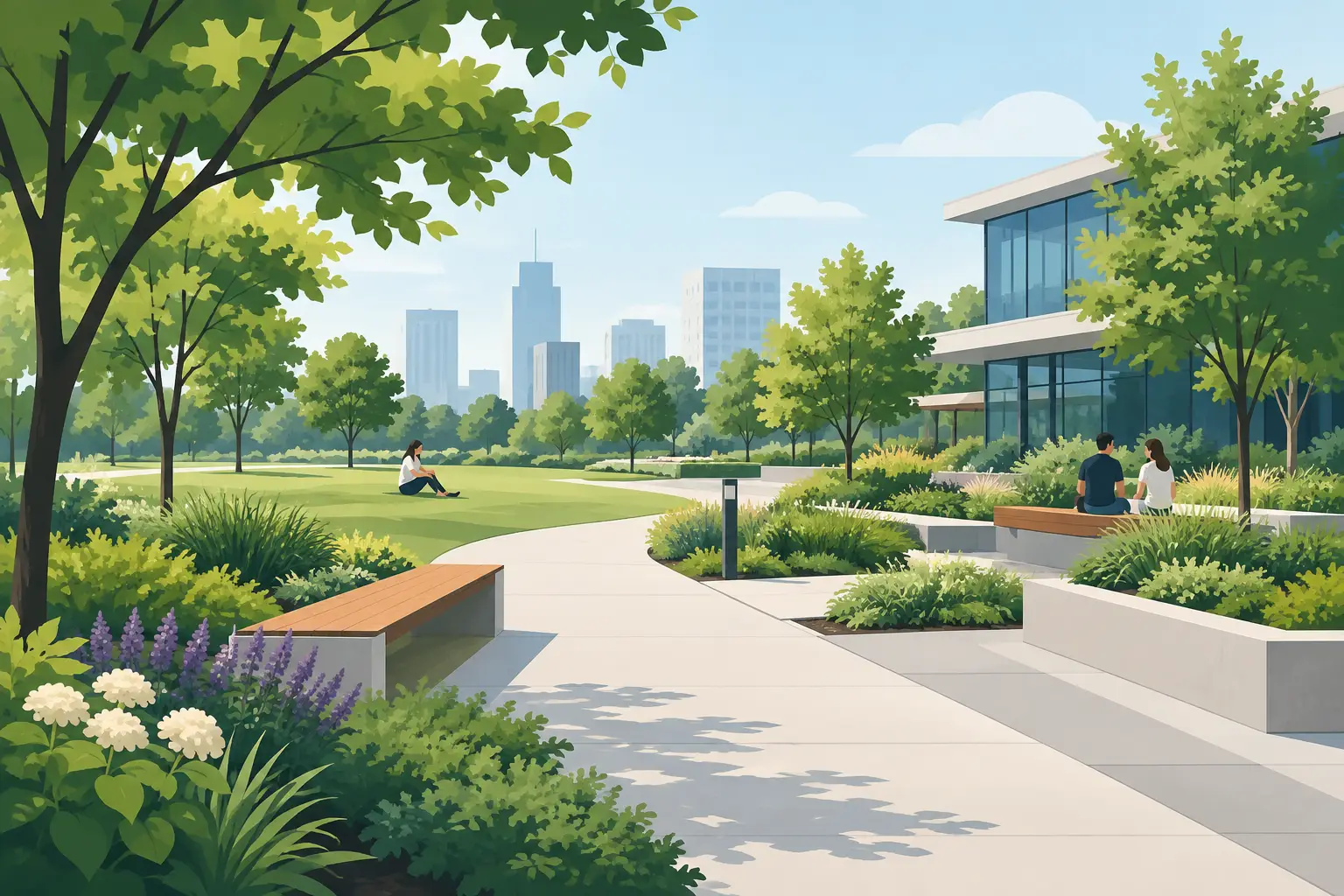
A beautiful property is not just a collection of plants, pavers, and mulch. It is a place that needs to work when rain comes down hard, when guests arrive, when children play outside, and when you simply want to relax after a long day. Landscape architecture brings those needs together into one thoughtful plan, helping homeowners and property managers create outdoor spaces that look better and perform better year after year.
For properties across Louisville, Oldham County, and Shelby County, that practical planning matters. Kentucky weather can expose weak drainage, poorly chosen plants, and hardscape work that was never built for changing conditions. A well-designed landscape considers the whole property before the first shrub is planted or the first paver is set.
What Landscape Architecture Really Means
Landscape architecture is the planning and design of outdoor spaces with both appearance and function in mind. It looks at how people move through a property, where water goes, how sunlight changes throughout the day, what needs privacy, and which areas deserve attention from the street.
That may mean creating a welcoming front entry with planting beds and landscape lighting. It may mean designing a patio that fits the way a family actually entertains. For a commercial property, it can mean improving traffic flow, visibility, safety, and the first impression customers get before they walk through the door.
The difference is in the coordination. Rather than treating mowing, planting, drainage, irrigation, retaining walls, and lighting as unrelated projects, a complete plan makes them work together. The result is less guesswork, fewer expensive corrections later, and an outdoor space that feels intentional.
Start With How the Property Needs to Work
The best design starts with questions, not a plant list. How is the yard used now? What is frustrating about it? Where does water collect? Is the front of the home hard to see at night? Does the property need a better place for grilling, gathering, parking, or walking safely?
A homeowner may need a low-maintenance backyard that still has room for weekend cookouts. A property manager may need durable planting areas that hold up under regular foot traffic and are easy to maintain. Those are different goals, and they should lead to different design choices.
It also helps to think beyond the first season. A small ornamental tree might look perfect at installation, but it can become crowded near a walkway or roofline as it matures. A patio may look generous on paper but feel cramped once furniture, a grill, and guests are added. Good planning accounts for the way the space will be used over time.
Site Conditions Shape Every Smart Decision
No two properties have the same conditions. Grade, soil, sun exposure, existing trees, utility lines, drainage patterns, and access for equipment all affect what makes sense. A shaded side yard calls for a different planting strategy than a sunny front bed. A sloped backyard may need grading or a retaining wall before it is ready for sod, planting, or a patio.
Water deserves special attention. Standing water can damage turf, weaken hardscapes, create muddy traffic areas, and make a property harder to enjoy. Sometimes the answer is a drainage solution. In other cases, careful grading, a properly placed planting bed, or a revised downspout path can solve the problem. The right approach depends on the source of the water and the layout of the property.
The Core Elements of a Complete Outdoor Plan
A strong landscape design usually combines several elements, but every property does not need every feature. The goal is not to add more. It is to make the right improvements in the right order.
Planting Design That Does Not Become a Chore
Plants bring color, texture, shade, and seasonal interest, but they also create ongoing maintenance needs. The best planting plan balances visual impact with the time and budget available for care. Shrubs that outgrow their location, beds with too many high-maintenance flowers, or plants poorly suited to local conditions can turn a promising project into a constant headache.
A practical design uses plant sizes, spacing, and mature growth habits wisely. It can include seasonal color where it will be noticed, while relying on reliable foundation plants to carry the landscape through the year. Mulch, clean bed edges, and weed control help keep those areas looking finished, but smart plant selection reduces the workload from the start.
Hardscaping With a Purpose
Patios, walkways, paver areas, retaining walls, and steps give a property structure. They guide people where they need to go and make usable space out of areas that might otherwise sit empty. A well-placed walkway can protect a lawn from foot traffic. A retaining wall can manage elevation changes while creating a level area for planting or entertaining.
Hardscaping needs careful installation because small errors can become visible problems. Poor base preparation, weak edge restraint, incorrect slope, or inadequate drainage can lead to shifting pavers, pooling water, and premature repairs. Saving money on the unseen parts of a project often costs more later. Durable materials and proper preparation are worth discussing before construction begins.
Lighting, Irrigation, and Long-Term Care
Landscape lighting is often treated as a finishing touch, but it can serve practical purposes as well. It can improve visibility around entries, walkways, steps, and gathering areas while highlighting a home, mature trees, or architectural features. The key is placement. Too much light can feel harsh, while well-aimed fixtures create a safer, more welcoming look.
Irrigation is another decision that should connect to the larger plan. New sod, young plants, and planted beds need dependable water while they establish. A sprinkler system can make that easier, particularly on larger properties, but it needs to be installed and adjusted correctly. Watering schedules should reflect weather, soil conditions, and plant needs rather than running on the same setting all year.
Routine lawn maintenance, pruning, weed control, seasonal cleanups, and leaf removal protect the investment made in the design. Even a well-planned property needs consistent care. The advantage of working with one dependable outdoor service provider is that maintenance teams can understand the original plan and notice concerns before they become larger repairs.
Choosing the Right Project Scope
Not every property needs a full redesign. Sometimes a focused update delivers the greatest value: refreshing overgrown front beds, repairing a failing walkway, installing sod in bare areas, or adding a patio where the family will use it most. A phased plan can be a smart choice when there are several goals but one budget.
Start with issues that affect function and longevity. Drainage, grading, unsafe steps, failing retaining walls, and irrigation problems should generally come before decorative upgrades. Once those fundamentals are addressed, it is easier to invest confidently in planting, lighting, and finishing details.
Curb appeal also has real value, especially for homes preparing for sale and commercial properties competing for attention. Clean edges, healthy turf, defined beds, and an inviting entrance communicate care before a visitor says a word. Still, curb appeal should not come at the expense of practical needs. The strongest properties look good because they are well planned and well maintained.
A Better Process From Estimate to Ongoing Care
A reliable landscape project begins with a site visit and an honest conversation about priorities. Clear communication matters because it prevents surprises around budget, timing, materials, and maintenance expectations. Homeowners and property managers should feel comfortable asking why a recommendation is being made, what alternatives exist, and what care the finished project will require.
MowAction Lawn Care Services approaches outdoor improvements with that same practical mindset: understand the property, explain the options, and put in the effort needed to deliver work that holds up. Whether the need is routine maintenance or a larger landscape improvement, dependable service and professional-grade equipment make a visible difference.
Your outdoor space should make life easier, not give you another weekend project to worry about. Start with the problems you want solved, build a plan around the way you use the property, and choose improvements that will keep earning their place long after installation day.