

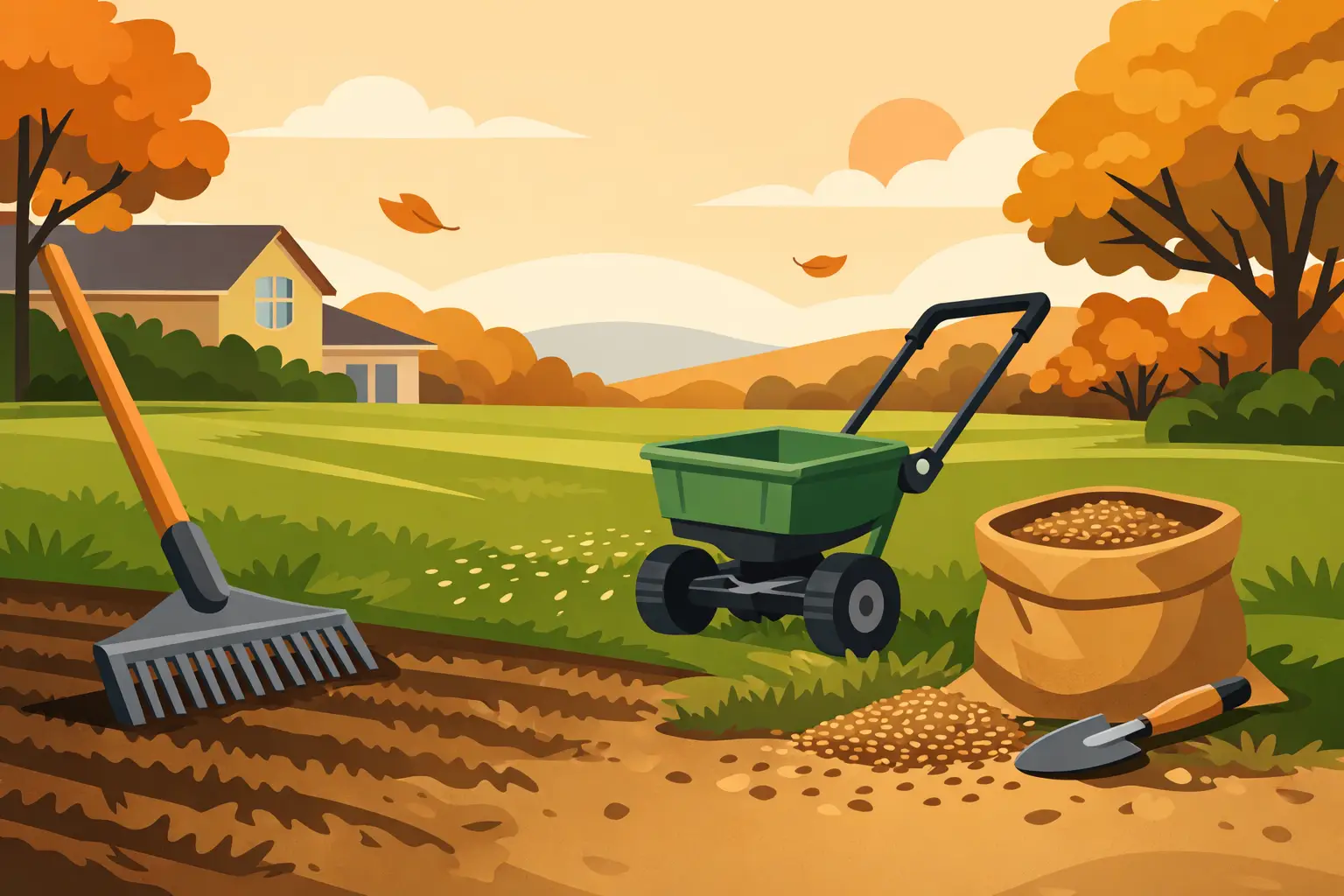
Thin grass rarely fixes itself with more fertilizer or a few extra watering days. When a lawn has bare spots, weak color, or turf that has thinned beneath summer heat and foot traffic, new seed can make a visible difference. Knowing how to prepare a lawn for overseeding is what separates a patchy result from a fuller, healthier stand of grass.
For homeowners and property managers in Louisville, Oldham County, and Shelby County, preparation matters even more because Kentucky lawns often deal with compacted clay soil, humid summers, shade from mature trees, and heavy seasonal use. Overseeding works best when new grass seed can reach the soil, receive steady moisture, and grow without being crowded out by weeds or excess thatch.
Start With the Right Overseeding Window
For most cool-season lawns in Kentucky, early fall is the best time to overseed. Late August through October usually provides warm soil for germination along with cooler air temperatures that reduce stress on young grass. The exact timing depends on the weather, but the goal is to give seedlings several weeks to establish before hard freezes arrive.
Spring overseeding is possible, especially when winter damage leaves obvious bare areas. It is also more challenging. Young grass must compete with summer heat, annual weeds, and a shorter establishment period. If a lawn can wait, fall typically delivers a better return on the time and seed you invest.
Before scheduling the work, look at the forecast. Avoid seeding immediately before a heavy downpour that could wash seed away, particularly on slopes. A mild stretch with regular access to water is ideal.
Check Why the Lawn Is Thin Before Adding Seed
Overseeding improves density, but it does not solve every underlying lawn problem. If grass has thinned because irrigation coverage is poor, drainage is weak, tree shade is excessive, or compacted soil prevents roots from growing, the new seed may struggle in the same places.
Walk the property and look for patterns. Thin turf along driveways, sidewalks, and play areas often points to compaction or heat stress. Bare ground under dense tree canopies may need a shade-tolerant seed blend, selective pruning, or a different landscape solution. Low areas that stay wet after rain may require drainage attention before seed is spread.
A simple soil test can also prevent guesswork. Soil pH and nutrient levels affect how well both existing turf and seedlings use fertilizer. Applying fertilizer without knowing what the lawn needs can waste money and may encourage weeds or excessive top growth instead of stronger roots.
Mow Low and Clear the Surface
The first hands-on step in preparing a lawn is mowing it shorter than normal. Cut the grass to about 1 1/2 to 2 inches, then collect the clippings. This opens the canopy so seed can fall closer to the soil rather than resting on tall blades of grass.
Do not scalp the lawn down to bare dirt. An overly aggressive cut can stress existing turf and expose the soil to drying. The objective is to reduce competition and improve seed-to-soil contact, not damage the lawn you want to thicken.
After mowing, remove leaves, sticks, and heavy grass debris. A clean surface makes every following step more effective. On commercial properties, this cleanup is especially useful around entrances, sidewalks, parking areas, and landscaped edges where debris can collect and prevent even seed coverage.
Relieve Compaction With Core Aeration
Core aeration is one of the most valuable steps before overseeding, particularly in Kentucky’s heavier soils. A core aerator pulls small plugs of soil from the lawn, creating openings where air, water, nutrients, and roots can move more freely. Those holes also give grass seed a better place to settle and germinate.
Aeration is a strong choice for lawns that feel hard underfoot, receive regular foot traffic, or show water puddling instead of soaking in. It is also helpful when a lawn has gone through a demanding summer. For best results, aerate when the soil is slightly moist, not muddy and not bone dry.
Leave the soil plugs on the surface. They break down naturally and return soil and organic material to the lawn. Raking them away removes part of the benefit.
Dethatching can be useful, but it is not automatically required. Thatch is the dense layer of dead stems and roots that sits between green grass and soil. A light layer is normal and can protect the lawn. If thatch is thicker than about a half-inch and seed cannot reach the soil, a dethatching pass may help. If the lawn is simply compacted, core aeration is usually the better and less disruptive option.
Address Weeds Carefully
Weeds compete with new seedlings for space, water, and sunlight. Large weed populations should be addressed before overseeding, but timing matters. Many weed control products require a waiting period before grass seed can be planted. Always follow the product label, because some herbicides can prevent new seed from germinating for several weeks or longer.
If overseeding is planned soon, it may be smarter to pull isolated weeds by hand or postpone broad weed control until the new grass is established. Once seedlings have been mowed several times and are growing well, a lawn care professional can recommend an appropriate weed management plan.
Avoid using pre-emergent weed control before overseeding. Pre-emergents are designed to stop seeds from sprouting, and they cannot tell the difference between crabgrass seed and the grass seed you want to grow.
Choose Seed That Fits the Property
The right seed mix depends on sun exposure, soil conditions, and how the lawn is used. Tall fescue is a common choice for Kentucky lawns because it handles heat, has a deep root system, and performs well in many residential settings. Fine fescue varieties can be useful in shadier areas, while Kentucky bluegrass may be included for its ability to spread and fill in over time.
A quality blend is often a better choice than a single variety because it gives the lawn more resilience. Look for fresh seed with a high germination rate and minimal weed seed content. Bargain seed can be tempting, but poor-quality mixes may produce thin turf, unwanted grasses, or disappointing establishment.
Apply seed evenly with a broadcast spreader. Divide the recommended amount in half, spread one pass in one direction, and make the second pass perpendicular to the first. This crosshatch method helps prevent stripes and bare bands. More seed is not always better. Overcrowded seedlings compete with each other and may develop shallow roots.
Get the Seed Into Contact With Soil
After spreading seed, lightly rake the lawn or make a gentle pass with a lawn roller. The goal is to press seed into the soil surface, not bury it deeply. Most grass seed needs light to germinate, so a heavy layer of soil on top can reduce results.
If the lawn has uneven bare areas, a light topdressing of screened compost or quality topsoil can help improve the seedbed. Keep it thin, usually no more than one-quarter inch. Thick topdressing can smother existing grass and create an uneven grade.
A starter fertilizer may support early root development, but it should be selected based on soil-test results whenever possible. A lawn with high phosphorus, for example, may not benefit from a standard starter formula. Thoughtful application protects the property and avoids putting more product on the lawn than it needs.
Water for Germination, Then Build Stronger Roots
Water is the deciding factor after overseeding. For the first two to three weeks, keep the top layer of soil consistently damp. That often means light watering once or twice a day, depending on temperatures, wind, sun exposure, and rainfall. The surface should not dry out completely, but it should not stay soggy either.
After seeds germinate and seedlings begin to grow, gradually shift to less frequent, deeper watering. This encourages roots to move downward instead of remaining near the surface. Areas under trees, along hot pavement, or on slopes may need extra attention because they dry faster.
Do not rely only on a sprinkler timer. Check the lawn by hand, especially after a warm or windy day. An irrigation system can make this process easier, but every zone should be adjusted for its actual coverage and the season’s weather.
Protect New Grass Until It Is Established
New grass needs patience. Keep foot traffic, pets, and equipment off seeded areas as much as possible until the seedlings are established. Mow for the first time when the new grass reaches about 3 to 4 inches tall, using a sharp mower blade and removing only the top third of the growth.
Continue mowing at an appropriate height rather than cutting the lawn short. Taller turf shades the soil, supports deeper roots, and helps reduce weed pressure. Hold off on heavy weed treatments until the new grass has been mowed several times.
If your property needs aeration, seed selection, irrigation adjustments, and routine follow-up, coordinating the work with one dependable lawn care team can take the pressure off a busy fall schedule. MowAction Lawn Care Services helps homeowners and commercial property owners build thicker lawns with practical recommendations and professional-grade equipment.
A well-prepared overseeding project is not about spreading seed and hoping for rain. Give that seed clean soil contact, steady moisture, and room to grow, and your lawn will have a much better chance to look fuller when spring returns.