

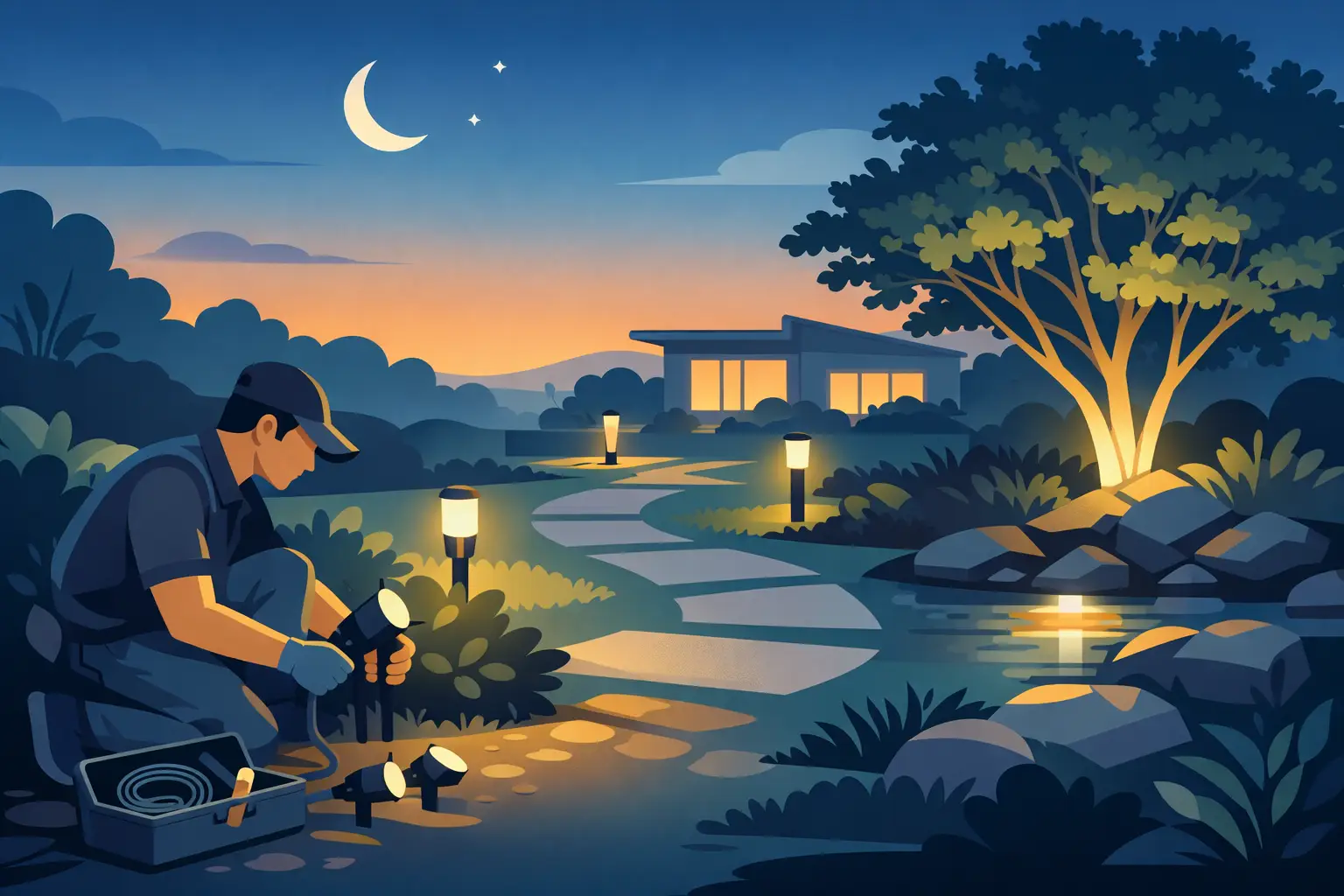
A dark front walk can make even a well-kept property feel unfinished. The right landscape lighting installation changes that fast. It adds safety where people step, highlights the parts of your property you have invested in, and gives your home or commercial space a polished look long after the sun goes down.
For many property owners in Crestwood, Middletown, Prospect, and nearby areas, outdoor lighting starts as a simple idea - make the house look better at night. Then the practical side shows up. You want guests to see the entry clearly. You want patios and walkways to feel more usable. You may also want to light signs, gathering areas, steps, retaining walls, or key landscape features without making the yard look harsh or overdone. That is where good planning matters.
What landscape lighting installation should accomplish
A strong lighting plan does more than brighten the yard. It creates balance between appearance, function, and long-term reliability. If one of those is missing, the result usually feels off.
Curb appeal is the first thing most people notice. Soft light on the front of the home, trees, planting beds, or masonry can make the entire property look cleaner and more finished. On commercial properties, the same principle helps entrances feel more inviting and gives clients or tenants a better first impression.
Safety is just as important. Walkways, drive lanes, steps, pool areas, and transitions between surfaces should be easy to see. The goal is not to flood everything with brightness. It is to guide people naturally and reduce dark spots where footing is less certain.
Usability is the third piece. Patios, outdoor seating areas, and backyard gathering spaces often sit unused after sunset simply because there is not enough well-placed light. A thoughtful system extends the time you can comfortably enjoy those spaces.
Where landscape lighting makes the biggest difference
Not every part of a property needs equal attention. In most cases, the best results come from focusing on the areas that affect movement, visibility, and overall presentation.
Entryways and walkways
The front walk, porch approach, and side access points are usually top priorities. Path lights help define where to walk, but spacing matters. Too many fixtures can create a runway effect. Too few can leave dead zones. A cleaner look often comes from using fewer, well-placed fixtures with the right beam spread.
Architectural features
Stone facades, columns, textured walls, and front elevation details look very different after dark. Uplighting can add depth and make the home stand out without looking flashy. On commercial buildings, lighting can strengthen visibility and professionalism, especially near entrances and signage.
Trees and planting beds
Mature trees, ornamental plantings, and layered beds create natural focal points. When lit correctly, they add dimension to the entire yard. This is one area where restraint helps. A few well-chosen accents usually look better than trying to illuminate every shrub on the property.
Outdoor living areas
Patios, seating walls, outdoor kitchens, and entertainment spaces need practical light, but they also need comfort. Bright glare can ruin the atmosphere. Low-voltage fixtures, subtle downlighting, and carefully placed accent lights often create a more usable and inviting space.
Choosing the right fixtures and layout
A successful landscape lighting installation depends on matching the fixture type to the job. Homeowners sometimes focus only on style, but performance matters just as much.
Path lights work best for guiding movement along sidewalks, garden edges, and approach routes. Spotlights and uplights are typically used for trees, facades, and vertical features. Wash lights spread light more broadly across walls or planting areas. Hardscape lights can be built into steps, retaining walls, or seat walls to improve visibility without adding visual clutter.
The layout should also account for what the property looks like during the day. Fixtures need to blend into the landscape rather than distract from it. That means paying attention to fixture finish, scale, concealment, and wire routing.
Brightness is another area where it depends. More light is not always better. Overlighting can flatten the landscape, create glare, and make the property feel less welcoming. A better approach is layered lighting - enough illumination for safe movement, combined with selective accents that create depth and highlight key features.
LED systems, low voltage, and other practical decisions
Most modern outdoor systems use LED fixtures, and for good reason. They are energy efficient, long lasting, and available in a wide range of color temperatures and output levels. For most residential and many commercial applications, low-voltage systems offer a dependable and cost-effective option.
Low voltage is popular because it is versatile and efficient for landscape use. It works well for paths, gardens, patios, and accent lighting. Line-voltage lighting may still have a place in certain situations, especially when stronger output is needed, but it is not the default for most landscape designs.
Color temperature affects the final look more than many people expect. Warmer light often feels more natural and welcoming on homes, planting beds, and outdoor living spaces. Cooler light can feel sharper and more commercial. Neither is automatically wrong, but the choice should fit the property and the intended look.
Controls also matter. Timers, photocells, and smart controls can help the system run efficiently and keep the lights on when needed. For busy homeowners and property managers, automatic scheduling is a simple upgrade that makes the system easier to live with.
Why installation quality matters
Good fixtures cannot make up for poor installation. If wires are exposed, transformers are undersized, connections are weak, or fixture placement is rushed, the system will show problems sooner rather than later.
Professional installation is about more than getting the lights to turn on. It includes proper load planning, clean wire runs, secure connections, thoughtful aiming, and adjustments after dark. Those last adjustments are especially important. Lighting that looks fine in daylight may need to be repositioned once the sun goes down and the actual effect is visible.
There is also the issue of property protection. Landscape beds, lawns, irrigation lines, hardscapes, and root zones all need to be considered during installation. A team that already understands landscaping and exterior property systems has an advantage here because the lighting work can be coordinated with the rest of the yard instead of treated as a separate afterthought.
Landscape lighting installation for homes and commercial properties
Residential and commercial projects often share the same basic principles, but the priorities can be different.
For homeowners, the focus is usually on curb appeal, security, and backyard enjoyment. The lighting needs to feel attractive and comfortable while making entrances, pathways, and gathering spaces easier to use.
For commercial properties, visibility, safety, and presentation often take the lead. Customers, tenants, and employees need clear access after dark. Entrances should be easy to identify, and the property should look maintained and professional. In some cases, lighting may also support wayfinding, signage, or common-use areas.
That difference is why there is no one-size-fits-all design. A quiet residential street in Prospect may call for a softer, more selective approach than a commercial property near a busier route in Middletown.
Planning for maintenance and long-term value
Outdoor lighting systems live in the weather, so maintenance should be part of the conversation from the start. Even quality systems need occasional adjustments, fixture cleaning, wire checks, and lamp or component replacement over time.
Leaves, mulch shifts, plant growth, and seasonal changes can affect performance. A fixture that looked perfect in spring may be blocked by summer growth or buried after a bed refresh. That does not mean the installation was wrong. It means the landscape changes, and the lighting should be checked with that in mind.
The long-term value of landscape lighting comes from more than appearance. It can improve how the property functions, help people move around more safely, and make outdoor spaces feel like a real extension of the home or business. When designed and installed well, it is one of the few exterior upgrades that keeps working every evening without demanding much attention.
If you are considering landscape lighting installation, the smartest place to start is with your priorities. Maybe it is the front entry, the patio, a dark side yard, or the overall nighttime look of the property. Once those goals are clear, the right plan becomes much easier to build - and the finished result feels like it belongs there from day one.