

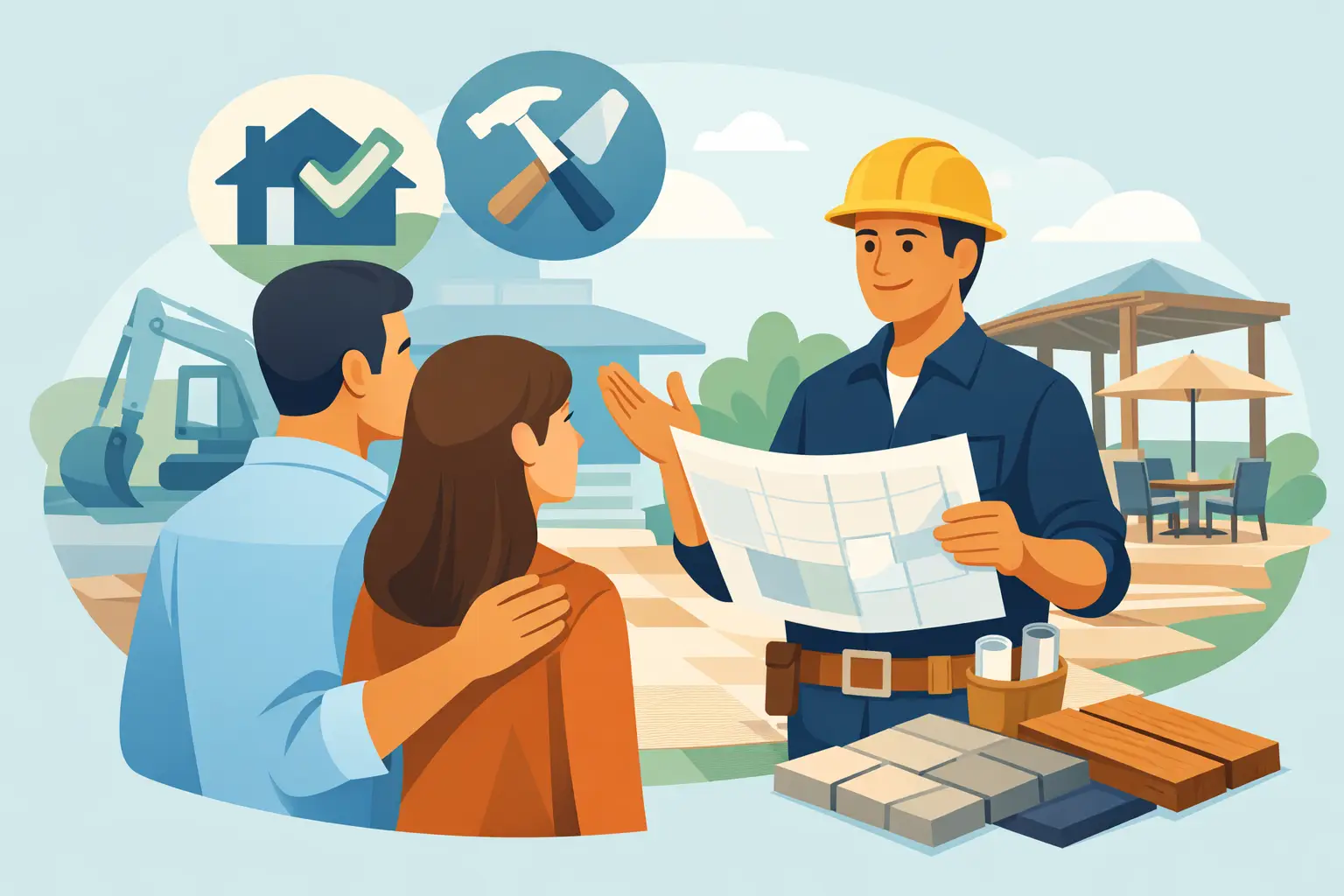
A good patio changes how you use your property. It turns an empty patch of yard into a place for cookouts, quiet mornings, family time, or a better-looking outdoor area that finally feels finished. But the results depend heavily on the patio construction contractor you hire.
If you choose the right team, the project feels organized, the design fits your property, and the finished patio holds up through Kentucky weather. If you choose the wrong one, small mistakes in grading, drainage, base prep, or material selection can turn into standing water, shifting pavers, cracked surfaces, and a patio that never looks quite right. That is why it pays to slow down before you sign a proposal.
What a patio construction contractor should really handle
A patio is not just a flat surface with pavers on top. It is part of your larger landscape, and it needs to work with your yard, your home, and the way water moves across the property. A dependable contractor should look at slope, drainage, traffic patterns, sun exposure, and how the patio connects to other features like walkways, retaining walls, lawn areas, lighting, and planting beds.
That matters because a beautiful patio can still be frustrating if it is placed in the wrong spot or built without thinking through daily use. Maybe it gets too much afternoon sun, maybe it creates drainage issues near the foundation, or maybe it feels disconnected from the rest of the yard. A contractor with real outdoor construction experience should help you avoid those problems before the first piece of material is installed.
For homeowners and property managers, this bigger-picture view also makes life easier. When one company understands hardscaping, landscaping, grading, maintenance, and seasonal property care, projects tend to move more smoothly and the finished space feels more intentional.
How to evaluate a patio construction contractor
Price matters, but it should not be the only thing guiding your decision. A lower quote can look appealing at first, especially if you are comparing similar patio sizes. Still, patio work is one of those services where the prep beneath the surface often makes the difference between a patio that lasts and one that starts failing early.
A solid contractor should be able to explain the process clearly. That includes how the site will be prepared, how the base will be built, what materials are being used, how drainage will be handled, and what kind of timeline you should expect. If those answers are vague, rushed, or overly simplified, that is worth paying attention to.
You also want to look for professionalism in the basics. Was the estimate clear? Were your calls returned? Did the contractor listen to how you want to use the space, or did they push one standard layout? Good service during the estimate stage usually says a lot about how communication will go once the project starts.
Experience matters, but relevant experience matters more
Not every contractor who can pour concrete or lay pavers is equally qualified to build the right patio for your property. A patio construction contractor should understand how outdoor living spaces fit into the full landscape. That is especially important in areas where drainage, soil conditions, and seasonal weather can affect long-term performance.
Ask yourself whether the contractor seems focused on lasting results or just getting the job done fast. There is a difference. Fast is not always bad, but speed should never come at the expense of proper excavation, base compaction, edge restraint, or finish work.
Local knowledge is a real advantage
Hiring a local team often means better insight into what works in your area. Soil movement, rainfall patterns, freeze-thaw cycles, and typical yard layouts all affect patio design and installation. A contractor serving Crestwood, Middletown, Prospect, and nearby communities should understand the practical issues local properties face.
That local knowledge can also help with design choices. Some materials hold up better in certain conditions. Some layouts work better for sloped yards. Some outdoor spaces need drainage solutions built in from the beginning. Those details are easier to get right when your contractor has worked on similar properties nearby.
Questions worth asking before the project starts
A good estimate meeting should leave you with confidence, not confusion. You do not need to know every technical detail, but you should understand what you are paying for and how the contractor plans to approach the work.
Ask how the patio location was selected and whether there are any drainage concerns. Ask what material options make the most sense for your goals and maintenance expectations. Ask how the patio will connect to surrounding features and whether the project may benefit from additions like a walkway, retaining wall, border planting, or landscape lighting.
It is also smart to ask what could change the cost after work begins. Sometimes site conditions are not fully visible until excavation starts. A trustworthy contractor will explain that possibility upfront instead of surprising you later.
Cost depends on more than size
Many property owners start with one question: how much will a patio cost? That is fair, but there is no one-size-fits-all number. Size matters, of course, but layout complexity, material choice, grading needs, access to the work area, and site preparation can all affect the final price.
For example, a simple rectangular patio in an open, level backyard is usually more straightforward than a custom-shaped patio with multiple elevations, curves, seating areas, and tight access for equipment. Natural stone may create a very different look than concrete pavers, but it can also change installation time and labor. If drainage corrections or retaining features are needed, the price will rise because the project is doing more work than just creating a surface.
This is where a detailed estimate becomes so important. It helps you compare proposals based on scope, not just a bottom-line number. Two quotes can look similar at first and include very different levels of preparation and finish quality.
Design choices that affect everyday use
The best patios are not always the largest or most elaborate. They are the ones designed around how people actually live. A family that wants room for outdoor dining and a grill setup needs a different layout than a homeowner looking for a small, low-maintenance sitting area off the back door.
Think about movement first. How will people step onto the patio from the house? Will there be enough room for furniture without creating awkward traffic flow? Does the space need shade at certain times of day? Should it connect to a pool, garden, fire feature, or lawn area for kids and pets?
Material choice also affects the daily experience. Some surfaces stay cooler underfoot. Some offer a more formal look. Some are easier to maintain. There is no perfect material for every property. It depends on budget, style, intended use, and how much upkeep you want over time.
Why installation quality shows up later
A patio can look great on day one and still be headed for trouble. That is why installation quality is not always obvious during the final walkthrough. The base depth, compaction, grading, and edge support are what help the patio stay level and drain properly over the long term.
When corners are cut, the issues usually show up after the first heavy rains, the first winter, or a season of regular use. Pavers may separate. Water may collect in low spots. Edges may shift. Repairs can be frustrating because they often involve redoing work that should have been handled properly the first time.
That is one reason many property owners prefer a company that already handles broader landscape and exterior improvement work. A team that understands the whole property is often better equipped to build a patio that does not create new problems elsewhere.
Choosing a contractor you can work with comfortably
Skill matters, but so does trust. You are hiring a crew to work on one of the most visible parts of your property. You should feel comfortable asking questions, discussing options, and being honest about your budget.
A dependable contractor will not make you feel pressured into features you do not need. They should help you understand your options, point out trade-offs, and offer recommendations that fit your property rather than forcing a generic plan. Sometimes that means scaling the design up. Sometimes it means simplifying it and doing the fundamentals well.
For many local property owners, that balance of professionalism and neighborly service matters just as much as the finished patio itself. Companies like MowAction Lawn Care Services understand that outdoor projects are not only about construction. They are about making your home or commercial property more useful, more attractive, and easier to enjoy.
A patio is one of those upgrades you notice every week after it is done. If you choose carefully, you will not just get a new hardscape surface. You will get an outdoor space that feels like it belongs there and keeps earning its place season after season.