

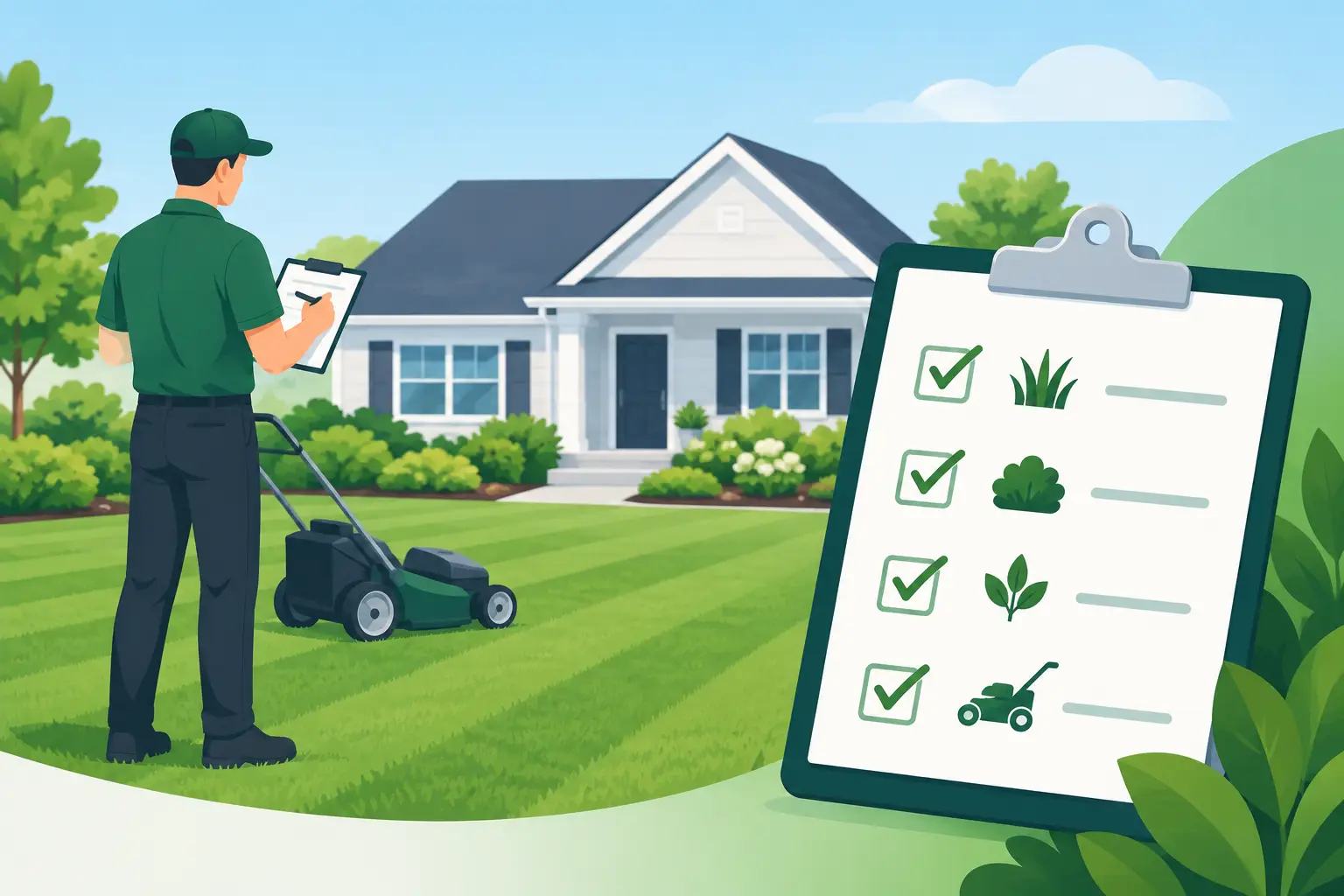

A missed mowing visit can turn a well-kept property into the one yard everyone notices for the wrong reason. A clear lawn service review checklist helps homeowners, property managers, and business owners look beyond a low quote and choose a provider that will show up, communicate clearly, and care for the details that affect curb appeal.
The right company depends on your property, your priorities, and how hands-on you want to be. A small residential lawn may only need dependable weekly mowing, while a commercial site may need mowing, bed maintenance, irrigation support, leaf removal, and snow service coordinated on a schedule. Use the questions below to compare providers with confidence before you commit.
Start With the Work Your Property Actually Needs
Before reviewing companies, define the service you expect. “Lawn care” can mean very different things from one provider to the next. One company may mow and blow clippings from hard surfaces, while another may include edging, weed control, shrub trimming, or seasonal cleanup in a separate package.
Walk your property and make a short list of recurring needs and occasional problems. Consider the size and slope of the lawn, fenced areas, gates, landscaping beds, trees, drainage trouble spots, and whether parked cars or pedestrian traffic affect access. For commercial properties, think about public-facing entrances, sidewalks, common areas, and the appearance standards tenants or customers expect.
Ask each provider to explain exactly what is included in the quoted service. A written scope prevents frustrating assumptions later. If edging, bagging, bed weeding, or hauling away debris matters to you, make sure it is listed rather than assumed.
Lawn Service Review Checklist: Reliability First
A beautiful first cut is good. Consistent work through spring growth, summer heat, fall leaves, and changing weather is better. Reliability is often the difference between a service you barely have to think about and one that creates another item on your to-do list.
When reviewing a lawn company, look for answers to these four questions:
- How often will crews visit, and how do they handle rain delays or rapid spring growth?
- Will the company notify you when a schedule changes, a gate is locked, or a property issue prevents service?
- Is there a clear contact person for questions, service requests, and billing concerns?
- Can the provider maintain the same level of care during busy seasonal periods?
A provider should not promise a specific day in every weather condition. Rain, saturated ground, and extreme heat can require a schedule adjustment. What matters is whether the company has a reasonable plan and communicates it promptly. A dependable crew protects turf by avoiding damage when conditions are poor, then follows up as soon as practical.
For a commercial property, ask about service windows. Early mowing may work well for one location but disrupt another. The best arrangement balances a tidy appearance with the safety and comfort of residents, employees, customers, or visitors.
Look Closely at the Quality of the Finished Lawn
You can learn a lot from a lawn after it has been serviced. The grass should have an even cut, without obvious skipped strips, clumps of clippings, scalped patches, or ragged grass tips. Edges along walks, curbs, and beds should look neat without damaging turf or throwing debris into the street.
Ask how the crew adjusts mowing height through the season. Cutting grass too short may create a temporary “freshly shaved” look, but it can stress the lawn, encourage weeds, and leave it more vulnerable during hot Kentucky summers. A knowledgeable team adjusts its approach based on grass conditions instead of treating every lawn the same.
Also ask how the company protects landscape features. Sprinkler heads, low landscape lighting, young trees, pavers, retaining walls, and garden beds need care around them. A crew using professional-grade equipment should still slow down where precision matters.
If possible, review recent work on a property similar to yours. A provider that does excellent work on wide-open lawns may still need a thoughtful plan for a fenced backyard, a steep lot, or a detailed landscape design with narrow bed lines.
Compare Pricing Without Chasing the Lowest Number
Competitive pricing matters, but the least expensive quote is not always the best value. A low price can reflect a narrower service scope, fewer visits, rushed work, or added fees that appear once the season is underway. A higher quote may include better communication, cleanup, equipment, and a crew prepared to handle the property properly.
Ask for a quote that makes the pricing structure easy to understand. Find out whether rates are charged per visit, monthly, seasonally, or by project. Confirm what happens if the lawn becomes overgrown, if a cleanup is needed before regular service begins, or if an additional visit is requested.
You should also clarify how optional work is approved. Services such as aeration, overseeding, sod installation, weed control, mulching, shrub trimming, irrigation repair, and leaf removal may be worthwhile, but they should not surprise you on an invoice. A professional company explains the recommendation, the cost, and the expected result before work begins.
There is a trade-off here. A simple, predictable mowing plan may be the best fit for a homeowner who enjoys doing seasonal projects personally. For a busy household or a property manager, using one capable provider for routine maintenance and larger exterior needs can save time and reduce the hassle of coordinating several contractors.
Evaluate Communication Before You Need Help
A service relationship is easiest when you can get a straight answer quickly. Pay attention to what happens before you sign up. Was the estimate scheduled and delivered when promised? Did someone listen to your concerns about pets, gates, drainage, parking, or access? Were your questions answered in plain language?
These early interactions usually tell you how communication will work after the first invoice. You want a provider that is friendly and responsive, but also organized enough to document requests and follow through.
Ask how to report an issue if a gate was missed, clippings were left behind, or a section of the lawn needs attention. No service company is perfect every visit. The real test is whether the company takes responsibility, makes it right, and improves the process going forward.
For property managers, communication should include more than a phone number. You may need service records, clear approval procedures, photos for larger work, and advance notice of weather-related changes. Discuss those needs at the beginning instead of trying to build a system during a busy season.
Check Experience, Equipment, and Service Range
Experience matters because lawn maintenance is not just driving a mower across grass. Crews need to recognize poor drainage, turf stress, weed pressure, compacted soil, irrigation leaks, and hazards hidden in tall grass. They also need equipment that is maintained well enough to produce clean cuts and finish work efficiently.
Ask whether the provider can help when the property needs more than mowing. You may not need every service now, but it is useful to know who can assist with seasonal cleanups, landscaping, hardscaping, sprinkler concerns, or snow removal when the need arises. A company with a broader service range can offer practical continuity, especially for commercial sites and homeowners planning outdoor improvements.
That does not mean every job should automatically go to one company. For a major landscape project, compare the proposed design, materials, timeline, and workmanship rather than choosing solely for convenience. Still, working with a local team that already understands your property can be a real advantage.
MowAction Lawn Care Services works with residential and commercial clients who want that kind of dependable, full-property support, from routine mowing to seasonal maintenance and landscape improvements.
Review the Agreement and Your First Month of Service
Before approving service, read the agreement or estimate one more time. Confirm the service frequency, start date, payment terms, cancellation policy, and any special instructions for your property. Make sure the company has the correct contact information and knows about gates, pets, irrigation schedules, or areas that should not be serviced.
During the first month, review the results rather than waiting until a minor concern becomes a bigger frustration. Is the crew arriving within the expected service window? Does the lawn look consistent after each visit? Are hard surfaces and entrances left clean? Is the provider easy to reach?
If something is not right, address it early and specifically. “The yard does not look good” is hard to act on. “The grass near the side gate was skipped, and clippings were left on the patio” gives the crew a clear opportunity to correct the issue.
A lawn service should make property care feel easier, not less predictable. Choose the team that understands your expectations, respects your property, and earns your confidence one well-finished visit at a time.