

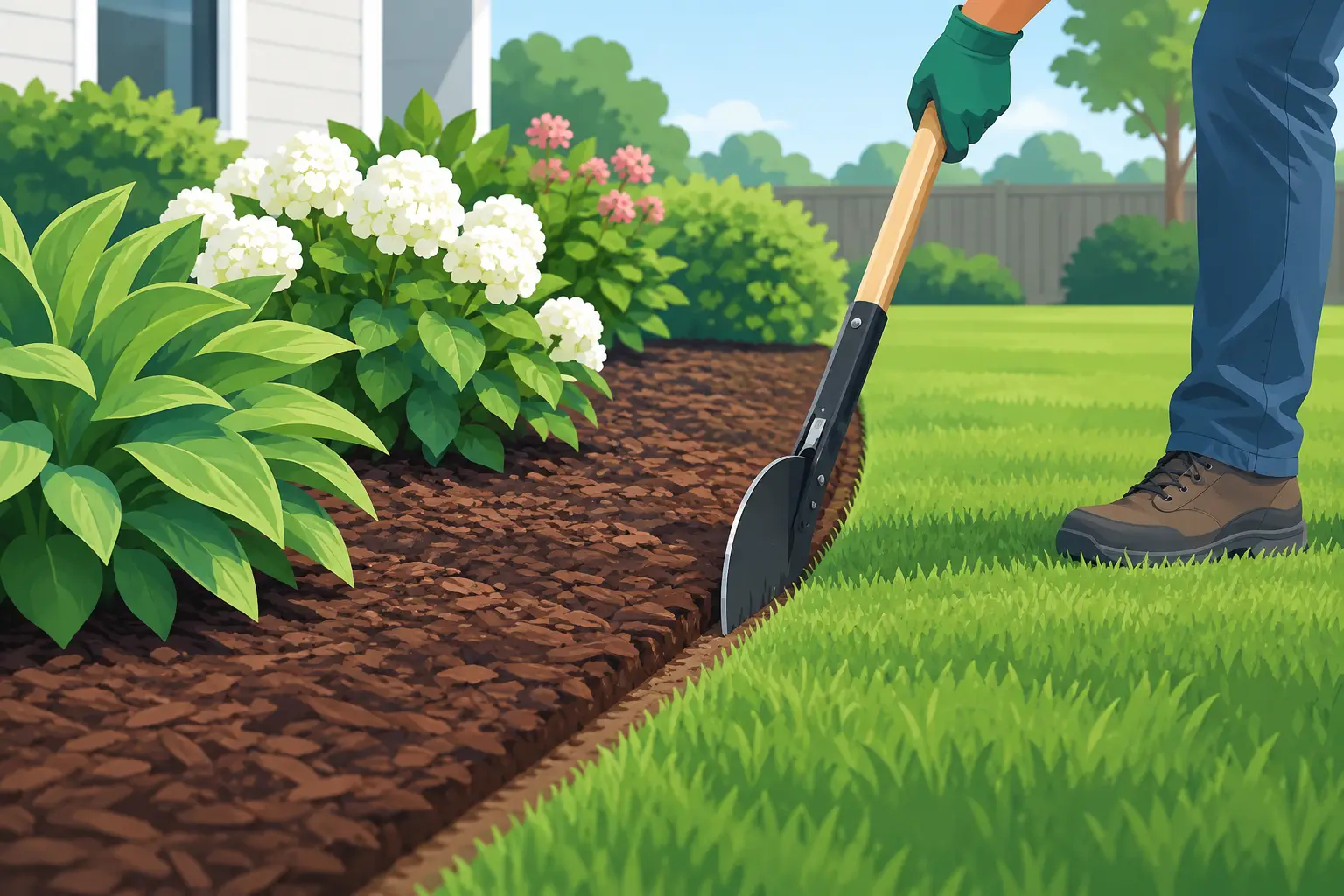

A fresh layer of mulch can make a planting bed look better for a few days. A clean edge is what makes it look finished. Knowing how to edge garden beds gives your lawn and landscape a sharper boundary, keeps grass from creeping into mulch, and makes routine mowing far less frustrating.
For homeowners, property managers, and business owners, edging is one of those small details that has an outsized effect on curb appeal. The good news is that it does not require a major landscape project. It does require a clear plan, the right tool for the edge you want, and a little attention through the growing season.
Start With the Purpose of the Edge
Before cutting a line in the turf, decide what the edge needs to do. Some garden beds only need a crisp separation between lawn and mulch. Others need a physical barrier to hold back gravel, define a paver patio, or prevent soil from washing into a walkway.
A natural, cut edge is usually the best fit for curved planting beds and traditional Kentucky landscapes. It creates a clean line without adding visible material, and it can be refreshed as part of regular lawn maintenance. The trade-off is that grass roots will eventually move back toward the bed, so the edge needs periodic touch-ups.
Hard edging made from steel, aluminum, stone, brick, pavers, or composite material is more permanent. It can be a good choice around formal landscape beds, high-traffic commercial properties, or areas where mulch and decorative stone need stronger containment. Installation takes more time and precision, and poorly installed material can shift, heave, or become an obstacle for mowing.
Choose the Right Tool for Your Beds
The tool should match the size of the bed, the condition of the turf, and how much control you need. A manual half-moon edger is affordable and gives you a deliberate, tidy cut. It is an excellent choice for smaller beds, especially when you are reshaping a line or working close to established plants.
For longer borders, a powered stick edger speeds up the work and creates a consistent vertical trench. A string trimmer can clean up a previously established edge, but it is not always the best tool for creating one. It can scalp turf or throw mulch into the lawn when used too aggressively.
A flat shovel is useful when the turf has grown well into the bed. Use it to lift out strips of sod after making your cut, not to hack at the edge from several directions. Clean cuts protect the shape of the bed and leave less loose soil to clean up afterward.
Gather a rake, wheelbarrow or yard cart, gloves, and eye protection before starting. If you plan to add mulch, have it ready. An open trench looks its best when the bed is freshly weeded and topped off at the same time.
How to Edge Garden Beds With a Natural Cut Edge
The goal is not a deep ditch around every bed. You are creating a distinct, manageable border that looks intentional from the driveway, sidewalk, or patio.
Mark the line before you cut
For an existing bed, use its current shape as a guide, but do not assume the old line is the right one. Grass often slowly pushes inward, making beds look smaller over time. Pull back mulch and identify the intended planting area before you begin.
For a new bed, lay out the curve with a garden hose or marking paint. Stand back and look at it from several angles. Smooth, gradual curves typically look more professional than a series of tight bends. If a line feels awkward from the street, adjust it now rather than after the sod has been removed.
Cut a vertical trench
Set the blade of a manual or powered edger straight down along the marked line. A depth of about 3 to 4 inches is enough for most lawn-to-mulch borders. Keep the cut as vertical as possible. Angled cuts can collapse, and they make the bed look fuzzy after a few mowing cycles.
Work slowly around curves. Forcing a powered edger through a turn can leave choppy marks that are hard to correct. With a manual edger, step firmly on the blade, pull it out, and move forward a few inches at a time.
Remove invading grass and soil
Once the outline is cut, use a shovel to remove the narrow strip of grass between the trench and the planting bed. Shake excess soil from the roots and place the removed turf in a compost pile or yard-waste container if available.
Then pull the mulch back into the bed, keeping it about 2 to 3 inches deep for most landscape areas. Do not pile mulch against shrub trunks, tree bases, siding, or foundations. The edge should frame the mulch, not bury the plants.
Clean the lawn side
Rake loose soil and grass clippings out of the lawn. If needed, use a string trimmer lightly along the turf side to tidy stray blades. The finished edge should be visible without looking overly excavated: a narrow, crisp shadow line between grass and bed is usually all you need.
Installing Permanent Landscape Edging
Hard edging works best when it is treated as a small construction project rather than a quick afternoon shortcut. The base and grade matter as much as the material itself.
Start by digging a trench wide enough for the chosen edging and deep enough to set the top at the right height. Metal and composite edging usually sit nearly flush with the lawn so mower wheels can pass over them. Brick and stone often sit slightly above grade, but not so high that they create a tripping hazard or make trimming difficult.
For pavers, brick, and stone, compact a stable base before setting each piece. Check the line often with a string line or level. A crooked border is noticeable, particularly along straight walks and formal patio edges. Steel edging produces a cleaner, more minimal look, while stone and brick add visual weight and can match existing hardscape features.
Consider maintenance before choosing a material. Decorative plastic edging may be inexpensive, but it can crack, fade, or lift out of the ground. Thin metal edging can bend if struck by equipment. Natural stone looks durable, but irregular pieces require more installation time. The right answer depends on the style of the property, the budget, and who will maintain the space.
Timing Matters in Kentucky Lawns
Spring and fall are ideal times to establish or reshape bed edges. The soil is generally easier to work, temperatures are more comfortable, and you can pair the job with mulch installation, planting, or seasonal cleanup.
Avoid edging during very wet conditions. Saturated clay soil can smear along the trench, compact underfoot, and leave a messy lawn edge. During a dry summer stretch, water the lawn and bed lightly a day before digging if the soil is hard. Moist soil cuts more cleanly than soil that is either muddy or baked solid.
For most properties in Louisville, Oldham County, and Shelby County, a natural edge benefits from a quick refresh two to four times during the growing season. Fast-growing turf, frequent irrigation, and heavy spring rain may call for more attention. A hard edge still needs occasional weeding, mulch adjustment, and inspection for movement.
Avoid the Mistakes That Make Edges Look Rough
The most common mistake is making beds too narrow. When turf slowly invades from every side, shrubs and perennials become crowded and mulch beds lose their definition. Restore the intended bed size rather than simply trimming around the plants.
Another problem is cutting too deeply. A trench much deeper than necessary can collect leaves, wash out during storms, and make it difficult to mow cleanly. Keep the edge functional, not dramatic.
Finally, do not edge once and expect permanent results. Lawn roots grow, mulch settles, and seasonal rain changes the soil line. A consistent maintenance schedule is what keeps the landscape looking cared for instead of freshly repaired.
When Professional Help Makes Sense
A homeowner can maintain a few straightforward beds with basic tools. Larger properties, long commercial borders, steep grades, overgrown beds, and projects involving pavers or retaining walls often benefit from professional planning and equipment. The work moves faster, lines stay consistent, and the broader landscape can be handled at the same time.
MowAction Lawn Care Services can help local property owners refresh garden beds as part of ongoing lawn maintenance, seasonal cleanup, or a larger landscape improvement. A well-defined edge is a simple upgrade, but it helps every flower, shrub, walkway, and lawn area look more intentional.
Take a walk around the property after mowing and look for the places where grass, mulch, and pavement are starting to blend together. Those are the edges worth restoring first. A few clean lines can make the whole yard feel better maintained before you change a single plant.