

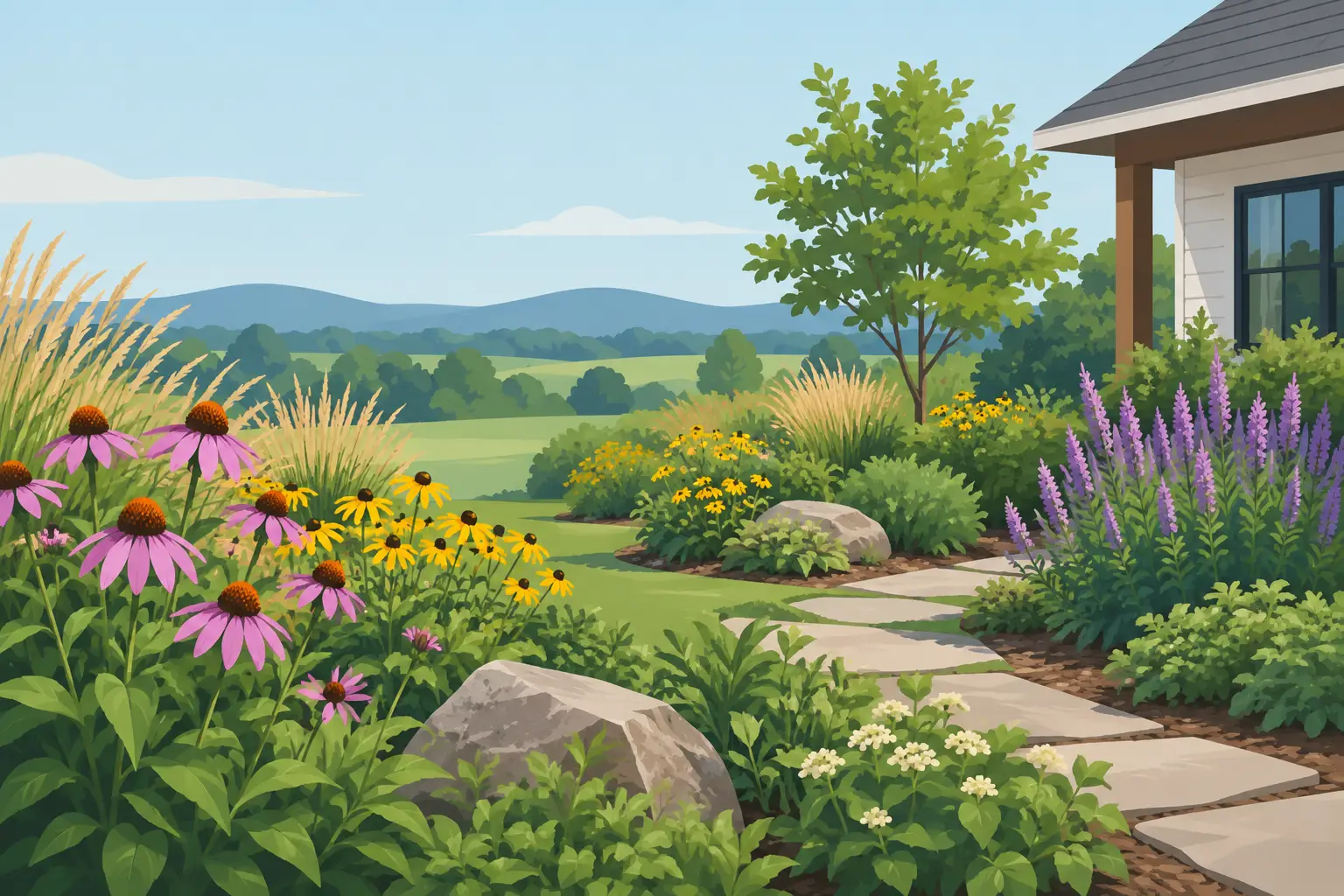
A landscape should not need constant rescuing to look good. If beds are thirsty by July, bare by August, or overrun with weeds every spring, the issue may be less about maintenance and more about plant selection. Oldham County native landscaping gives homeowners and property managers a practical way to build healthier, more attractive outdoor spaces with plants suited to Kentucky conditions.
Native landscaping is not about letting a yard grow wild. Done well, it is a planned landscape with clean bed lines, intentional layers of color and texture, and plants selected for the soil, sun, rain, and seasonal changes around Louisville and Oldham County. The result can feel polished and welcoming while asking less of your irrigation system, weekend schedule, and maintenance budget over time.
What Makes a Landscape Native?
A native plant is one that occurred naturally in this region before modern development and widespread plant importing. These plants have adapted to local weather patterns, soil conditions, and the insects and wildlife that share the area. That does not mean every plant in a landscape must be native. Many successful designs mix native plants with dependable non-invasive ornamentals to meet a property's needs.
The key is choosing plants for the site instead of forcing a site to support the wrong plants. A sunny slope, a shady foundation bed, and a low area that holds water after a hard rain each call for different choices. When a plant is matched to its location, it has a better chance to establish strong roots, stay healthy, and look intentional without excessive input.
This approach is especially useful for properties with challenging spots. Rather than repeatedly replacing struggling turf or seasonal flowers, a well-designed planting bed can turn that trouble area into a feature.
Why Oldham County Native Landscaping Makes Sense
Kentucky weather can be demanding. We see humid summers, quick temperature swings, heavy downpours, dry stretches, and winter cold. Plants adapted to this area are generally better prepared for those shifts once established. They are not maintenance-free, but they often need less intervention than plants chosen mainly for a brief burst of color at the garden center.
Lower Inputs, Not Zero Work
One of the biggest benefits is reduced reliance on supplemental watering after the first establishment period. New plants still need regular watering while roots develop, usually through their first growing season. Mulch, proper spacing, and a well-planned irrigation approach also matter.
After that early care, many native plants are more capable of handling normal local rainfall and dry spells. This can be a meaningful advantage for busy homeowners, commercial properties, and anyone tired of watching a landscape decline during a hot summer week.
Less water does not automatically mean less work in every situation. A densely planted pollinator garden may need more detailed spring cleanup than a simple shrub bed. The right design depends on how much maintenance you want, how formal you want the property to look, and whether the area is highly visible from the street or entrance.
Better Support for Pollinators and Birds
Native plants provide food and shelter for local bees, butterflies, beneficial insects, and birds. Flowering perennials can offer nectar at different points throughout the growing season, while seed heads and native grasses add interest later in the year.
This benefit does not require converting an entire lawn into a meadow. Even a few thoughtfully placed beds near a patio, driveway, office entry, or mailbox can add habitat and color. A layered planting plan gives the space structure: taller plants toward the back or center, mid-height flowering plants in the middle, and lower edges that keep the bed looking tidy.
A Landscape With Four-Season Interest
A good native landscape should not peak for two weeks and then disappear. Spring blooms can lead into summer flowers, ornamental grasses, fall color, berries, and winter texture. Seed heads and grass plumes can look especially sharp against frost or a light snowfall when they are placed with care.
The strongest designs balance bloom time with foliage, shape, and height. Purple coneflower, black-eyed Susan, bee balm, butterfly weed, little bluestem, switchgrass, inkberry, and native sedges are examples of plants that may work in the right Kentucky setting. Availability, sun exposure, drainage, and mature size should guide the final selection.
Start With the Property, Not a Plant List
It is easy to choose plants based on a photo, then find out they are wrong for the location. Before installing a native landscape, look at how the property actually performs throughout the year.
Sun is the first consideration. A bed that receives six or more hours of direct sun needs a different palette than one shaded by mature trees or the north side of a building. Drainage matters just as much. Some native plants tolerate moist soil, while others can suffer if their roots stay wet.
Soil condition, deer pressure, foot traffic, overhead utilities, and sightlines also shape the design. For commercial properties, visibility and maintenance access deserve special attention. A planting that looks great from the sidewalk should also leave room for crews to mow, mulch, prune, and maintain irrigation equipment safely.
A professional site visit can prevent costly rework. MowAction Lawn Care Services can help homeowners and property managers assess problem areas, build a layout that fits the property, and handle installation and ongoing care without making the process complicated.
Design It to Look Intentional
Some people hesitate to use native plants because they worry the result will look untidy. That concern is fair, particularly in front-yard beds and commercial entrances where curb appeal matters. Native landscaping looks its best when it has clear boundaries and repeated groupings instead of a scattered collection of individual plants.
Use defined bed edges, mulch or stone where appropriate, and plants installed in drifts rather than single-file rows. Repeating colors or textures across a larger bed helps the design feel connected. For example, fine-textured native grasses can soften the look of bolder flowering plants, while evergreen shrubs can provide structure during winter.
Hardscaping can also make a native planting feel more finished. A paver walkway, retaining wall, patio border, or landscape lighting can frame the planting and improve how the space functions after dark. The goal is not to add every feature. It is to make each part of the property work together.
Installation Details That Protect Your Investment
Plant choice is only half the job. Poor installation can cause even reliable plants to struggle. Beds should be cleared of aggressive weeds before planting, and the soil should be prepared only as much as the site requires. Overworking soil or adding unnecessary amendments can create a short-term fix that does not hold up.
Plants need room to reach their mature size. Crowding may make a new bed look full on day one, but it can lead to disease, poor airflow, and extra pruning later. A properly spaced landscape may look more open at first, then grow into the design as intended.
Mulch helps retain moisture, regulate soil temperature, and reduce weed competition. Keep it at a reasonable depth and away from stems and trunks. Piling mulch against plant bases traps moisture where it does not belong and can invite problems.
The first year is the establishment year. Regular watering, weeding, and monitoring give the landscape its best chance to succeed. After that, seasonal maintenance typically includes cutting back selected perennials and grasses, refreshing mulch as needed, removing invasive weeds, and checking for plants that need division or replacement.
When Native Landscaping May Not Be the Whole Answer
Native plants are a strong fit for many properties, but not every space needs the same treatment. A high-traffic lawn for children, pets, events, or recreation still benefits from quality turf care. A formal entry may call for clipped evergreen structure or annual color that native perennials alone will not provide.
The practical answer is often a balanced plan: healthy turf where turf serves a purpose, native beds where they solve drainage, color, privacy, or maintenance challenges, and hardscape features where people need usable outdoor space. This approach respects the property instead of following a trend.
A well-planned native landscape gives your property more than seasonal color. It creates a stronger foundation for curb appeal, better outdoor use, and easier long-term care. Whether you are improving a front bed, managing a commercial entrance, or reworking an underused section of the yard, start with the conditions you have and build a landscape that is ready to live in them.