

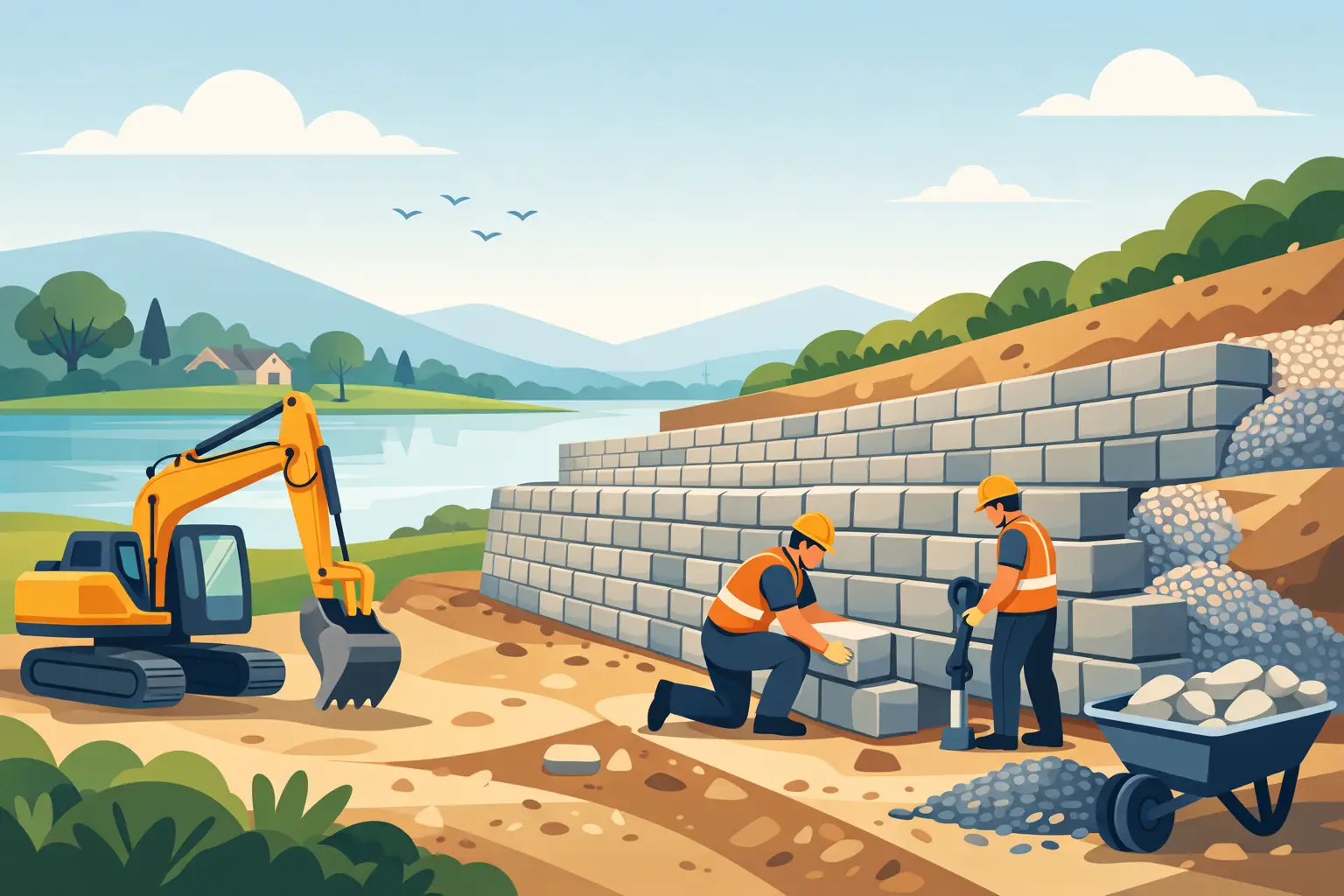
A retaining wall usually gets attention after something has already gone wrong. Soil starts washing into the yard, a slope becomes harder to mow, water collects where it should not, or a planting bed slowly gives way after every hard rain. That is why retaining wall construction matters so much. Done right, it solves a practical problem, protects your property, and makes the space look more finished at the same time.
For homeowners and property managers in Kentucky, that balance matters. You do not want a wall that only looks good for a season. You want one that holds up through heavy rain, changing temperatures, and daily wear. You also want a result that fits the rest of the landscape instead of looking like an afterthought.
Why retaining wall construction matters
A retaining wall is built to hold back soil where the ground changes elevation. That sounds simple, but the job is doing more than most people realize. A well-built wall helps control erosion, manages pressure from soil and water, and creates cleaner, more usable outdoor areas.
On some properties, the need is obvious. There may be a steep grade near a driveway, patio, sidewalk, or backyard edge. On others, the problem shows up slowly. Mulch drifts downhill, grass struggles on the slope, and water keeps carrying soil into low spots. In those situations, a retaining wall can turn an awkward part of the yard into a stable, attractive feature.
That practical value is one reason these projects are popular for both residential and commercial properties. A wall can protect an investment while also improving curb appeal. It can make lawn care easier, define outdoor spaces, and help the property feel more organized.
What makes a retaining wall last
The best-looking wall on day one can still fail if the foundation work is weak. Long-term performance comes from what happens below and behind the wall, not just from the material you see from the front.
The first factor is base preparation. The ground has to be properly excavated and leveled, and the wall needs a stable compacted base. If that base shifts, the wall can lean, settle unevenly, or crack over time.
Drainage is just as important. Water buildup behind a wall creates pressure, and that pressure is one of the biggest reasons retaining walls fail. Proper retaining wall construction includes drainage stone, backfill, and methods for moving water away instead of trapping it behind the wall.
Material selection also matters, but not always in the way people think. Concrete blocks, natural stone, and other hardscape materials can all work well when used in the right setting. The better choice depends on the height of the wall, the look you want, the surrounding landscape, and your budget.
Choosing the right wall for your property
No two yards are exactly alike, and that is why a one-size-fits-all answer rarely works. The right wall depends on grade changes, drainage patterns, soil conditions, and how the area will be used.
Segmental concrete block walls are a common choice because they offer a clean look, solid performance, and good design flexibility. They work well for many residential applications and can blend nicely with patios, walkways, and planting beds.
Natural stone walls bring a more organic appearance that fits certain landscapes especially well. They can look timeless, but they also tend to involve more variation in material and installation. For some properties, that character is exactly the right fit. For others, a more uniform block system makes more sense.
There is also the question of scale. A short garden wall that helps shape a landscape bed is different from a taller structural wall that holds back a major slope. Once height, pressure, and drainage demands increase, the construction details become more critical. That is where professional planning really pays off.
Common problems that start before the first block is set
Most retaining wall issues do not begin with the wall itself. They begin with misreading the site. If water naturally moves toward the area, if the soil is unstable, or if the grade change is more severe than it appears, the project can run into trouble fast.
A wall may also fail because the design did not account for what sits above it. A grassy slope is one thing. A driveway, parked vehicles, or heavy traffic nearby changes the load and the demands on the wall. The same is true when a property owner wants to add lighting, planting, or a patio connection later. Good planning looks at the whole landscape, not just the wall line.
Another common issue is underbuilding for the sake of saving money upfront. It is understandable to want a lower project cost, but cutting corners on excavation, base material, backfill, or drainage usually leads to higher costs later. Repairs are rarely as simple or affordable as doing the job correctly the first time.
How retaining wall construction improves usable space
One of the best parts of a retaining wall project is that it often gives you more than erosion control. It can change how the property functions.
A sloped backyard can become a level area for outdoor seating, a play space, or cleaner landscape beds. A side yard that once felt wasted can become easier to maintain. Around commercial properties, retaining walls can help create neater borders, safer transitions, and a more polished appearance for visitors, tenants, and customers.
That is often where the value becomes clear. You are not just holding soil in place. You are making the property easier to use, easier to maintain, and more visually appealing. For busy property owners, that combination is worth a lot.
Design matters as much as structure
A retaining wall should solve a problem, but it should also look like it belongs there. The right design ties into the home, the surrounding hardscape, and the overall character of the property.
Color, texture, wall height, cap style, and curves all influence the final result. A straight wall can feel clean and formal. A curved wall can soften the space and follow the landscape more naturally. The right choice depends on the property and the look you want.
Plantings can make a major difference too. A well-placed wall paired with shrubs, ornamental grasses, mulch beds, or landscape lighting tends to feel more complete than a wall standing alone. That is one reason it helps to work with a team that understands both structural needs and the bigger landscape picture.
When to call a professional
Some small landscape projects are good candidates for a weekend DIY effort. Retaining walls are not always one of them. Even a wall that seems modest can fail if the grade, drainage, or installation details are off.
Professional installation is especially important when the wall will hold back significant soil, manage runoff near a home or building, or connect with other hardscape features. It is also the safer route when the project needs site-specific planning instead of guesswork.
An experienced contractor can evaluate slope conditions, identify drainage concerns, recommend the right material, and build with long-term performance in mind. That is the difference between a wall that simply fills a space and one that actually protects it.
For local properties in Crestwood, Middletown, Prospect, and nearby areas, climate and terrain are part of the equation too. Seasonal rain and changing ground conditions can expose weaknesses over time, so it helps to work with a crew that understands what local landscapes really need.
What to expect from the process
A good retaining wall project starts with a clear look at the site and the problem you are trying to solve. Sometimes the goal is stopping erosion. Sometimes it is reclaiming usable yard space. Sometimes it is both.
From there, the focus should be on design, layout, drainage planning, excavation, base prep, installation, and final finish work. Homeowners often focus on the visible material, but the hidden work is what protects the investment. If the crew takes time on the front end, the finished wall usually performs better and looks better too.
This is also where communication matters. Property owners should understand what is being built, why certain methods are recommended, and how the wall fits into the rest of the outdoor space. Straight answers and dependable execution go a long way, especially on a project that affects both appearance and function.
At MowAction Lawn Care Services, that practical mindset is part of how outdoor projects should be handled. You want work that looks sharp, holds up, and makes your property easier to enjoy.
If part of your yard keeps sliding, staying soggy, or falling short of its potential, a well-built retaining wall can change that in a big way. The right wall does not just hold back soil. It gives your property stronger lines, better function, and one less problem to worry about every time the weather turns.