

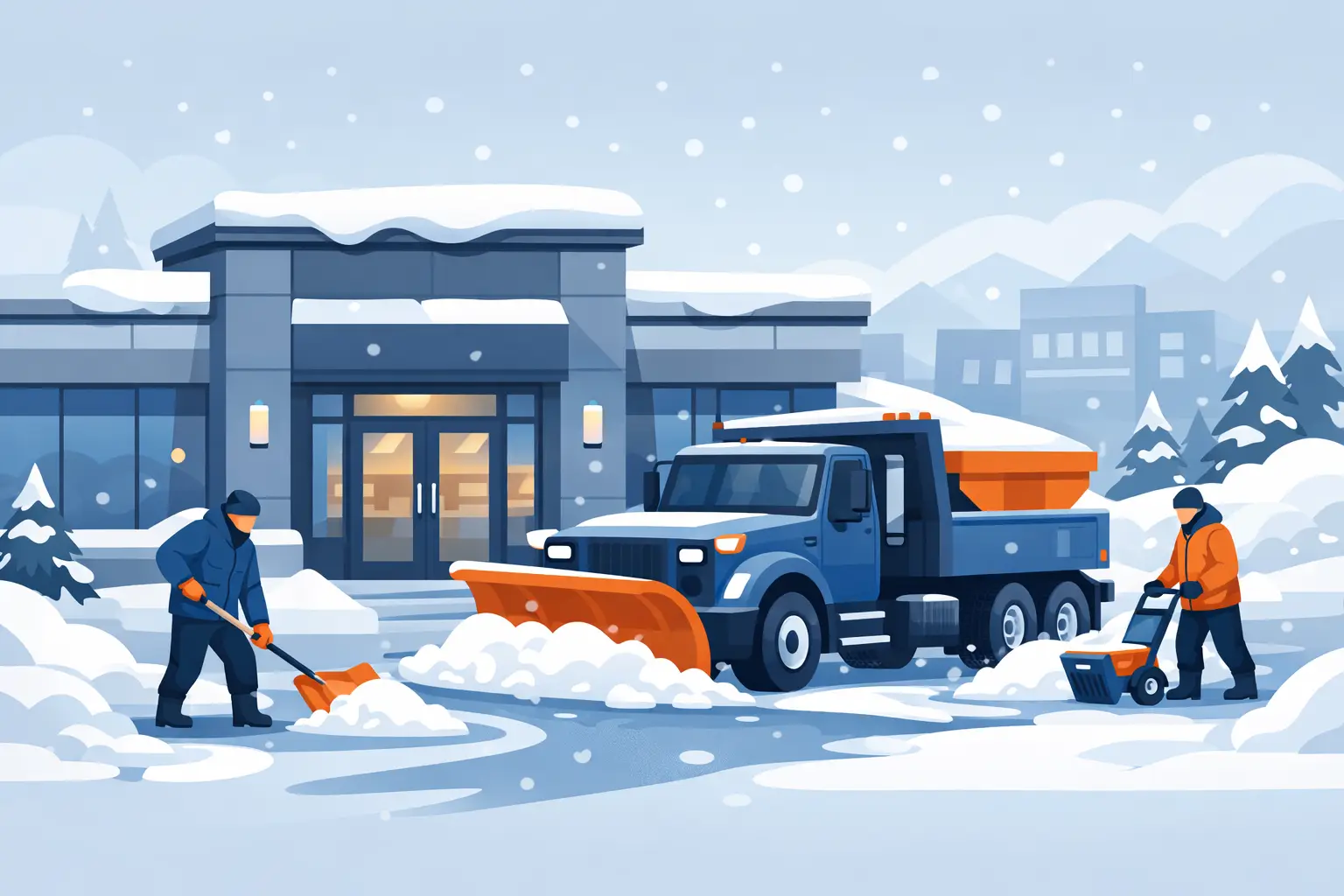
A snow-covered parking lot can turn a normal workday into a chain of problems before the first customer arrives. Employees may struggle to park, delivery drivers may skip a stop, and visitors can face slippery walks at your entrance. Reliable snow removal for businesses is not just about making a property look maintained. It is about keeping people safer, protecting access, and helping your operation stay open when winter weather moves through Kentucky.
For commercial property owners and managers, the best approach is planned well before the forecast calls for snow. A dependable winter service plan gives you a clear point of contact, defined service areas, and fewer last-minute decisions when conditions change quickly.
Why Snow Removal for Businesses Is a Business Priority
Snow and ice affect more than curb appeal. They affect the customer experience from the moment someone turns into your property. If parking spaces, drive lanes, sidewalks, ramps, and entrances are not addressed promptly, people may decide it is easier to go somewhere else or postpone their visit altogether.
There is also a real safety concern. Slips and falls can happen in a few seconds, especially when snow melts during the day and refreezes overnight. Clearing visible snow is only part of the job. Problem areas such as shaded sidewalks, curb ramps, steps, loading zones, and entryways often need ongoing ice treatment to stay manageable.
For offices, retail centers, medical facilities, restaurants, apartment communities, warehouses, and professional buildings, winter service supports day-to-day continuity. The right plan helps employees arrive safely, customers reach the front door, and deliveries move without unnecessary delays.
Start With a Property-Specific Winter Plan
No two commercial properties need the same level of service. A small office with a single entrance has different priorities than a busy retail lot or a multi-building apartment community. Before winter arrives, walk the property with your snow removal provider and identify where snow can be pushed, where it cannot, and which areas must be cleared first.
Your plan should account for traffic flow, pedestrian routes, fire lanes, accessible parking, dumpsters, loading areas, mailboxes, and drainage. Snow piles placed in the wrong location can block visibility at an exit, take up valuable parking spaces, or create runoff that refreezes later. Planning pile locations in advance prevents many of these avoidable issues.
It also helps to identify sensitive landscape features. Curbs, irrigation heads, light fixtures, decorative stone, retaining walls, and low plantings can be damaged when crews are working in low visibility. Professional-grade equipment and clear site markings help protect your property while the work gets done efficiently.
Decide What Needs Priority Service
Most businesses benefit from a priority order rather than treating every square foot the same. Main entrances, accessible routes, primary drive lanes, and high-traffic parking areas typically come first. Secondary parking sections, rear walks, and less-used access points may follow once the most important routes are open.
This is especially useful during a long storm. Rather than waiting for snowfall to end, a service team may make repeated visits to maintain access where people need it most. The right timing depends on the storm, your hours, traffic volume, and the type of property you manage.
Know the Difference Between Plowing, Shoveling, and Ice Control
A complete commercial snow service often includes several types of work. Plowing clears broad parking lots and drive lanes quickly. Sidewalk crews use shovels, blowers, or compact equipment to address pedestrian areas that plow trucks cannot reach safely. Ice control applies material to reduce slippery conditions before or after snow and freezing rain.
Each service has a different purpose, and skipping one can leave a major gap. A freshly plowed lot does not help much if a customer must cross an untreated sidewalk to reach the door. Likewise, heavy salt application is not a substitute for physically removing several inches of packed snow.
The material used for ice control should fit the conditions and the property. Rock salt is a common, effective option in many situations, but it can be less effective in very low temperatures and may leave residue. Other products may be appropriate near concrete, landscaping, pets, or high-traffic entrances. A knowledgeable provider can explain the trade-offs and recommend a practical approach rather than applying the same product everywhere.
Set Clear Expectations Before the First Storm
A dependable snow removal agreement should answer the questions that matter when weather turns bad. When does service begin? Is there a snowfall trigger, or will the crew monitor and respond to conditions? Are ice treatments included separately? Will service happen overnight, before opening, during the storm, or as needed afterward?
Communication matters just as much as equipment. Property managers should know who to contact for urgent issues and how updates will be handled during extended weather events. If your business opens early, has overnight staff, or receives deliveries on a strict schedule, share that information up front. A local service team can plan around your operational needs more effectively when it understands them.
Pricing can vary based on property size, service frequency, snowfall totals, required materials, and whether visits are billed per event or through a seasonal agreement. The lowest quote is not always the best value if it leaves unclear response times, excludes sidewalks, or provides no plan for ice after refreezing. Look for clear scope, responsive communication, and a provider prepared to do the work when conditions are at their worst.
Help Your Snow Crew Work Faster and Safer
A snow contractor can do better work when the site is ready. Before winter, remove or secure portable signs, outdoor furniture, loose planters, and other items that may be buried or damaged. Mark curbs, fire hydrants, speed bumps, drainage inlets, and landscape edges with visible stakes where appropriate.
Keep employees informed about where snow will be piled and which entrances should be used during active service. If possible, avoid having vehicles left overnight in sections that need plowing. Even a few parked cars can create pockets of packed snow that are difficult to clear later.
After a storm, ask staff to report slick spots quickly. Conditions can change throughout the day as temperatures rise, snow melts, and evening temperatures drop. Prompt reporting allows ice treatment to be targeted where it is needed instead of waiting for a larger problem to develop.
Choose a Partner Built for Winter Response
Commercial snow work is a service where reliability shows up in the details. You want a team with the equipment, staffing, and local experience to respond when roads are messy and demand is high. You also want people who answer the phone, explain what is happening, and treat your property like a place where people need to move safely.
For businesses in Louisville, Oldham County, and Shelby County, working with one exterior maintenance provider can make seasonal care easier to manage. The same team that understands your grounds, curbs, entrances, and traffic patterns during the growing season is better positioned to recognize winter problem areas. MowAction Lawn Care Services brings that practical, property-focused approach to commercial snow and ice service.
Winter weather cannot be scheduled, but your response to it can be. A thoughtful service plan, clear communication, and dependable crews give your customers and employees a safer path through the next storm - and help your business keep moving when it matters most.