

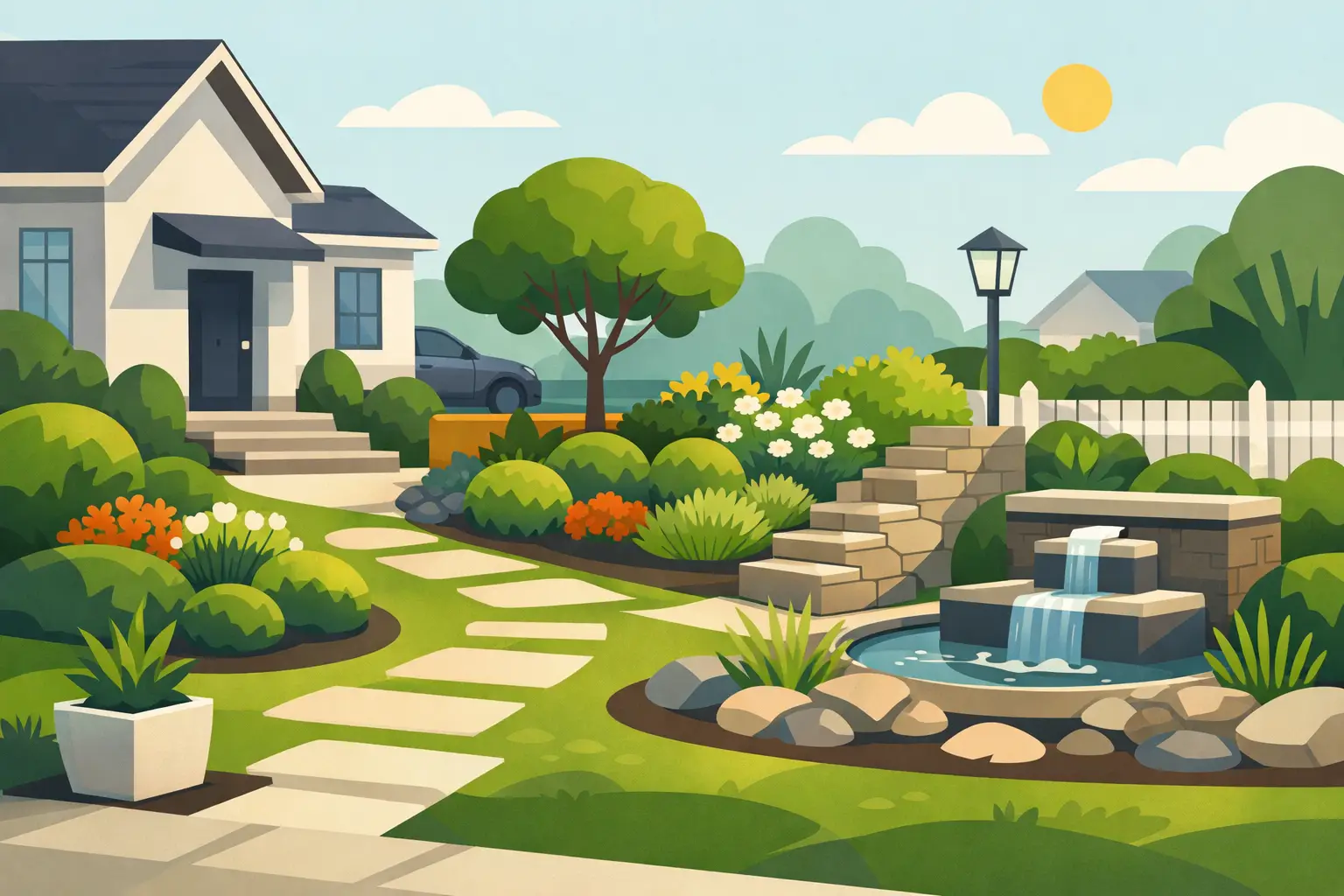
A front yard does more than frame a house. It guides visitors to the door, sets expectations for the property, and can make a well-kept home look neglected when the lawn is thin, beds are overgrown, or the walkway feels like an afterthought. The best front yard makeover ideas do not rely on one expensive feature. They combine healthy turf, clean edges, practical plantings, and a clear path to create an entrance that feels cared for.
For homeowners and property managers, the right plan depends on the property’s sun exposure, drainage, maintenance needs, and budget. A large installation can make a dramatic difference, but even a focused cleanup and a few smart upgrades can change how the whole property looks from the street.
Start With the Problems People Notice First
Before choosing plants or pavers, stand at the curb and look at the property as a visitor would. Notice where the eye goes first. Is the lawn patchy? Are shrubs covering windows? Does mulch spill into the grass? Is there a bare area near the driveway where water repeatedly washes out the soil?
This quick assessment prevents a common mistake: spending money on decorative details while the basics still look unfinished. A front yard makeover works best when it solves visible maintenance issues first. Mowing, edging, pruning, weed control, leaf removal, and fresh mulch often provide the strongest return for the least disruption.
It also helps to think about the view from inside the home. A planting bed can look balanced from the street but block a favorite window from the living room. A good landscape plan considers both perspectives.
Front Yard Makeover Ideas for a Strong First Impression
1. Repair the lawn before adding extras
A thick, evenly colored lawn makes every other feature look better. Thin grass, compacted soil, and weeds can make a property feel tired even when the beds are freshly planted. Aeration, overseeding, proper mowing, and targeted weed control are often the right starting point for an established lawn.
For areas that have failed repeatedly, sod may be a more practical solution. Sod delivers immediate coverage, but it needs good soil preparation and consistent watering while roots establish. Seeding costs less and can be effective, though it requires more patience and careful timing. The best choice depends on the condition of the existing lawn and how quickly the property needs to look finished.
2. Give planting beds a clean, defined edge
Crisp bed lines are one of the simplest ways to make a yard look professionally maintained. A natural spade edge can work well for traditional landscapes, while stone, brick, or metal edging provides a more permanent border in high-traffic areas.
Keep the bed shape in proportion to the house. Small, narrow strips of mulch against a large home tend to disappear from the street. Broader, gently curved beds give plants room to grow and create a more intentional look. Avoid overly complicated curves that are difficult to mow and maintain.
3. Use foundation plants with room to mature
Foundation planting should soften the base of the home, not hide it. Choose shrubs and perennials based on their mature size, not how they look in a nursery container. Plants crowded too closely may look full for a season, then require heavy pruning year after year.
A dependable design usually uses a simple structure: taller plants near blank walls or corners, medium shrubs along the foundation, and lower flowers or groundcover near the bed edge. Repeating a few plant varieties gives the yard a calm, coordinated appearance. Mixing too many colors and plant types can feel busy, especially in a smaller front yard.
4. Create a walkway that feels like an invitation
If guests have to step through grass, navigate cracked concrete, or guess where to enter, a better path can transform the front of the property. A widened walkway or paver path improves both appearance and function. It is especially valuable where foot traffic has created muddy or worn areas.
Pavers offer flexibility in color and pattern, and individual pieces can often be repaired more easily than a poured surface. Concrete can be a cost-effective option for a clean, straightforward walk. The right material depends on the home’s style, the desired budget, and whether the project also includes a front stoop, patio, or driveway border.
5. Add a focal point near the entry
A focal point gives the eye a place to land. It might be a small ornamental tree, a pair of planters, a well-shaped evergreen, a boulder, or a seasonal container display. The key is restraint. One strong feature near the entrance is more effective than several competing decorations spread across the lawn.
For homes with limited space, matching planters by the front door can add color without creating another bed to weed. For larger lots, a specimen tree placed away from utility lines and the foundation can add structure, seasonal interest, and shade over time.
6. Bring in landscape lighting for safety and warmth
Landscape lighting makes a property more welcoming after sunset and helps visitors see steps, changes in elevation, and walkway edges. Low-voltage path lights, uplighting on architectural features, and subtle lighting around a front planting bed can add curb appeal without making the yard look overly bright.
Placement matters more than quantity. Too many fixtures can create glare and distract from the home. A professional layout keeps the light focused where it improves safety and highlights the property’s best features.
7. Solve drainage before it damages the design
Standing water, washed-out mulch, and soggy lawn areas are not just cosmetic concerns. They can damage turf, encourage erosion, and make walkways slippery. A front yard makeover is the right time to correct grading concerns, extend downspouts, install drainage solutions, or select plants that can tolerate the site conditions.
Do not cover a drainage problem with extra mulch or decorative stone and hope it disappears. The surface may look better briefly, but water will continue to move where gravity sends it. Addressing the cause protects the investment in landscaping.
8. Upgrade the driveway edge and mailbox area
The space beside the driveway is easy to overlook, yet it is one of the first things people see. A narrow bed with low-maintenance plants, a clean edge, and mulch can make the driveway feel integrated with the landscape rather than cut through it.
The mailbox area is another small opportunity. A simple planting around the post, sized so it does not interfere with mail delivery or visibility, creates a polished detail. Choose hardy plants that can handle heat, road splash, and occasional foot traffic.
9. Add seasonal color in manageable amounts
Annual flowers can create a fast, noticeable update near an entry, sign, or mailbox. They are ideal for adding color during spring and summer, but they require watering, deadheading, and seasonal replacement. If low maintenance is the priority, rely on durable perennials, flowering shrubs, and evergreen structure first, then use annuals as a limited accent.
Fall is also a valuable season for curb appeal. Clean leaves, refreshed mulch, ornamental grasses, and containers with autumn color can keep the entrance looking cared for after summer blooms fade.
10. Use retaining walls where grade changes demand them
A sloped front yard can be attractive, but steep grades are hard to mow and can make planting beds unstable. A retaining wall can create usable, level planting areas and help control erosion. It can also define a front entry when paired with steps, lighting, and well-planned plantings.
This is a project where construction quality matters. The wall needs proper base preparation, drainage, and materials suited to the height and soil conditions. A wall built only for appearance can shift or fail if the underlying work is ignored.
11. Keep maintenance in the plan
The most successful front yard makeover is one that still looks good six months later. Before adding beds, trees, or hardscape, consider who will mow around them, trim them, remove leaves, and manage irrigation. Narrow spaces between plants and fences, complicated edges, and plants that outgrow their location can turn a beautiful design into a recurring chore.
Choose a level of maintenance that fits real life. Busy households often do best with a clear lawn layout, mulch beds with reliable shrubs, and a scheduled maintenance plan. Commercial properties may benefit from durable plantings, strong lighting, and regular service that keeps the entrance consistent for customers and tenants.
12. Make the improvements work together
The strongest front yards have a clear relationship between lawn, beds, walkways, lighting, and the home itself. That does not mean everything must match perfectly. It means the materials, colors, and scale should feel intentional. A traditional brick home may suit classic planting beds and brick accents, while a newer home may look better with cleaner bed lines, contemporary lighting, and simple paver patterns.
For properties in Louisville, Oldham County, and Shelby County, seasonal changes should also shape the plan. Select plants that can handle local weather swings, build drainage into the design, and plan for leaf cleanup before mature trees become a maintenance burden.
Plan the Project in Phases When Needed
A full renovation is not always necessary or practical. Start with the work that protects the property and improves daily use: drainage, lawn health, pruning, and safe walkways. Next, add permanent upgrades such as expanded beds, retaining walls, or pavers. Finish with details like lighting, containers, and seasonal color.
Phasing the work helps protect the budget while keeping the final vision consistent. It also gives homeowners time to see how sun, water, and traffic affect each area before committing to additional planting or construction.
A front yard should make coming home feel good and make visitors confident they are at a property that is cared for. Whether the goal is preparing to sell, improving a business entrance, or simply ending the battle with an overgrown landscape, a thoughtful plan and dependable upkeep make the difference. MowAction Lawn Care Services can help turn the ideas that fit your property into practical, well-maintained results.