

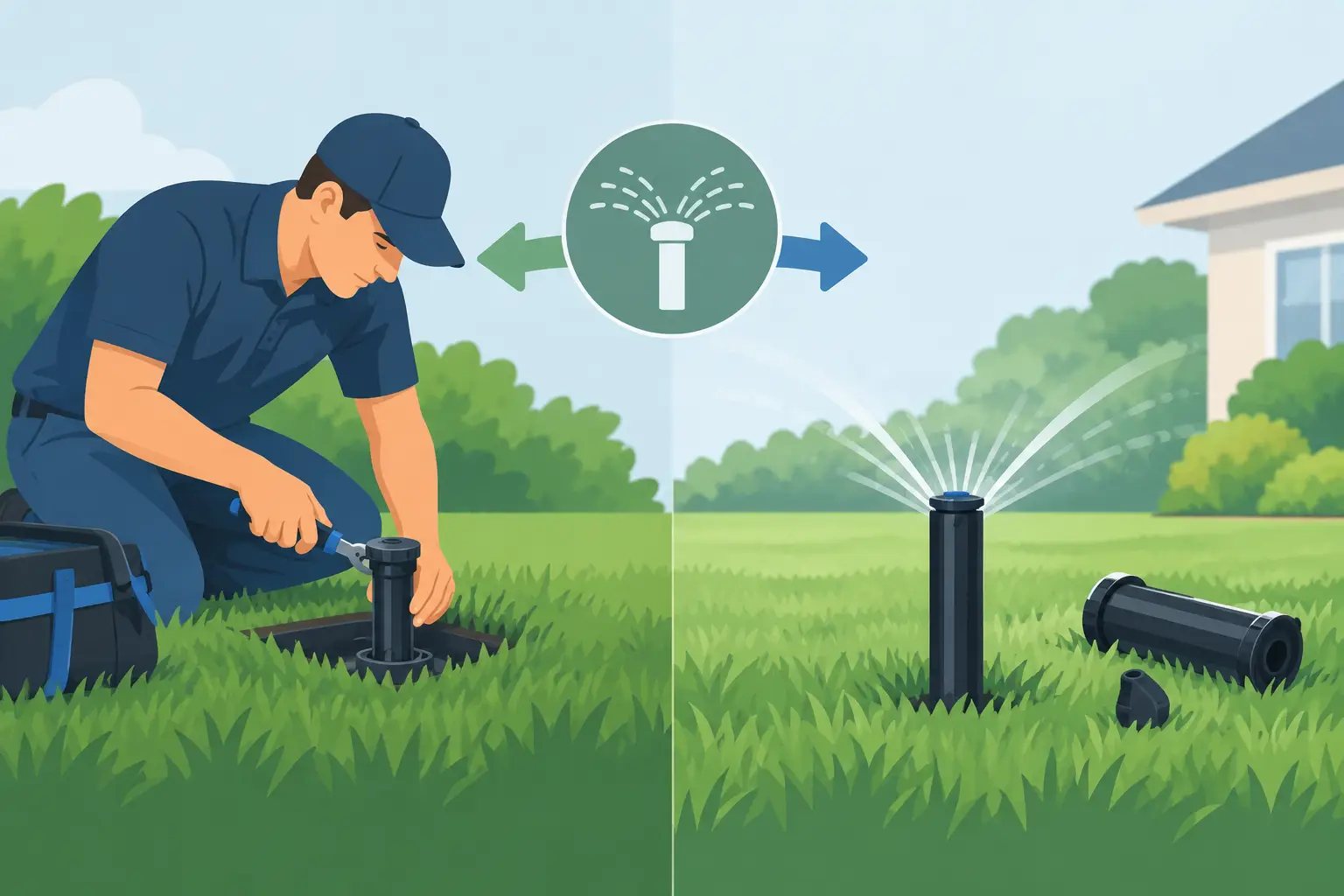
A brown strip along the driveway, a soggy patch near the foundation, or a sprinkler zone that suddenly will not turn on can turn a well-kept landscape into a frustrating problem fast. Deciding between sprinkler repair or replacement is not always as simple as choosing the least expensive option today. The right choice depends on the system’s age, the source of the problem, your water use, and whether repairs are solving the issue or merely buying time.
For homeowners, property managers, and business owners, irrigation should make outdoor care easier. A properly working system protects turf, supports healthy landscaping, and helps avoid wasted water. When it starts failing, a clear assessment can prevent repeat service calls and help you invest wisely in the property.
When Sprinkler Repair Makes the Most Sense
Most irrigation problems do not require a full system replacement. A single broken sprinkler head, clogged nozzle, cracked fitting, worn valve diaphragm, or damaged section of pipe can often be repaired efficiently. These issues are common after mowing, foot traffic, landscaping work, freezing temperatures, or normal wear over time.
Repair is usually the smart route when the rest of the system is working consistently. If the controller runs reliably, zones activate as expected, coverage is generally even, and the system has not needed frequent major work, a targeted repair can restore performance without a large project cost.
A repair is also a good choice when the trouble is clearly isolated. For example, one head that sprays the sidewalk instead of the flower bed may only need adjustment or replacement. A valve box that leaks while every other zone operates properly may need a new valve or fitting. These are manageable fixes that can make an immediate difference in water use and curb appeal.
Common repairs that are worth making
Repairing a sprinkler system is often practical when the issue involves a broken or sunken head, a cracked riser, a clogged nozzle, a minor underground leak, a faulty valve, or a controller programming problem. Seasonal adjustments also matter. Changing run times as temperatures shift can help your lawn receive the water it needs without overwatering.
The key is to look beyond the visible symptom. A puddle around one sprinkler head may be a simple broken fitting, but it could also point to excess pressure, poor drainage, or a pipe leak below the surface. A professional inspection helps identify the actual cause before money is spent on the wrong fix.
Signs Sprinkler Replacement May Be the Better Investment
Replacement becomes more appealing when repairs are frequent, costly, or spread across several parts of the system. An older irrigation system can develop failures that seem unrelated at first: weak pressure in one zone, leaks in another, uneven coverage near the street, and controller issues after every storm. At that point, patching each new problem may cost more over a few seasons than upgrading the system strategically.
Age alone does not automatically mean replacement. A well-installed system that has been maintained may last for many years. Still, systems with older piping, outdated controllers, worn valves, or poorly matched heads may no longer be delivering water where it is needed. This is especially true when landscaping has changed since the system was installed.
A replacement or major upgrade is often worth considering when you notice several of these concerns:
- Repairs are needed repeatedly during the same season.
- Multiple zones have low pressure, leaks, or poor coverage.
- Water bills have increased without a clear explanation.
- The system uses old components that are difficult to match or service.
- Lawn areas, planting beds, patios, or hardscapes have changed the property’s watering needs.
- The controller cannot support practical scheduling, rain sensors, or zone-by-zone adjustments.
For a commercial property, inconsistent watering can affect more than appearance. Dead turf, muddy entry areas, or stressed landscaping can weaken the first impression customers and tenants have of the property. Replacing problem components before peak summer heat can help avoid a much bigger issue later.
The Cost Question: Repair Today or Spend More Once?
The lowest upfront price is not always the lowest overall cost. A simple repair may be the right answer, but only if it gives you dependable performance afterward. If the same system needs a valve repair in spring, a pipe repair in early summer, and several head replacements before fall, the total begins to add up.
Consider the cost of water waste as well. Underground leaks can go unnoticed for weeks, especially if they occur between scheduled mowing visits or behind dense shrubs. Overspray onto pavement and poor zone coverage also waste water while leaving parts of the lawn thirsty. A system that runs longer to compensate for weak performance can raise utility costs and still produce uneven results.
Replacement does not always mean tearing out every line and starting over. In many cases, the best solution is a partial upgrade. That might include replacing an aging controller, rebuilding a valve manifold, updating inefficient heads, adding better coverage to a new planting bed, or rerouting irrigation around a patio or retaining wall. A thoughtful upgrade can address the weak points while preserving parts of the existing system that are still in good condition.
How Landscaping Changes Affect Your Irrigation System
A sprinkler layout should match the landscape you have now, not the one that existed years ago. New sod, mature trees, expanded garden beds, landscape lighting, walkways, patios, and retaining walls can all change how water reaches the ground. Tree roots may affect buried lines, while growing shrubs can block spray patterns that once covered open lawn.
Kentucky’s weather also makes flexibility valuable. Hot, dry stretches can stress turf quickly, while periods of heavy rain make excessive irrigation wasteful. A controller with practical scheduling options and properly adjusted zones gives you more control than a one-size-fits-all watering schedule.
If you recently completed a landscape improvement project, it is a good time to evaluate the irrigation system. New plantings often need different watering than established grass. Beds may benefit from a more targeted solution, while turf zones should be adjusted so water does not soak mulch, pavers, or the side of a building.
What a Professional Sprinkler Assessment Should Cover
Before deciding on sprinkler repair or replacement, ask for an assessment of the entire system rather than a quick look at only the failed area. A dependable evaluation should include zone operation, water pressure, head-to-head coverage, valve performance, controller settings, visible leaks, drainage concerns, and the condition of accessible components.
It should also account for how you use the property. A homeowner may want a simple, dependable setup that protects the lawn while they are away. A property manager may need consistent coverage across larger common areas and a plan that minimizes disruptions. Commercial owners may prioritize appearance near entrances, signage, and customer-facing spaces.
Clear communication matters here. You should understand which repairs are urgent, which upgrades are optional, and what may reasonably be expected from the existing system after the work is complete. That allows you to plan around your budget without ignoring problems that could become more expensive underground.
A Better Way to Decide
If the problem is isolated and the system otherwise performs well, repair is usually the sensible move. If failures are recurring, coverage is poor throughout the property, or outdated equipment is driving up water use and service costs, replacement or a focused system upgrade may offer better value.
MowAction Lawn Care Services helps property owners throughout Louisville, Oldham County, and Shelby County make that decision with practical recommendations and dependable irrigation service. The goal is not to sell more work than you need. It is to get water where it belongs, protect your landscape investment, and keep your property looking cared for.
A sprinkler system should work quietly in the background, not demand your attention every week. Addressing a small issue early, and knowing when repeated repairs have run their course, keeps your lawn healthier and your outdoor maintenance simpler.