

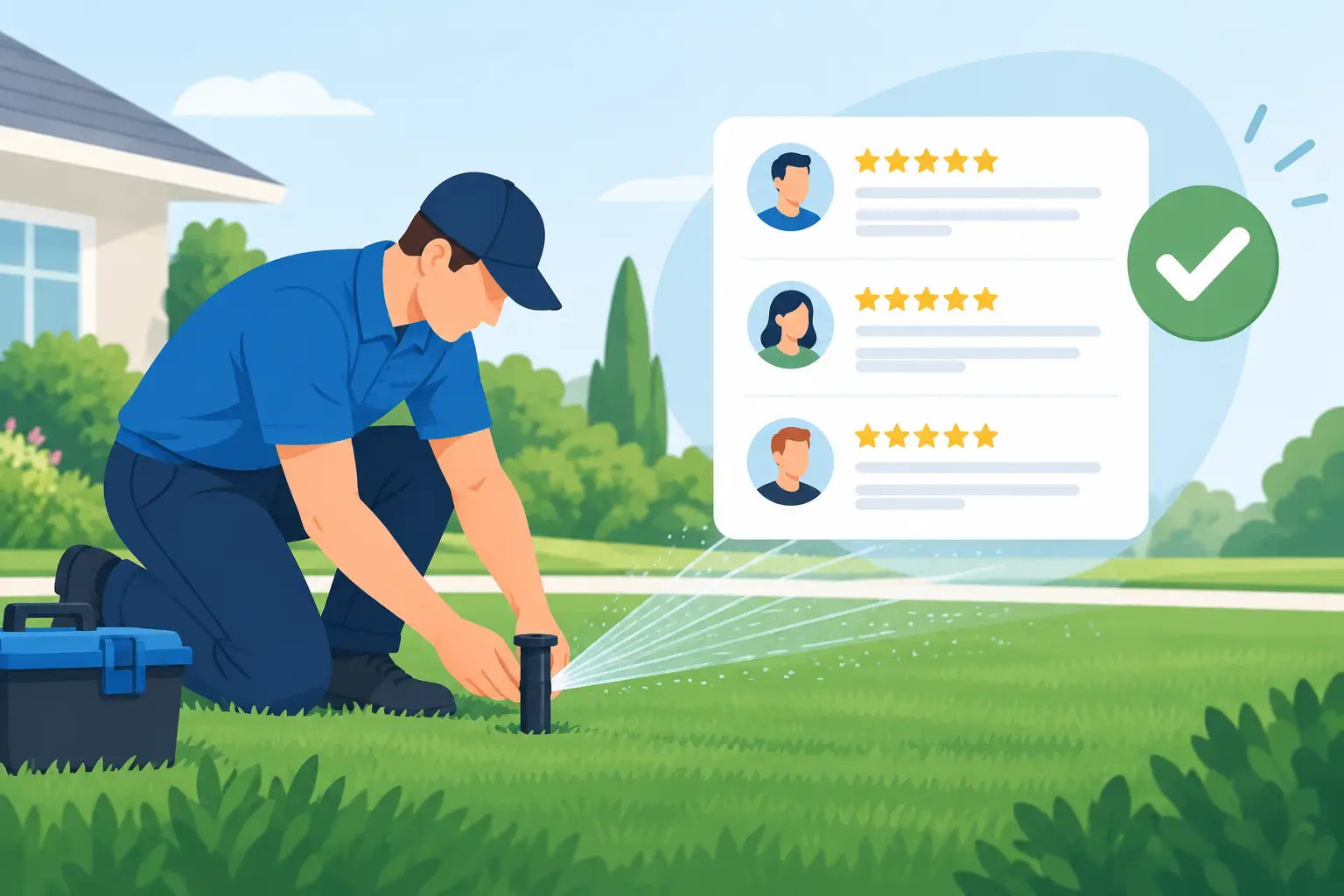
A sprinkler system should make your property easier to manage, not create another list of worries. Sprinkler installer reviews can help you find a contractor who communicates clearly, protects your landscape during installation, and is still available when a zone stops working in the middle of a dry Kentucky summer.
For homeowners, property managers, and commercial owners, the best review is not always the shortest or the most enthusiastic. A useful review explains what the company did, how it handled the job, and whether the customer felt supported after the work was complete. Reading with that mindset helps you move beyond star ratings and choose a team that fits your property.
What Sprinkler Installer Reviews Can Tell You
Reviews are most valuable when they reveal patterns. One five-star rating may reflect a great first impression. Twenty reviews that mention prompt callbacks, careful work, fair pricing, and dependable repairs tell you much more about what it may be like to work with that contractor.
Pay attention to comments about the full customer experience. Did the installer show up when promised? Was the estimate easy to understand? Did the crew explain the system before leaving? Were the work areas cleaned up? These details matter because irrigation installation involves more than putting sprinkler heads in the ground. It requires planning, plumbing, wiring, controller setup, and respect for existing lawns, beds, hardscapes, and utility lines.
The most useful reviews often mention a specific problem and how it was solved. A homeowner may describe dry patches in the yard, poor water pressure, runoff near a foundation, or a system that had been installed incorrectly years before. When a review explains how the contractor diagnosed and corrected the issue, it offers a clearer picture of the company’s skill than a simple comment like “great job.”
Read Beyond the Star Rating
A high average rating is a good starting point, but it should not be the final decision. Read a mix of recent reviews, detailed reviews, and the company’s responses to concerns. Recent feedback gives you a better sense of current scheduling, crew quality, and communication practices.
Look for language that points to consistent service. Phrases such as “kept us informed,” “explained our options,” “arrived on time,” or “came back to make an adjustment” are encouraging because they describe conduct that affects the job from start to finish. For commercial properties, reviews that reference coordination with a manager, working around business hours, or minimizing disruption can be especially meaningful.
A few less-than-perfect reviews do not automatically disqualify a contractor. Outdoor work is affected by weather, permitting, existing conditions, and material availability. What matters is whether the complaint sounds like an isolated issue or part of a repeated pattern. It also matters how the company responds. A professional response should be respectful, specific, and focused on making things right, not defensive or dismissive.
Be cautious with reviews that are overly vague, repeated in nearly identical wording, or focused only on price. Competitive pricing is important, but the lowest bid can become expensive if the system has poor coverage, damaged components, improper drainage, or no dependable service after installation.
Questions Reviews Should Help You Answer
By the time you finish reading reviews, you should have a better feel for several practical questions. First, does the installer design systems for the property rather than offering a one-size-fits-all setup? A small front lawn, a sloped yard, landscaped planting beds, and a large commercial site all need different coverage and zoning considerations.
Second, does the company communicate in a way that works for you? Busy property owners often need straightforward estimates, realistic timelines, and someone who answers the phone or returns messages. Reviews that consistently praise communication are worth their weight when you need a seasonal adjustment or an unexpected repair.
Third, is the contractor prepared to support the system after installation? Sprinkler heads can be damaged by mowing, landscaping, freezing temperatures, vehicles, or ordinary wear. Controllers may need programming changes as seasons shift. An installer who also handles repairs, inspections, winterization, and spring startup can save you the trouble of calling a new provider whenever something changes.
Finally, do reviews suggest that the crew respects the property? Installation can involve trenching and digging, so some disruption is normal. Still, a careful contractor should work to protect turf, plant beds, driveways, and surrounding landscape features, then leave the site orderly when the work is done.
Compare Reviews With the Estimate
Reviews should guide your questions, not replace an estimate. Once you have narrowed your choices, ask each contractor to explain what is included in the proposed work. A clear estimate should address the number of zones, types of heads, controller options, water source connection, expected coverage, and any anticipated restoration work.
This is also the time to ask about the details that are easy to overlook. Will the system be designed around sun exposure, slopes, gardens, and existing trees? How will the contractor avoid overspray on patios, sidewalks, or buildings? Is there a plan for rain sensors or smart controller settings? What service is available if an issue appears after installation?
Do not expect every property to need the same equipment or number of zones. A contractor who asks questions and walks the property may provide a more thoughtful proposal than one who gives a quick price without evaluating the site. The right system balances efficient water use with consistent coverage, and that balance depends on your property’s layout and needs.
Reviews Matter Even More for Repairs
If you already have an irrigation system, reviews can be just as helpful when you need repairs. A broken head is usually straightforward, but inconsistent pressure, soggy areas, zones that will not activate, or unusually high water use may require a more careful diagnosis.
Look for customer comments that mention troubleshooting rather than only installation. You want a contractor who investigates the cause of the problem instead of replacing parts at random. Good repair work may involve finding leaks, adjusting coverage, repairing valves, addressing controller issues, or correcting a zone that was never designed properly.
For property managers, responsiveness can be the deciding factor. A malfunctioning system can leave landscaping stressed, create slippery walkways, or waste water before anyone notices. Reviews that mention fast scheduling and clear updates can help you identify a provider who understands the urgency of maintaining an occupied property.
Use Local Experience to Your Advantage
Irrigation systems perform best when the installer understands the conditions around the property. In Louisville, Oldham County, and Shelby County, changing summer heat, rainfall patterns, clay-heavy soils, slopes, and freezing winter temperatures all affect how a system should be installed and maintained.
Local experience does not mean every contractor will recommend the same solution. It means they should be able to explain why a certain layout, controller setting, drainage approach, or winterization service makes sense for your yard or site. That education is a sign of a service team that wants you to understand the work, not simply approve it.
MowAction Lawn Care Services helps property owners coordinate irrigation work with lawn maintenance, landscape improvements, seasonal cleanups, and other exterior needs. Working with one dependable local team can make ongoing property care simpler, especially when your sprinkler system needs to work around new sod, planting beds, hardscapes, or changing landscape plans.
Trust the Details That Match Your Priorities
The best sprinkler installer for your neighbor may not be the best fit for your property. If you manage a commercial site, dependable communication and minimal disruption may rank highest. If you are improving a home before selling, you may prioritize curb appeal, coverage, and a clean installation. If you have struggled with dry grass and rising water bills, efficient design and skilled diagnostics may matter most.
Use reviews to identify the companies that consistently deliver on the priorities you care about, then have a real conversation before making a decision. A good contractor will listen to your concerns, explain the options in plain language, and provide a plan that respects both your property and your budget. That is the kind of service that keeps a lawn healthy long after the installation crew has packed up.