

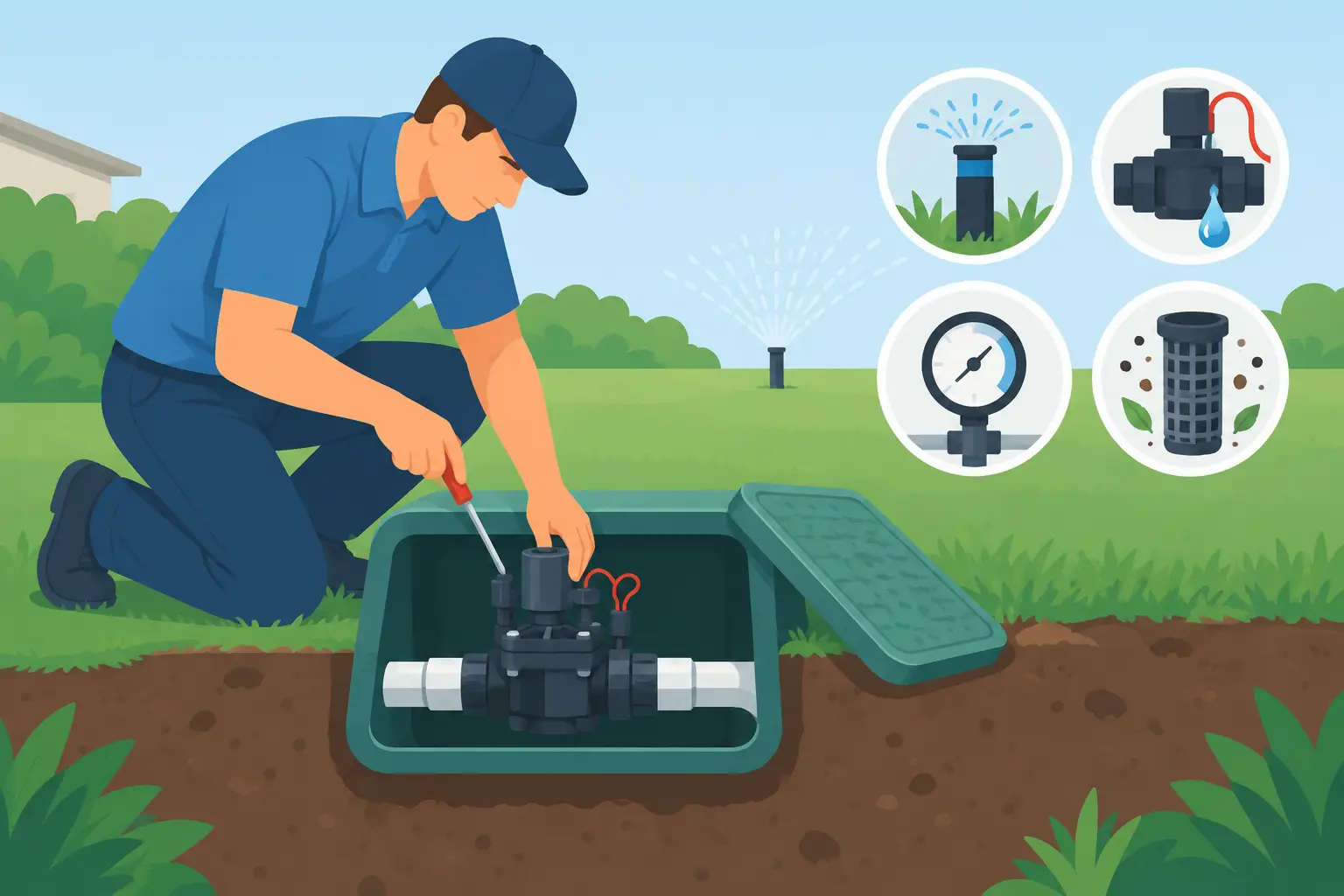
A brown strip of grass next to a healthy lawn often points to one simple problem: a sprinkler zone is not getting water when it should. Effective sprinkler valve troubleshooting helps identify whether the issue is a controller setting, wiring fault, blocked valve, damaged diaphragm, or water-supply concern before a small irrigation problem turns into wasted water and stressed turf.
For homeowners and property managers, the goal is not to take apart every component at the first sign of trouble. Start with the symptoms, make a few safe checks, and know when a repair calls for professional help. That approach protects your landscape, avoids unnecessary parts replacements, and gets the system back on schedule sooner.
Start With the Symptom, Not the Valve
Each sprinkler valve controls one irrigation zone. When the timer tells that zone to run, an electrical signal activates a solenoid on the valve. The valve opens, allowing water to travel to the sprinkler heads. If any part of that chain fails, the symptoms can look similar even though the repair is very different.
Before opening a valve box, run the affected zone manually from the controller. Watch what happens and listen closely. Does the zone fail to start? Does it run weakly? Does water pool around the valve box? Does it continue running after the schedule ends? Those details narrow the problem quickly.
If more than one zone is acting up, begin at the controller or main water supply. If only one zone has trouble, the valve, solenoid, wiring, or sprinkler heads within that zone are more likely to be responsible.
Sprinkler Valve Troubleshooting for a Zone That Will Not Run
A zone that will not turn on is one of the most common irrigation calls. Begin with the easy checks. Confirm the controller has power, the correct date and time, and an active watering program. It is surprisingly common for a rain-delay setting, seasonal adjustment, or accidental programming change to stop a zone.
Next, make sure the irrigation shutoff valve is open. This valve may be near the backflow preventer, inside a basement, garage, utility area, or exterior valve enclosure. If the main irrigation supply is off, no zone will receive water.
If other zones operate normally, find the valve box for the problem zone. It is usually a green or black plastic box set flush with the ground. Clear away soil, mulch, leaves, and standing water so you can inspect the valve without damaging wires or fittings.
Check the Solenoid and Wiring
The solenoid is the small cylindrical piece with two wires attached to the top of the valve. When a zone will not open, loose wire connectors, corroded connections, or a failed solenoid are frequent causes.
Look for disconnected, cut, or brittle wires. In older systems, wire splices can corrode underground after repeated moisture exposure. A wire that looks intact above ground may still have a break farther along the line, especially near landscaping work, edging, fence installation, or rodent activity.
A multimeter can confirm whether the controller is sending power and whether the solenoid has an appropriate resistance reading. This is useful information, but it depends on using the meter correctly. If you are not comfortable working around irrigation wiring, leave electrical testing to a qualified irrigation technician. Turn off controller power before handling exposed wire connections.
You can also carefully turn the solenoid counterclockwise by about a quarter turn to manually open many valves. If water begins flowing, the valve itself may be functional and the issue may be electrical. Do not remove the solenoid completely while the water supply is on, and do not force it if it is stuck.
Look for a Clogged Valve or Damaged Diaphragm
If the solenoid receives power but the zone still will not run, debris inside the valve may be preventing it from opening. Sand, small stones, pipe debris, and mineral buildup can interfere with the diaphragm, which is the flexible internal component that opens and closes the water path.
Shut off the irrigation water supply before disassembling a valve. Take a photo of the valve and its internal parts before removing anything. Clean loose debris gently, inspect the diaphragm for tears or distortion, and check the small ports in the valve body. A torn diaphragm should be replaced with the exact compatible part, not a close-looking substitute.
This repair can be straightforward on an accessible, newer valve. It becomes more complicated when fittings are brittle, the valve box is flooded, or the valve is cracked. In those cases, replacement may be more reliable than repeated repairs.
Why a Sprinkler Valve Will Not Shut Off
A zone that keeps running after the controller has finished is frustrating and can waste a significant amount of water in a short time. If this happens, shut off the irrigation water supply first. If you cannot locate the irrigation shutoff, turn off the main water supply only if necessary and contact a professional promptly.
A valve that stays open is usually a mechanical issue. Dirt caught beneath the diaphragm is a common culprit. The valve may also have a worn diaphragm, damaged spring, cracked body, or a solenoid that has been manually opened and not tightened back into place.
Check that the solenoid is snug, but do not overtighten it. If the valve still leaks or remains open after cleaning the internal components, replacement is often the best answer. Constantly running water can soften soil around foundations, create muddy areas, and drive up utility bills, so it is worth addressing quickly.
Low Pressure Is Not Always a Valve Problem
When a zone runs but the sprinkler heads barely pop up or spray weakly, the valve may not be the problem. Low pressure can come from a partially closed shutoff valve, a crushed or leaking supply line, too many heads on one zone, clogged nozzles, or a broken sprinkler head releasing water underground.
Walk the zone while it is operating. Look for unusually wet spots, bubbling soil, geysers around heads, or water flowing from the valve box. A wet valve box may indicate a valve leak, while a soggy area farther out often points to a damaged lateral line or fitting.
Clogged nozzles can be cleaned, but avoid using wire or sharp objects that enlarge the opening and change the spray pattern. If several heads have low pressure at once, inspect the zone as a whole rather than replacing individual heads one by one.
Seasonal Issues Matter in Kentucky
Freezing temperatures can create irrigation problems that do not show up until spring. If a system was not winterized properly, trapped water may crack fittings, backflow components, valves, or exposed pipe. A small freeze crack can leak only when the system is pressurized, which is why a spring startup inspection is valuable.
During startup, open the water supply slowly and inspect the backflow preventer, valve boxes, and visible piping. Running every zone briefly allows you to catch broken heads, leaks, and valve failures before summer heat puts stress on the lawn. For commercial properties, early testing also helps avoid irrigation failures that affect curb appeal or create slippery walkways.
When to Call for Sprinkler Valve Repair
Homeowners can often resolve programming mistakes, tighten a loose solenoid, and clear visible debris. But a professional repair is the smarter choice when the valve is cracked, wiring must be traced, a leak is underground, the backflow device is involved, or repeated repairs have not fixed the issue.
It also makes sense to call for help when valve boxes are buried, flooded, or difficult to access. Digging around irrigation lines without knowing their layout can create more damage than the original problem. An experienced technician can test zones, locate faults, repair valves, adjust coverage, and make sure water is reaching the landscape evenly.
For properties in Louisville, Oldham County, and Shelby County, MowAction Lawn Care Services can help with irrigation repairs as part of a broader plan for a healthier, better-looking property. A reliable sprinkler system should work quietly in the background, giving your lawn the water it needs without adding another item to your to-do list.