

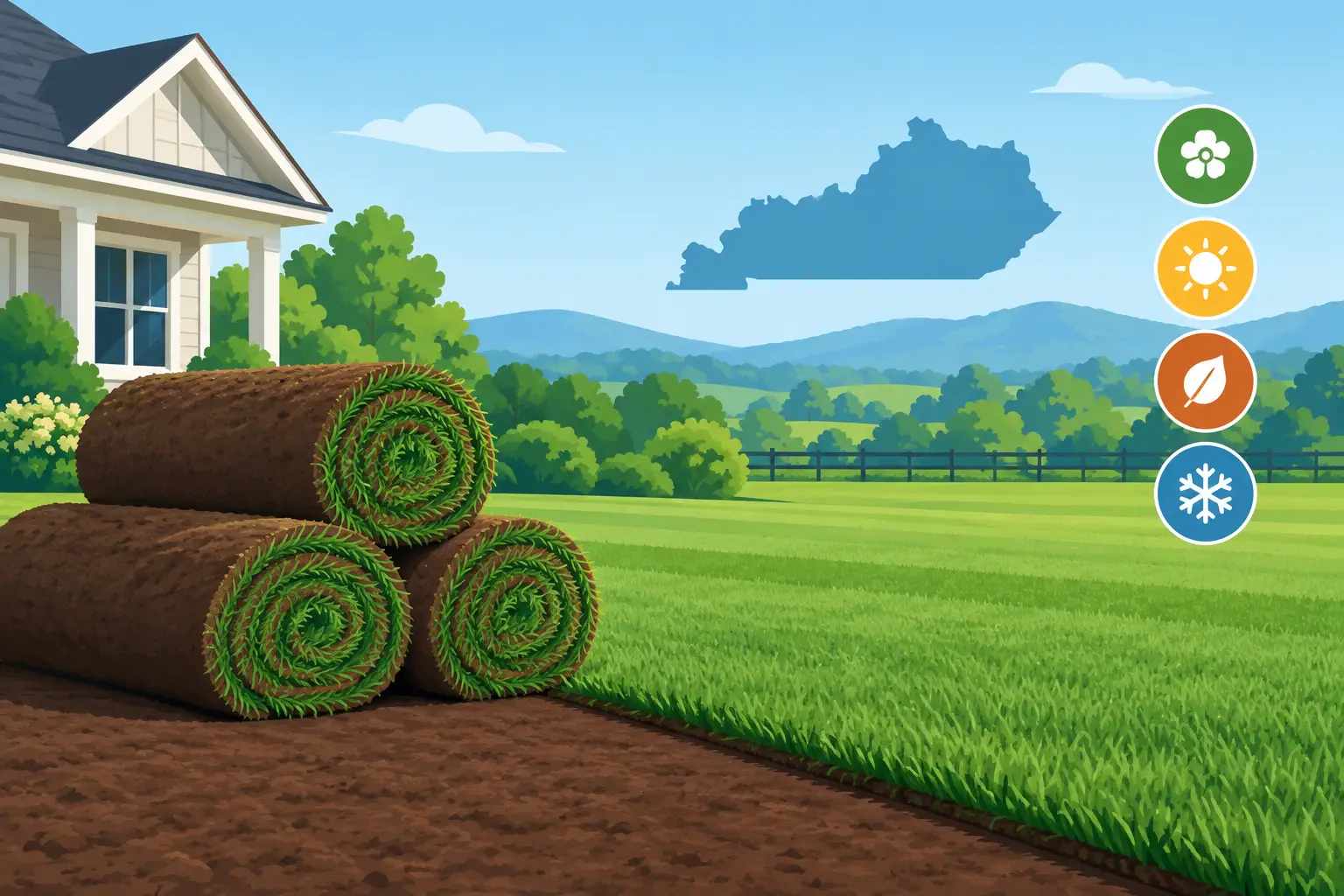
A new sod lawn can make a property look finished in a single day, but that fresh green result depends on more than installation day. When should sod be installed? In Kentucky, the best answer usually comes down to grass type, soil moisture, weather, and your ability to water consistently after the work is done.
For homeowners, property managers, and business owners, timing sod correctly protects the investment. Install at the right time, and the roots can establish before heat, cold, or heavy foot traffic put the new lawn under stress. Install at the wrong time without a care plan, and even quality sod may dry out, separate at the seams, or struggle to root into the soil below.
When Should Sod Be Installed for the Best Results?
In Louisville, Oldham County, and much of central Kentucky, early fall is often the strongest season for installing cool-season sod. September through early November typically brings warm soil, milder daytime temperatures, cooler nights, and more regular rainfall. Those conditions encourage root development without the intense summer heat that can quickly dry out new turf.
Spring is also an excellent time, especially from March through May. A spring installation gives sod a full growing season to establish before winter. The trade-off is that Kentucky spring weather can be unpredictable. Saturated soil, late cold snaps, and rapid temperature swings may delay site preparation or require closer attention to watering.
Sod can be installed in summer and winter, too, but both seasons demand more planning. Summer sod needs disciplined irrigation and should be installed before a stretch of mild weather when possible. Winter installations can work when the ground is not frozen and sod is available, particularly for projects that need a finished appearance before spring. Root growth will be slow, however, so the lawn needs protection from traffic and realistic expectations until warmer weather returns.
Cool-Season Grass Is the Local Standard
Most lawns in this area rely on cool-season turf varieties, including tall fescue and Kentucky bluegrass blends. Tall fescue is especially common because it handles local conditions well, has a deep green color, and can tolerate some heat once established.
Because cool-season grass does most of its rooting and growing during cooler weather, fall installation gives it an advantage. The sod has time to knit into the soil before next summer's heat arrives. That does not mean spring sod is a poor choice. It simply means fall usually provides a wider margin for success when watering and weather are less demanding.
Weather Matters More Than the Calendar
A date on the calendar is helpful, but it should not be the only deciding factor. The ideal day for sod installation has workable soil, moderate temperatures, and a forecast that allows the crew to prepare and water the lawn properly.
Avoid installing over frozen ground, standing water, or soil that is so muddy it compacts under equipment and foot traffic. Compacted soil limits air and water movement, making it harder for roots to grow downward. If a site has drainage trouble, low spots, or irrigation concerns, those issues should be addressed before the sod arrives rather than covered up with new grass.
Summer is the season where weather can make or break the job. Sod laid during a hot, dry week can still succeed, but it needs immediate watering and frequent monitoring. Fresh sod is not yet connected to the moisture in the soil beneath it. Until new roots form, it depends on water supplied from above.
On the other hand, a rainy forecast is not automatically perfect. Heavy rain can wash soil from seams, create muddy ruts during installation, and leave the root zone overly wet. Consistent moisture is the goal, not a flooded lawn.
Prepare the Ground Before Sod Is Delivered
Good installation starts below the grass. Sod cannot correct poor grading, compacted soil, or a lawn full of perennial weeds. Preparing the site properly takes extra effort up front, but it prevents many of the frustrations people associate with new sod.
The existing lawn or weeds should be removed or controlled, depending on the project. The soil should then be loosened and graded so water moves away from structures and does not collect in the lawn. A light finish grade creates a smooth surface, but the soil should not be packed hard. Roots need contact with soil, not a dense surface they cannot penetrate.
Before installation, check sprinkler coverage if the property has irrigation. New sod requires even watering across every section of the lawn. A dry corner near a driveway, a missed strip along a fence, or a sprinkler head blocked by shrubs can become obvious within days. Repairing or adjusting irrigation before sod goes down is simpler than trying to save stressed turf afterward.
If soil testing is appropriate, it can also guide lime or fertilizer decisions. Kentucky soils vary from property to property. Applying products based on the soil's needs is more useful than guessing, especially on larger residential lawns and commercial sites.
The First Two Weeks Set the Lawn Up for Success
The installation date matters, but the care immediately afterward matters just as much. New sod should be watered as soon as it is installed. The goal is to moisten the sod and the top layer of soil underneath so roots begin moving into their new home.
For the first week or two, keep the root zone consistently moist. In warm or windy weather, that may mean watering more than once a day in short cycles. In cool, rainy weather, it may mean much less. Lift a corner of a piece of sod occasionally. If the soil underneath is dry, the lawn needs water. If it is muddy and water is pooling, cut back and allow the area to drain.
Try to limit foot traffic during this period. Kids, pets, delivery crews, and lawn equipment can shift pieces before roots have anchored them. If a seam opens or a corner curls up, press it back into place and water it thoroughly.
Mowing normally begins once the sod has started rooting and the grass is tall enough to trim. Use a sharp mower blade, avoid taking off more than one-third of the grass height, and do not mow a soggy lawn. For tall fescue, keeping the mowing height on the higher side helps shade the soil and supports stronger roots.
When Summer Installation Makes Sense
Sometimes a property cannot wait until fall or spring. A home may be going on the market, a construction project may have just wrapped up, or a commercial site may need safe, presentable ground cover before opening. In those cases, summer sod is a practical solution when the owner is prepared for the added maintenance.
The key is not treating summer sod like an established lawn. Plan for watering, schedule installation around the weather when possible, and avoid mowing or using the area too soon. Shade from mature trees can reduce heat stress, but it may also limit the sunlight grass needs, so each area of the property should be evaluated on its own.
A professional crew can help determine whether immediate installation is the right move or whether site preparation now and sod installation during a better weather window will provide better value. MowAction Lawn Care Services helps property owners make that call based on the lawn's condition, drainage, irrigation, and goals for the space.
Signs You May Need to Wait Before Installing Sod
Waiting is often the smarter choice when the site is not ready. If the yard has active drainage problems, exposed tree roots, construction debris, severe compaction, or unresolved weed growth, new sod may give a short-term cosmetic improvement without lasting results.
It can also be wise to wait if no one can manage the watering schedule. New sod needs attention, especially during the first 10 to 14 days. Leaving for a summer vacation immediately after installation or expecting occasional rain to do all the work creates unnecessary risk.
The same is true for major landscaping work. If a patio, retaining wall, sprinkler repair, or utility project is planned soon, complete that work first. Installing sod last helps protect the finished lawn from equipment damage and keeps the property looking clean when the project is complete.
A well-timed sod installation is not just about choosing spring or fall. It is about starting with prepared soil, matching the work to the weather, and giving the lawn the care it needs to take root. When those pieces come together, a new lawn has the best chance to become the healthy, polished part of the property you had in mind.