

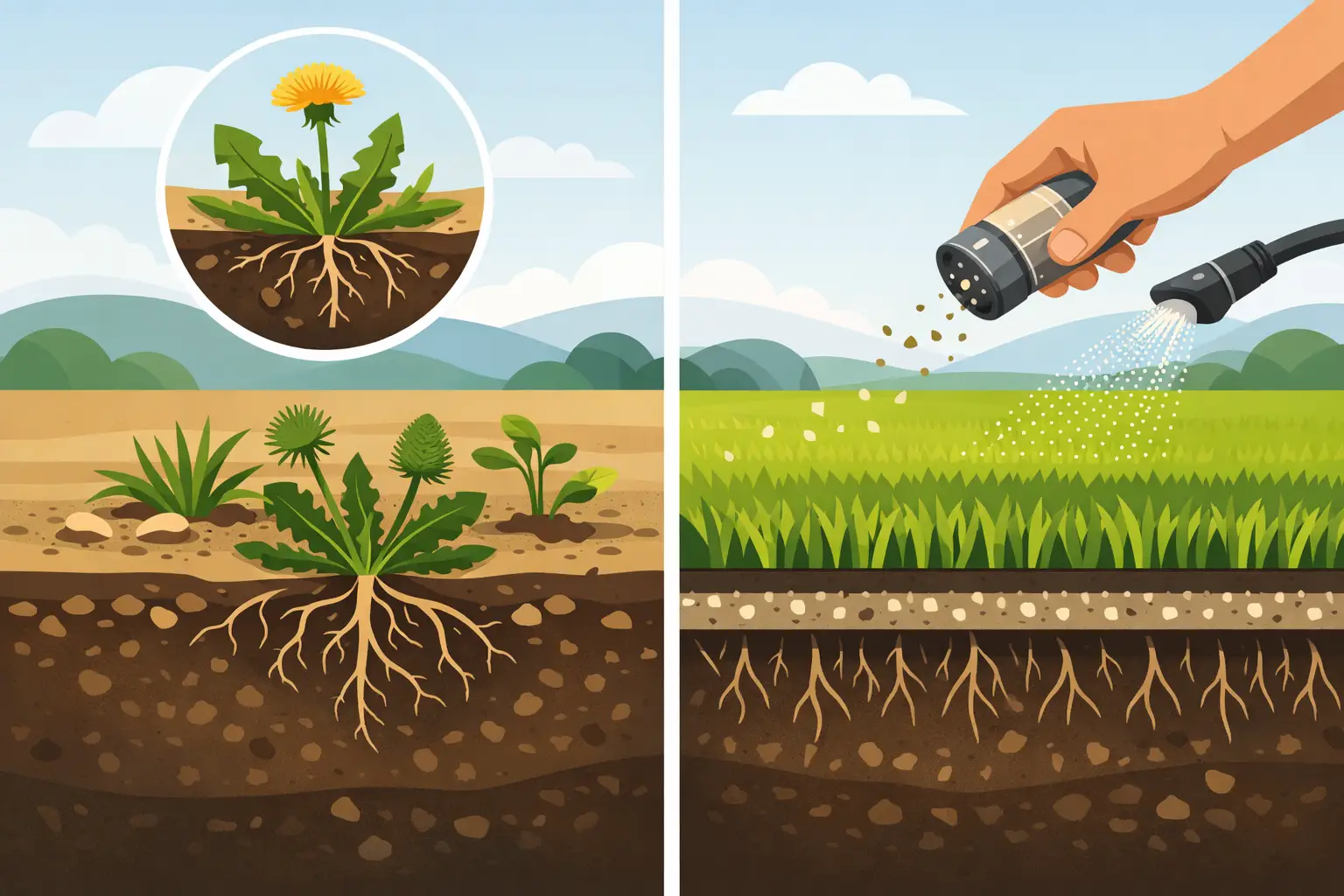
A newly seeded or sodded lawn can look promising one week and suddenly fill with crabgrass, clover, or broadleaf weeds the next. Effective weed prevention for new lawns starts before those weeds get a foothold, but it also requires patience. New grass is still establishing roots, and using the wrong product or mowing too aggressively can set the lawn back just when it needs to grow.
For homeowners and property managers, the goal is not a perfectly weed-free yard overnight. The goal is to establish thick, healthy turf that naturally leaves little room for weeds to grow. Good preparation, smart watering, proper mowing, and careful herbicide timing make the biggest difference.
Start With a Clean, Prepared Seedbed
The best time to prevent weeds is before grass seed or sod goes down. Weeds thrive in thin turf, bare soil, compacted ground, and areas with poor drainage. If a lawn is being renovated or installed from scratch, clear existing vegetation and remove debris before planting. Grade the area so water moves away from the home without washing out seed or soil.
Soil preparation matters just as much as surface appearance. Loosen compacted soil, add quality topsoil where needed, and correct major drainage issues before installation. A soil test can also identify whether the ground needs lime, fertilizer, or other amendments. Grass that receives the right foundation germinates more evenly and fills in faster.
For new sod, make sure the soil is smooth and has good contact with the sod pieces. Gaps between rolls or uneven ground can dry out quickly, creating weak spots where weeds can move in. For seed, use clean seed suited to Kentucky conditions and follow the recommended seeding rate. Spreading too little seed leaves open soil. Spreading far too much can create crowded seedlings that compete with one another.
Weed Prevention for New Lawns Begins With Timing
In the Louisville area and nearby Oldham and Shelby County communities, most lawns are cool-season turf such as tall fescue or Kentucky bluegrass. Early fall is generally the strongest window for seeding because warm soil encourages germination while cooler air reduces stress. Many annual summer weeds are also slowing down, giving new grass a better chance to establish.
Spring seeding can work, especially when repairs cannot wait, but it comes with more pressure from crabgrass and hot weather. A lawn seeded in spring may need more frequent watering and closer monitoring as temperatures rise. It may also be too young for some weed-control products during the period when weed seeds are most active.
This timing issue is why pre-emergent weed control needs careful planning. Pre-emergent products create a barrier that stops many weed seeds from germinating. They can be very useful for established lawns, but they may also prevent new grass seed from sprouting. Applying a standard crabgrass preventer before or immediately after seeding is one of the most common mistakes homeowners make.
If you are planting grass seed, do not apply a regular pre-emergent herbicide unless the label specifically states it is safe for new seeding and gives clear application instructions. Some specialty products are designed for use around newly seeded lawns, but the grass type, product, and timing all matter. When in doubt, protect the new turf first and address weeds after it has matured.
Water to Grow Grass, Not a Weed Nursery
New seed needs consistently moist soil. That does not mean soaking the lawn every day. Heavy watering can wash seed into low spots, create muddy areas, and encourage disease. The better approach is light, frequent watering until seedlings emerge and begin to establish.
Once the grass is up, gradually shift toward deeper, less frequent watering. This encourages roots to grow down into the soil instead of staying near the surface. Sod also needs steady moisture during its first weeks, especially along seams and edges, but it should not remain saturated. Lift a corner only if necessary to check whether the soil beneath is moist and whether roots are beginning to knit into the ground.
Watch for runoff, standing water, and dry patches. Irrigation problems often show up first in a new lawn because the grass has not yet developed a deep root system. Correcting sprinkler coverage or drainage early helps prevent thin turf and recurring weed trouble later.
Mow at the Right Height and Never Remove Too Much
Mowing is one of the simplest forms of weed control. Taller, properly maintained grass shades the soil, reduces weed seed germination, and helps the lawn hold moisture. For most tall fescue lawns, a mowing height around 3 to 4 inches is a good target during the active growing season.
Wait to mow new grass until it is well rooted and tall enough for the mower to trim only the top portion. A good rule is to avoid removing more than one-third of the blade at a time. If grass has grown to 4.5 inches, cut it no shorter than about 3 inches. Cutting too low stresses seedlings and exposes more soil to sunlight, which is exactly what many weeds need.
Use a sharp mower blade. Dull blades tear tender grass rather than making a clean cut, leaving a rough, stressed appearance. Keep foot traffic limited while the lawn is establishing, particularly after rain or watering, when soil is soft and young roots can be disturbed.
Handle Early Weeds Without Hurting Young Turf
Seeing a few weeds in a new lawn does not mean the project has failed. Disturbed soil contains dormant weed seeds, and some will germinate alongside the grass. The key is deciding whether a weed needs immediate action or whether it can wait until the new lawn is stronger.
For scattered, easy-to-remove weeds, hand-pulling is often the safest option. Pull after a light rain or watering, when the soil releases roots more easily. Remove the whole root where possible, especially with larger broadleaf weeds. Do not leave pulled weeds lying on bare soil if they have seed heads.
Avoid broad, aggressive herbicide applications on newly seeded grass. Many post-emergent weed killers require the lawn to be mowed several times or established for a set number of weeks before treatment. Product labels vary, and the label is the authority on which turf types can be treated and when. Applying too soon can stunt, discolor, or kill new grass.
If weeds are widespread, it may be better to focus on getting the grass healthy through watering and mowing first. As turf thickens, many small weeds become less noticeable and easier to control later with a targeted treatment plan. For large areas, commercial properties, or lawns with persistent weed pressure, professional evaluation can prevent costly trial and error.
Feed Carefully and Build Density Over Time
Fertilizer can help a new lawn establish, but more is not better. Too much fertilizer can burn young grass, push weak top growth, or contribute to runoff. Use a starter fertilizer only when it fits the soil conditions and installation plan. After establishment, a balanced seasonal lawn-care program can help maintain color, root strength, and density.
Aeration may be helpful later if soil compaction is limiting growth, but do not rush it on a very young lawn. New grass needs time to anchor. Once turf is established, aeration and overseeding can improve thin areas and reduce future weed opportunities by keeping the lawn full.
A thick lawn is the best long-term weed defense. It shades the soil, competes for water and nutrients, and gives your property the clean, cared-for look you want without relying on constant chemical treatment.
When a New Lawn Needs Professional Help
Some weed problems are really installation or site problems in disguise. Poor drainage, compacted clay, uneven grading, weak irrigation coverage, shade, or low-quality soil can keep grass thin no matter how often it is treated. Addressing the cause protects your investment better than repeatedly spraying the symptom.
MowAction Lawn Care Services can help homeowners, property managers, and commercial property owners evaluate new turf, irrigation needs, seeding, sod installation, mowing, and ongoing weed-control timing. A coordinated plan is especially valuable when a lawn is part of a larger landscape project or when curb appeal needs to stay strong through every season.
Give new grass the time and conditions it needs to fill in. A few early weeds are manageable, but strong roots, consistent care, and patient decisions are what turn bare ground into a lawn that can stand up to weed pressure for years.