

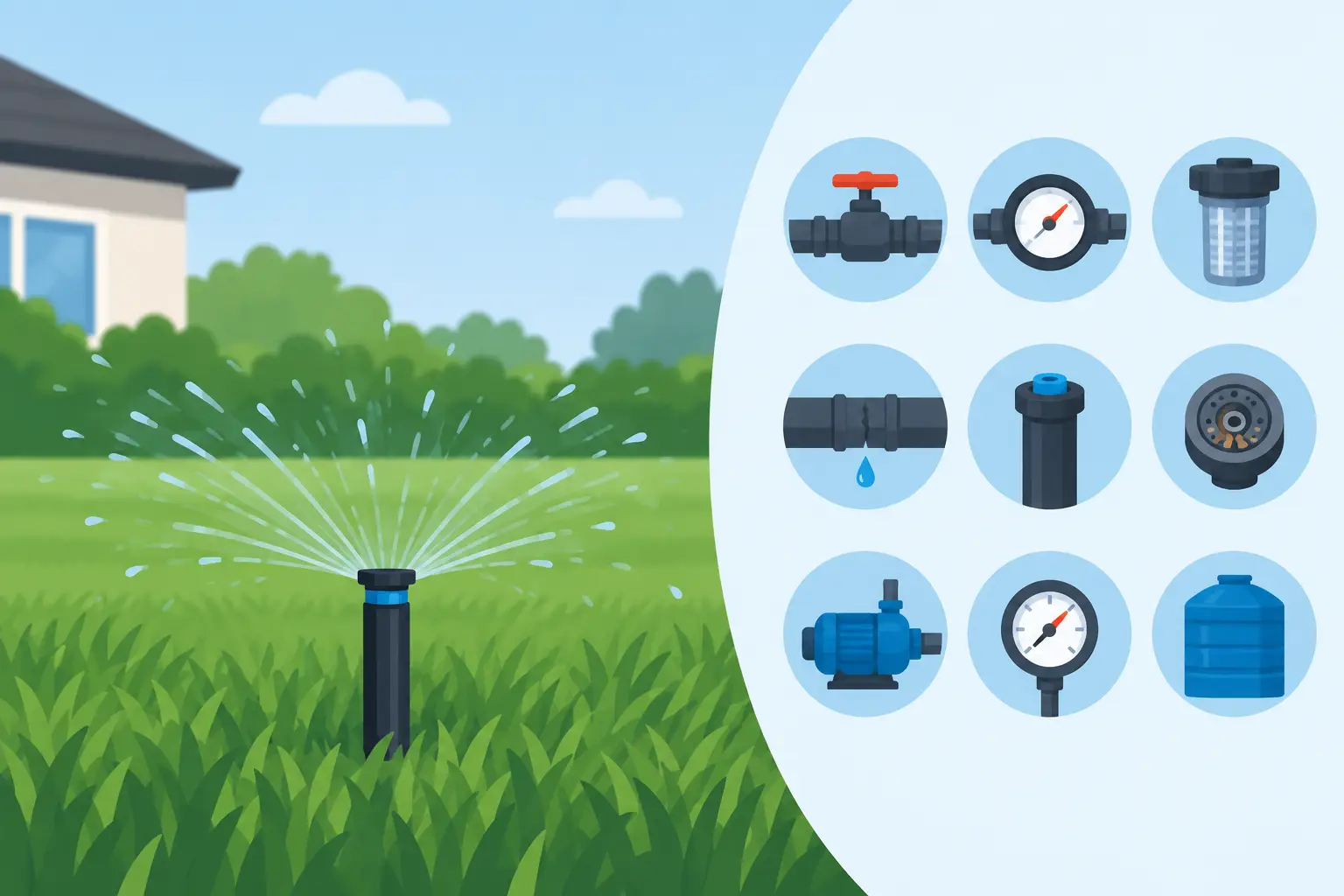
A sprinkler zone that once covered the lawn evenly can suddenly leave brown strips, weak sprays, and dry areas around flower beds. Homeowners often ask, what causes sprinkler low pressure when a system seems to be running but the results are clearly falling short. The answer can be as simple as a partly closed valve or as involved as a hidden underground leak.
Low pressure is not just a watering inconvenience. It can waste water, stress turf during Kentucky heat, and make an otherwise well-maintained property look patchy. Finding the real source early helps prevent a small irrigation issue from becoming a bigger repair.
What Causes Sprinkler Low Pressure in a System?
Sprinkler systems rely on a balance of water volume, pressure, correctly sized pipes, and properly matched sprinkler heads. When one part of that balance changes, the sprinklers may pop up but fail to throw water far enough or distribute it evenly.
A useful first clue is whether the issue affects every zone or only one. Low pressure throughout the entire system usually points to the water supply, a main valve, a pressure regulator, or a major leak. If one zone is weak while others work normally, the problem is more likely within that zone's valve, piping, heads, or settings.
1. A Partly Closed Water Supply Valve
The irrigation shutoff valve may be near the water meter, inside a basement, or close to the backflow preventer. After winterization, plumbing work, or a previous repair, that valve may not have been reopened all the way.
A gate valve can appear open even when its internal mechanism is not fully allowing water through. Ball valves are easier to check: the handle should generally run parallel to the pipe when open. Before adjusting any valve, make sure it belongs to the irrigation system and not the home's main water supply.
2. A Backflow Preventer or Pressure Regulator Issue
Most irrigation systems include a backflow prevention assembly to keep irrigation water from flowing back into the home's drinking water. If its shutoff handles are partly closed, its internal components are damaged, or its fittings are leaking, pressure can drop before water reaches the zones.
Some properties also have a pressure regulator. This device protects pipes and fixtures from excessive water pressure, but a failing or incorrectly adjusted regulator can restrict irrigation performance. Because backflow devices and regulators affect the system's safety and plumbing operation, professional service is usually the right choice.
3. A Leak in the Main Line or Zone Line
A break or leak allows water to escape before it reaches the sprinkler heads. Large leaks often create soggy soil, pooling water, unusually lush patches of grass, or water running from a slope while the system is on. Smaller leaks can be harder to spot, especially if they are beneath mulch, turf, or a hardscape edge.
If the leak is in the main line, it may cause weak performance in multiple zones. A zone-line leak typically affects one area. Do not assume a wet spot is simply overwatering. A damaged line can erode soil, undermine paving, and raise the water bill if left unaddressed.
4. Clogged, Damaged, or Mismatched Sprinkler Heads
Sprinkler heads work in the dirt, so they collect dirt. Sand, lawn clippings, mulch, insects, and small stones can clog nozzles and filters. A clogged nozzle may produce a weak stream, spray straight down, or fail to cover its normal arc.
A cracked head, broken riser, or head that does not fully pop up also reduces performance. Sometimes the issue is not damage but design: a high-flow rotor installed on a zone designed for small spray heads can pull too much water from the line. The first heads may look acceptable while the heads at the end of the zone barely spray.
5. Too Many Sprinklers Running on One Zone
Every zone has a practical flow limit. If a system was expanded over time by adding heads to an existing zone, it may now demand more water than the supply and pipe size can deliver. This is common when new beds, sod areas, or landscape additions are tied into an older irrigation layout.
The symptoms are usually consistent. All heads in the zone run weakly, and coverage improves when one or two heads are turned off. The lasting repair may involve separating the area into additional zones, changing nozzles, or redesigning the layout so each zone uses water at a manageable rate.
6. A Valve That Is Not Opening Fully
Each sprinkler zone is controlled by an electric valve. When the controller activates it, the valve should open fully and send water to the selected zone. A worn diaphragm, debris inside the valve, a weak solenoid, or a wiring problem can prevent that from happening.
A valve problem can look like low pressure, but the source is actually restricted flow. You may hear the controller click and see some water at the heads, yet the zone never reaches normal coverage. This type of issue often calls for valve inspection and repair rather than adjustments at the sprinkler heads.
7. Water Use Inside the Home or Building
Irrigation and household plumbing may share the same water supply. Running sprinklers while someone is showering, filling a pool, washing clothes, or using several fixtures can reduce available pressure. Commercial properties can see a similar effect when irrigation runs during active business hours.
This does not necessarily mean the sprinkler system is broken. Try operating the affected zone when other water use is low. If pressure improves, updating the controller schedule may solve the problem. If it remains weak at all times, there is likely another restriction or supply concern.
8. Municipal Supply Changes or Well Pump Problems
A pressure drop across the whole property can be tied to the incoming water supply. Municipal systems can experience temporary demand changes, maintenance activity, or pressure fluctuations. Homes with wells may have a failing pressure tank, clogged filter, undersized pump, or pump control issue.
Check faucets and outdoor spigots while the irrigation system is off. If they also seem weaker than normal, the issue may extend beyond the sprinkler system. A licensed plumbing or well professional may need to evaluate the water source before irrigation repairs begin.
9. Seasonal Damage and Aging Components
Freeze-thaw cycles can damage exposed backflow assemblies, fittings, valves, and shallow pipe sections. Even when a crack does not create an obvious geyser, it can reduce system pressure. Older systems may also develop mineral buildup, brittle fittings, worn seals, and corroded components that restrict flow over time.
Proper winterization and spring startup reduce these risks, but they do not eliminate normal wear. A yearly inspection is a practical way to catch small issues before the hottest part of the growing season.
How to Narrow Down the Cause of Low Sprinkler Pressure
Start by running one zone at a time and walking the property. Look for heads that do not rise fully, water bubbling from the ground, saturated areas, visible spray interference, and unusually weak coverage at the end of a zone. Compare the affected zone with a zone that performs normally.
Next, check accessible irrigation shutoff valves to confirm they are fully open. Clear obvious debris from sprinkler nozzles only after turning off the system. Avoid digging around suspected leaks without knowing where utility lines, irrigation wiring, and pipes are located.
Pay attention to timing as well. If the problem occurs only when the household or building is using water, schedule changes may help. If every zone remains weak regardless of time, it is wise to have the supply, backflow assembly, pressure regulation, and main line evaluated.
When a Professional Sprinkler Repair Makes Sense
Basic nozzle cleaning and a quick valve check can resolve minor issues. But professional help is the safer and more cost-effective route when you see persistent wet areas, suspect a buried leak, notice low pressure across several zones, or need to work on backflow equipment, electrical valves, or pipe connections.
A qualified irrigation technician can measure pressure and flow, test individual zones, locate leaks with less disruption to the landscape, and determine whether the system needs a repair or a design adjustment. That distinction matters. Replacing a few sprinkler heads will not fix a zone that is overloaded or a main line that is losing water underground.
For homeowners and property managers in Louisville, Oldham County, and Shelby County, MowAction Lawn Care Services can help identify irrigation problems and make practical repairs that protect both the lawn and your water use.
A healthy sprinkler system should water consistently without flooding one corner of the yard and starving another. If your lawn is showing uneven color or your sprinkler spray has lost its reach, addressing the pressure issue now can help keep the property looking cared for through the next dry stretch.