

A lawn can look green from the street and still struggle underneath. When soil becomes packed down, water runs off instead of soaking in, grass roots stay shallow, and fertilizer has a harder time doing its job. This complete lawn aeration guide explains how to recognize compacted soil, when to aerate in Kentucky, and what to do afterward so the work pays off.
For homeowners, property managers, and business owners, aeration is one of the most practical ways to improve a thinning or tired-looking lawn without starting over. It is not a cure for every turf problem, but when compaction and thatch are holding grass back, it can make a noticeable difference.
What Lawn Aeration Actually Does
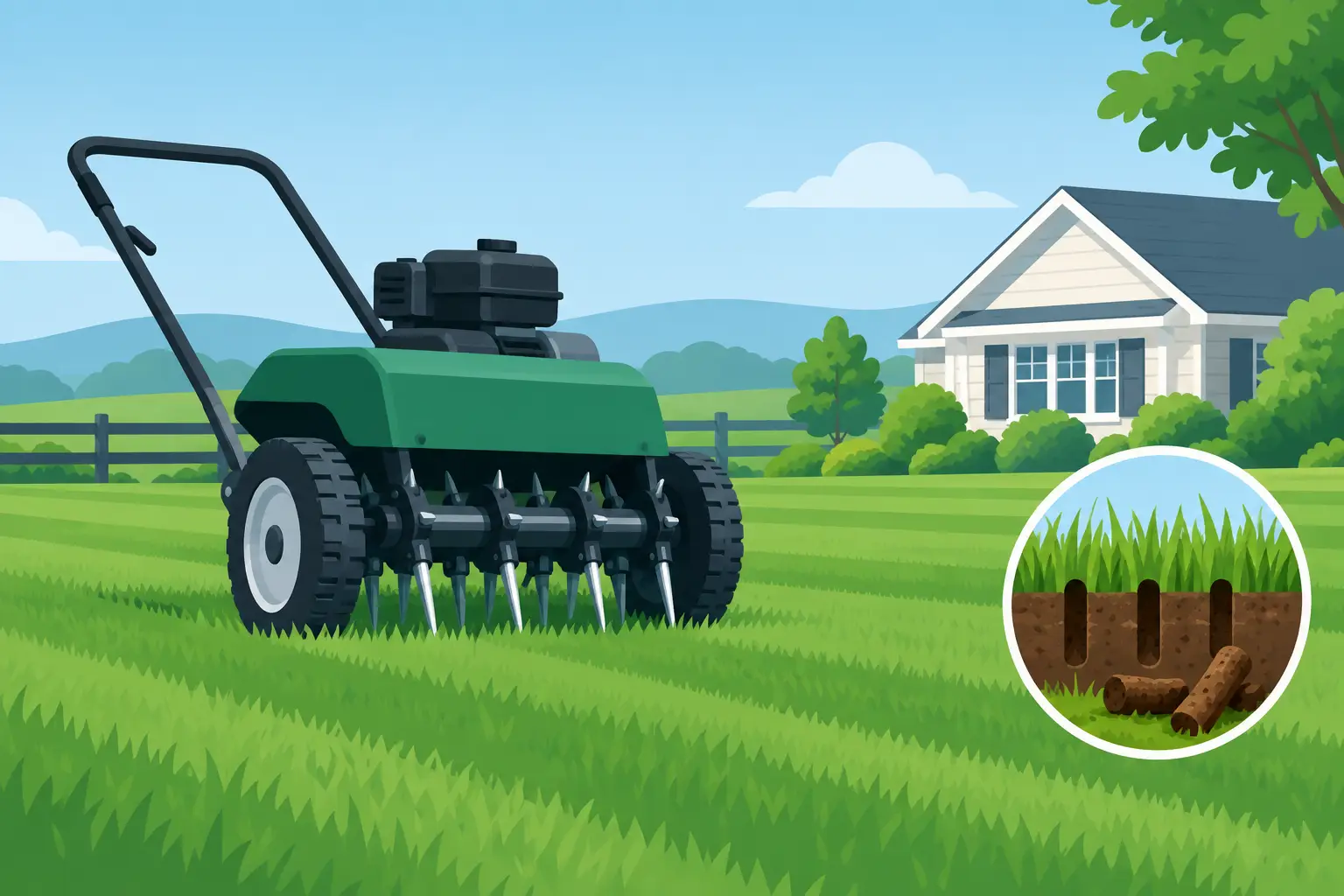
Aeration removes small plugs of soil and thatch from the lawn. Those openings let air, water, and nutrients move deeper into the root zone. They also give grass roots room to expand, which helps turf handle summer heat, foot traffic, and dry spells more effectively.
Core aeration is the standard service for most established lawns. A machine pulls narrow plugs from the soil, usually about 2 to 3 inches deep, and leaves them on the surface. The plugs break down naturally over the following days and weeks. While the lawn may look a little rough at first, that temporary appearance is part of the process.
Spike aerators simply poke holes into the ground. They can help lightly compacted soil, but they may also press the surrounding soil tighter. For lawns with real compaction, core aeration generally delivers better results because it physically removes soil instead of just pushing it aside.
Signs Your Lawn Needs Aeration
Compaction often develops slowly. It is common in yards with clay-heavy soil, regular mowing, active kids or pets, construction traffic, and frequent gatherings. Many properties around Louisville, Oldham County, and Shelby County have soil conditions that benefit from periodic aeration, especially in high-use areas.
Look for a combination of these warning signs:
- Water puddles or runs across the lawn after rain instead of soaking in.
- Grass thins out in pathways, near driveways, or where equipment and people travel most.
- The ground feels hard underfoot, and a screwdriver is difficult to push several inches into moist soil.
- Your lawn dries out quickly even though you are watering regularly.
- Fertilizer and overseeding have produced limited improvement.
- There is more than about a half-inch of thatch, the dense layer of dead stems and organic material between grass blades and soil.
Thin grass does not automatically mean your lawn needs aeration. Shade, poor drainage, insects, disease, improper mowing height, and weed pressure can all create bare or weak spots. A professional assessment helps separate a compaction issue from another problem, so you are investing in the right solution.
The Best Time to Aerate a Lawn in Kentucky
Timing matters because grass needs a chance to recover after aeration. For most cool-season lawns in this area, including tall fescue and Kentucky bluegrass, early fall is the best window. September through early October is usually ideal because soil is still warm, cooler air reduces stress, and grass has time to establish stronger roots before winter.
Fall aeration also pairs well with overseeding. The open holes improve seed-to-soil contact, and cooler temperatures help new grass establish with less pressure from summer weeds and heat.
Spring aeration can work when soil is compacted and the lawn needs attention before the growing season. However, spring is usually a second choice for cool-season turf. Weed seeds are active, summer heat arrives quickly, and newly opened soil can create opportunities for crabgrass and other annual weeds. If spring is the only practical option, a sound weed-control plan and steady watering become more important.
Avoid aerating during drought stress, extreme heat, or when the ground is saturated. Wet soil can smear rather than pull clean plugs, while dry, hard soil may prevent the machine from reaching an effective depth. Watering lightly a day or two before service can help if the lawn is dry, but it should not be muddy.
How to Prepare for Core Aeration
A little preparation protects your property and helps the equipment do its best work. Mow the lawn a bit shorter than usual, but do not scalp it. A height around 2 to 2 1/2 inches is often enough to make plugs easier to remove while keeping the grass healthy.
Water the lawn if conditions have been dry, then mark anything hidden at ground level. Sprinkler heads, irrigation lines, shallow cables, landscape lighting wires, invisible pet fences, and utility boxes all need to be identified before aeration begins. If you have a sprinkler system, this step is especially important.
Clear toys, furniture, hoses, branches, and other obstacles from the turf. Gates should be unlocked, and pets should remain indoors while equipment is operating. For commercial properties, it may be best to schedule work during lower-traffic hours so customers, employees, and residents can move safely around the service area.
What to Do After Aerating
The real value of aeration comes from what happens next. Leave the soil plugs where they land. They will crumble back into the turf and return beneficial organic material to the soil. Raking them up defeats much of the purpose and adds unnecessary work.
Watering should be consistent but sensible. If you aerated without seeding, maintain your normal lawn watering routine and adjust for rainfall. If you overseeded, keep the top layer of soil consistently moist until germination, often with shorter and more frequent watering cycles. Once seedlings are established, gradually shift toward deeper, less frequent watering to encourage roots to grow down.
Aeration is an excellent time for overseeding, especially if the lawn is thin or has bare areas. Quality seed should match the sun exposure, traffic level, and maintenance expectations of the property. Tall fescue is a common choice for many local lawns because it handles Kentucky's changing weather reasonably well, though every yard has its own conditions.
A soil test can also guide fertilizer decisions. Adding fertilizer without knowing what the soil lacks can waste money and create excess growth that requires more mowing. If nutrients are needed, aeration helps them move into the root zone more effectively.
Hold off on heavy traffic for a few days, particularly if the soil is soft. Continue mowing when the grass needs it, using sharp blades and avoiding the temptation to cut too low. Proper mowing height protects the soil, encourages deeper roots, and reduces weed pressure over time.
How Often Should You Aerate?
Many healthy residential lawns benefit from core aeration once each year, particularly if they see regular traffic or sit on dense clay soil. A lightly used lawn with good soil structure may only need aeration every two or three years. High-traffic commercial grounds, play areas, and lawns affected by construction may need more frequent attention.
The better question is not simply how often, but why. If water infiltrates well, grass grows densely, and the soil remains easy to penetrate, annual aeration may not be necessary. On the other hand, if runoff, thin turf, and hard ground return every season, aeration should be part of a broader lawn-care plan that may also include overseeding, proper irrigation, mowing adjustments, and weed control.
DIY Aeration or Professional Service?
Rental core aerators can be effective, but they are heavy machines that require time, transportation, and careful handling. The work becomes more difficult on slopes, around irrigation systems, and in yards with tight access. A rushed pass with a rental machine may not provide enough coverage to solve the problem.
Professional service brings commercial-grade equipment and the experience to work around obstacles, choose suitable conditions, and coordinate aeration with overseeding or seasonal lawn care. For busy homeowners and property managers, it also eliminates a demanding weekend project and provides a clearer plan for what the lawn needs next.
MowAction Lawn Care Services can evaluate compacted turf and schedule aeration as part of a practical maintenance plan for properties throughout the area. The goal is not to sell a service your yard does not need. It is to help your grass receive the air, water, and nutrients it has been missing.
A few small soil plugs may not look like much, but they can be the start of a healthier lawn. Schedule aeration when your grass has time to recover, follow it with smart watering and seeding when needed, and give the roots room to do the work that shows above ground.