

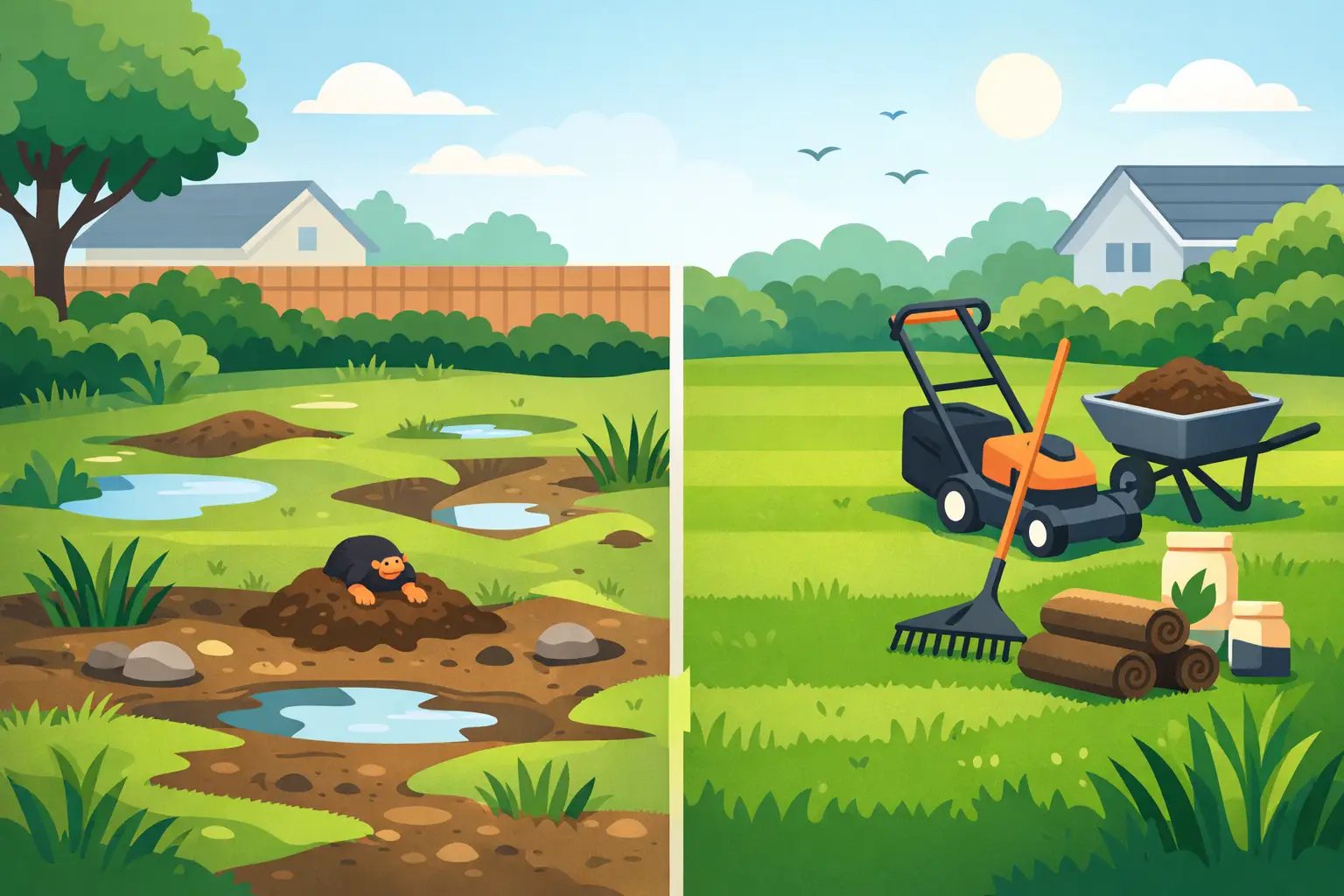
A lawn can look perfectly fine from the driveway, then feel like a washboard the moment you mow it. If you are asking, “why is my lawn uneven,” the answer is usually below the grass, not in the grass itself. Uneven ground can come from settling soil, water problems, animal activity, tree roots, or years of small changes that finally become noticeable.
A few shallow bumps may be mostly cosmetic. Deep holes, sudden low spots, or a slope directing water toward your foundation are different matters. Those issues can make mowing harder, create trip hazards, stress turf, and allow drainage trouble to worsen. The right repair depends on what created the unevenness in the first place.
Why Is My Lawn Uneven? Start With the Pattern
Before adding topsoil or renting equipment, walk the lawn after a rain and again when it is dry. Notice whether the problem is spread across the whole yard, limited to one area, or following a line near a fence, patio, downspout, or old tree.
Broad, gentle waves often point to soil settling or an imperfect original grade. A single sunken area may be a former construction trench, a buried stump, or soil that has washed away. Small raised ridges can be roots or moles. Low spots that stay wet are usually drainage problems, and simply filling them without correcting the water source can turn a minor problem into a recurring one.
For homeowners in Louisville, Oldham County, and Shelby County, clay-heavy soil adds another factor. Clay expands when wet and shrinks as it dries. Seasonal movement is normal, but poor drainage and repeated compaction can make the surface noticeably rough over time.
The Most Common Causes of an Uneven Lawn
Soil settling after construction or landscaping
Soil does not always settle evenly after a home is built, a patio is installed, utilities are repaired, or a landscape bed is changed. Areas where contractors backfilled trenches for irrigation, drainage, gas, or electrical work can sink over several months or even years. The same can happen where an old stump, brush pile, or buried organic material decomposes underground.
This type of unevenness often looks like a long, narrow depression or a low circular area. If the settling is minor and no water collects there, a gradual soil and seed repair may be enough. If the area continues sinking, it is wise to identify what is beneath it before bringing in fill.
Water runoff and poor drainage
Water is one of the biggest reasons a level lawn becomes uneven. Fast runoff can carry soil downhill, especially along the edge of a driveway, patio, or bare patch of turf. Downspouts that empty beside the house can dig channels and leave nearby soil soft or sunken. Standing water may also compact the ground, thin the turf, and create a low spot that grows larger every season.
Drainage repairs are not always as simple as adding soil. A lawn needs to move water away from the house while avoiding a new problem at a neighbor’s property line. Depending on the site, the solution may involve adjusting the grade, extending downspouts, installing drainage, repairing irrigation leaks, or using a properly designed swale.
Compacted soil and heavy traffic
Compaction is common where people, pets, vehicles, and equipment follow the same route. It can also develop in lawns with dense clay soil or areas that have been mowed repeatedly when wet. Compacted ground resists water and air movement, so grass roots stay shallow and weak. Over time, the lawn may become thin, bumpy, and prone to puddling.
Core aeration can help where compaction is the main issue. It removes small plugs of soil, allowing moisture, oxygen, and nutrients to reach the root zone. Aeration will not correct a major dip or steep grade, but it can make a lawn more receptive to leveling material and new grass growth.
Tree roots and old stumps
Large surface roots can lift sections of turf and create hard ridges that are difficult to mow. Mature trees are valuable, so cutting major roots just to flatten the lawn is rarely the best choice. Root damage can weaken or destabilize a tree, and covering roots with too much soil can also cause stress.
In these areas, a modest adjustment to the turf surface may be possible, but there are limits. Sometimes the better long-term choice is to reshape the lawn around the roots, establish a mulch bed, or use shade-tolerant landscaping rather than force grass to grow over a difficult root zone.
Animals, insects, and underground activity
Moles, voles, groundhogs, and other burrowing animals can leave tunnels, ridges, and holes throughout a lawn. Insects can contribute too. Grubs may attract digging animals, while weakened turf makes surface damage easier to see.
Do not fill every hole before checking for active animal activity. If the cause remains, new damage can appear right after the repair. Address the pest or wildlife issue first, then smooth the area and restore the grass.
Frost heave and seasonal soil movement
Winter freeze-thaw cycles can move soil and lift turf slightly, especially in areas with poor drainage. Spring often reveals minor unevenness that was hidden by dormant grass. Most small seasonal changes can be corrected during an appropriate growing season, but large or expanding movement deserves a closer look.
How to Fix Minor Bumps and Low Spots
Small repairs work best when the grass is actively growing and the ground is not saturated. Early fall is often an excellent time for cool-season lawns in Kentucky because temperatures are milder and grass has time to establish before winter.
For shallow low spots, use a leveling mix that suits the existing soil. A blend of screened topsoil and compost is often useful for improving the surface while supporting healthy grass. Sand can be helpful in specific leveling projects, but using too much sand on clay soil without a plan can create layers that hold water differently. The best mix depends on the soil beneath it.
Spread a thin layer, generally no more than about one-half inch at a time, over healthy grass. Work it down through the blades with a rake or leveling tool, leaving enough grass exposed to keep growing. Repeat gradually as needed. Trying to bury a deep depression in one heavy application can smother the lawn and create another uneven surface once the fill settles.
For a deeper hole or dip, cut the sod around the area, lift it carefully, add and compact soil in small layers, then replace the sod. Water the repaired section consistently while roots reconnect. If the existing grass is thin or damaged, overseeding may be a better option than trying to save every piece of turf.
When Regrading Is the Better Answer
A lawn-wide problem calls for more than a few bags of soil. If water pools after routine rain, a large section slopes toward the home, or mowing feels unsafe because of repeated dips and humps, professional grading may be the most practical solution.
Regrading typically involves removing or protecting existing turf, reshaping the soil, addressing drainage, and restoring the lawn with seed or sod. It is more involved than topdressing, but it creates a chance to correct the underlying issue instead of hiding it. The trade-off is cost and temporary disruption, particularly if irrigation, landscape lighting, trees, patios, or retaining walls are nearby.
Be especially careful around a foundation. The finished grade should direct water away from the home, but changing elevation too aggressively can expose roots, affect hardscapes, or move runoff where it does not belong. For major grading, an experienced landscape team can assess the whole property rather than treating one low spot in isolation.
Keep the Lawn From Becoming Uneven Again
Once the surface is repaired, prevention comes down to water management and sound lawn care. Keep downspouts from dumping water onto vulnerable areas, correct sprinkler heads that create runoff, and avoid mowing or driving on saturated ground. Aerate compacted soil when conditions call for it, and maintain a healthy grass cover so bare soil is not left exposed to erosion.
Use caution with heavy equipment near wet areas and tree roots. If a recurring low spot forms above a utility trench or near a structure, do not keep adding soil year after year without investigating the cause. A changing grade can be a signal that water, settling, or underground activity needs attention.
An uneven lawn is not always a major project, but it is worth taking seriously before it affects drainage, safety, or curb appeal. A careful diagnosis can save time, protect your turf, and help you choose between a simple leveling repair and a larger grading plan. When the cause is unclear or the problem involves drainage, MowAction Lawn Care Services can help evaluate the property and provide a practical path toward a smoother, healthier yard.