

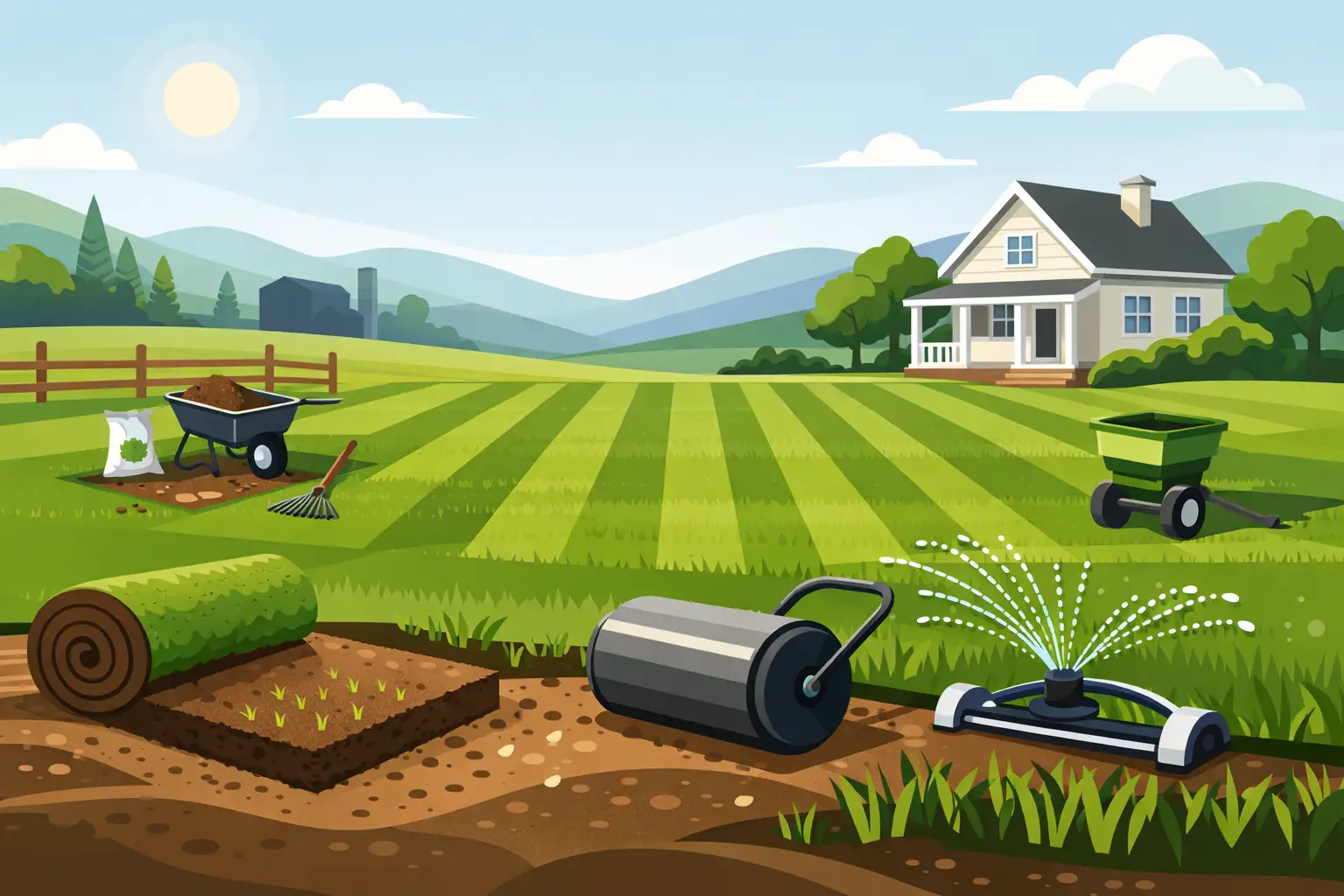
A new lawn can look finished the day seed sprouts or sod is rolled out. The real work, however, happens in the weeks that follow. This new lawn establishment guide is built for property owners who want more than a quick green surface - they want grass that fills in evenly, handles foot traffic, and holds up through Kentucky heat, rain, and seasonal changes.
Whether you are repairing a bare backyard, finishing a new construction lot, or improving the first impression at a commercial property, early decisions affect the lawn for years. Good preparation and consistent care are usually more valuable than expensive shortcuts.
Start With the Site, Not the Grass
A lawn cannot overcome poor drainage, compacted soil, or a surface that has not been graded correctly. Before choosing seed or sod, walk the property after a hard rain. Look for standing water, runoff from downspouts, steep slopes, and low areas where water collects. These conditions should be addressed before installation, not after young grass begins to fail.
New construction sites deserve extra attention. Builders often leave behind compacted subsoil, construction debris, and thin topsoil. Grass may germinate there, but shallow roots will struggle once summer weather arrives. Remove rocks, sticks, and leftover materials, then loosen compacted areas and add quality topsoil or compost where needed.
The goal is a smooth surface that drains away from the home or building while still holding enough moisture for roots. Grade the lawn before planting, because correcting dips and humps after grass establishes can mean damaging the turf you worked hard to grow.
Test the Soil Before Adding Products
Soil testing takes guesswork out of fertilizer and lime decisions. A test can show pH, nutrient levels, and whether the ground needs amendments. In this region, clay-heavy soil is common, and it can become dense when dry or sticky when wet. Organic matter helps improve its structure, but adding fertilizer without knowing what the soil needs can waste money and stress new grass.
Work recommended amendments into the top few inches of soil before seeding or sodding. Then rake the area level and lightly firm it. A surface that is too loose can settle unevenly; one that is packed hard makes it difficult for roots to penetrate. You should be able to leave a shallow footprint, not sink deeply into the soil.
Choose Seed or Sod Based on Your Timeline
Both seed and sod can create a healthy lawn. The better choice depends on your budget, schedule, site conditions, and willingness to provide follow-up care.
Seeding costs less and offers more options for matching grass varieties to sun exposure and intended use. It is especially practical for larger properties or lawns with irregular areas that would require many sod cuts. The trade-off is time. Seed needs steady moisture and protection from washouts, weeds, and traffic while it develops.
Sod delivers an immediate finished appearance and helps stabilize slopes faster. It is a strong option for a home going on the market, a business entrance that needs curb appeal quickly, or a yard where erosion is a concern. Sod is not maintenance-free, though. Its roots must knit into the soil below, and missed watering during the first few weeks can leave seams, brown spots, and weak sections.
For many Louisville, Oldham County, and Shelby County properties, cool-season turf is the usual choice. Tall fescue is popular because it handles heat better than some other cool-season grasses and develops a deep root system when cared for properly. A professional can help match the grass type to shade, traffic, irrigation access, and your expectations for appearance.
Timing Makes a Noticeable Difference
Early fall is generally the most forgiving time to seed cool-season lawns. Soil remains warm enough for germination while cooler air reduces stress, and many annual weeds are less aggressive than they are in spring. Spring seeding can still work, particularly when a project cannot wait, but young grass then faces summer heat before it has fully matured.
Sod can be installed during more of the year when water is available, although extreme heat and frozen ground bring added risk. If you need a lawn established in midsummer, sod may be more predictable than seed, but only if the site can be watered thoroughly and consistently.
Plant Carefully for Even Coverage
For seed, spread half the recommended amount in one direction and the other half at a right angle. This simple approach helps prevent stripes and thin patches. Lightly rake the seed into the top layer of soil, then apply clean straw or another appropriate erosion-control cover sparingly if conditions call for it. Seed buried too deeply may not emerge; seed left entirely exposed can dry out or wash away.
For sod, begin along a straight edge such as a driveway or patio. Lay pieces tightly together in a staggered pattern, similar to brickwork, without stretching or overlapping seams. Cut pieces to fit around beds, trees, and hardscapes. Once installed, roll the sod lightly if needed to improve soil contact, then water it right away.
Avoid installing either product over a surface that has dried into hard clods or turned muddy under heavy equipment. Even quality sod and seed need good contact with a prepared soil bed.
Water for Roots, Not Just Green Color
Watering is the most common reason new lawns succeed or struggle. Fresh seed needs frequent, light watering that keeps the surface consistently damp until germination. Depending on weather, this may mean several short watering cycles a day. The soil should be moist, not puddled. Runoff can move seed into low spots and leave bare areas elsewhere.
As seedlings emerge and begin to grow, gradually reduce watering frequency while increasing the amount applied each time. This encourages roots to grow deeper instead of staying near the surface. Once the lawn is established, a deeper soaking once or twice a week is usually better than daily shallow watering, although rainfall, soil type, and summer temperatures all matter.
New sod needs water deep enough to moisten the soil underneath the rolls. Lift a corner occasionally during the first week to check. If the ground below is dry, the sod is not receiving enough water. After roots begin to anchor, transition toward less frequent, deeper irrigation.
Irrigation should be adjusted for real weather. A rainy week does not need the same schedule as a hot, windy stretch in July. Smart watering protects your investment and helps avoid disease caused by constantly wet grass.
Mow at the Right Time and Height
Do not rush the first mowing. Seeded grass should be tall enough that mowing will remove no more than one-third of the blade. Sod should be firmly rooted before regular mowing begins. Test a small edge by gently lifting it. If it resists, the roots are beginning to establish.
Keep mower blades sharp. Dull blades tear young grass, creating a ragged appearance and increasing stress. For tall fescue, a higher mowing height generally supports deeper roots and better drought tolerance. Cutting it too short may make the lawn look tidy for a few days, but it can expose soil to heat and encourage weeds.
Limit foot traffic during the early establishment period. Children, pets, lawn equipment, and delivery activity can all create ruts or pull up sod seams before roots have taken hold. If a section is used frequently, consider adding a walkway or adjusting the landscape plan rather than repeatedly asking grass to survive where it cannot thrive.
Fertilize With a Plan and Watch for Weeds
A starter fertilizer may be appropriate at planting, especially when a soil test supports it. After that, avoid the temptation to apply more product simply because growth seems slow. Too much fertilizer can burn young grass or create weak, fast top growth before the roots are ready.
Weed control also requires patience. Many herbicides can damage young turf, and timing restrictions vary by product and grass type. The best early weed defense is a dense lawn supported by good seed coverage, appropriate watering, mowing, and soil preparation. Pull isolated weeds by hand when practical, then address larger weed pressure with a treatment plan that is safe for the lawn's stage of development.
Know When to Bring in Help
A lawn project becomes more complicated when drainage is poor, grades need correction, irrigation is unavailable, or the area includes slopes and extensive shade. Commercial properties may also need work scheduled around parking, customer access, and safety concerns. In those cases, professional planning can prevent a costly restart.
MowAction Lawn Care Services can help homeowners and property managers coordinate soil preparation, sod installation, seeding, irrigation support, and ongoing lawn maintenance. Having one dependable team handle the process makes it easier to protect the work after installation rather than treating lawn care as an afterthought.
A new lawn is not judged by how it looks on installation day. Give it the preparation, water, and early care it needs, and it can become the dependable green space that makes the rest of your property look cared for.