

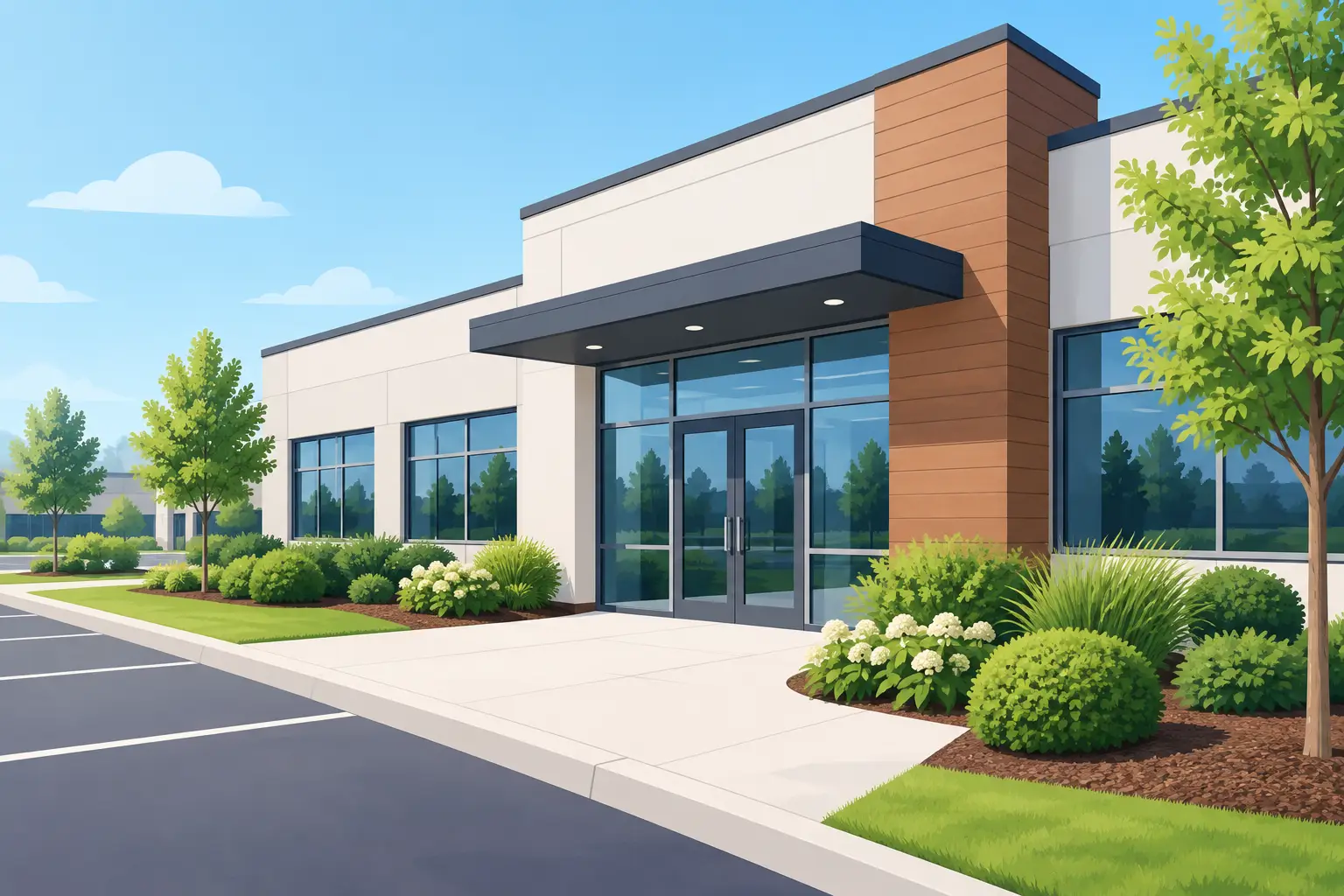
A potential tenant, customer, or visitor starts forming an opinion before they reach the front door. Cracked pavement, dead grass, overflowing planters, and dim walkways suggest a property that may be neglected inside, too. This commercial property curb appeal guide helps owners and property managers focus their time and budget on the exterior details that make a business property feel cared for, accessible, and ready for business.
Curb appeal is not about making every commercial property look like a resort. A medical office needs a clean, calm entry. A retail center needs clear visibility and safe parking. An industrial property may need durable, low-maintenance landscaping that keeps entrances organized without creating sightline issues. The right plan reflects how people use the property.
Start Where Visitors Make Their First Decisions
Most visitors experience a commercial property in a predictable order: street view, sign, driveway, parking area, sidewalk, entry, and front door. Walk that same route at least once each season and look at it from a customer’s point of view. Better yet, do it early in the morning, after dark, and following rain. Problems that are easy to miss at noon often stand out in lower light or wet weather.
Begin with visibility. Can drivers identify the entrance from the road? Are address numbers easy to read? Is landscaping covering monument signs, directional signs, fire hydrants, or lighting fixtures? Shrubs and ornamental trees add value when they frame an entry, but they become a liability when they hide important features or narrow sidewalks.
Then look for obvious maintenance signals. Weeds in pavement cracks, scattered litter, faded mulch, brown turf, and branches hanging over parking spaces all make an impression. None of these issues may seem major on its own. Together, they can make a well-run business look less dependable than it is.
Build Curb Appeal Around a Reliable Maintenance Routine
Large landscape projects get attention, but routine care is what protects curb appeal week after week. A beautifully installed bed will not stay attractive if mowing, edging, pruning, weed control, irrigation checks, and seasonal cleanup happen inconsistently.
For most commercial properties, lawn mowing should leave turf even, cleanly edged, and free of clippings on sidewalks and curbs. Overly short mowing can weaken grass during Kentucky heat, while allowing grass to grow too long before service can create a rough, uneven finish. The goal is a healthy, consistent appearance rather than a lawn cut as low as possible.
Landscape beds need the same attention. Fresh mulch provides a clean finished look, helps hold soil moisture, and reduces weed pressure. However, piling mulch high against tree trunks or building thick layers year after year can harm plants. A moderate, evenly spread layer looks professional and supports plant health.
Pruning also deserves a schedule. Remove dead limbs, clear branches from pedestrian routes, and keep shrubs shaped without shearing every plant into the same stiff form. Formal hedges may fit a bank or office entrance, while a more natural style can suit a professional campus or mixed-use property. It depends on the building’s architecture and the amount of upkeep the property can support.
Make irrigation part of the maintenance conversation
Irrigation problems often show up as curb appeal problems first. One leaking sprinkler head can create muddy areas near an entrance. A misdirected head can spray sidewalks, storefronts, or vehicles. Uneven coverage can leave one section of turf green while another turns thin and brown.
Regular sprinkler inspections help identify leaks, broken heads, poor timing, and coverage gaps before plants decline. Watering schedules should change with the season and weather rather than running on the same setting all year. Smart use of water keeps the property looking cared for while avoiding waste.
Give the Entrance More Attention Than the Back Lot
Not every exterior area deserves the same level of investment. The entry zone is where a property’s curb appeal earns its keep. This is the best place to prioritize defined planting beds, healthy turf, seasonal color, attractive containers, clean hardscapes, and working lighting.
A strong entry does not need to be complicated. A few well-chosen plant groups, maintained at the right size, often look better than a crowded landscape with too many varieties. Evergreen shrubs provide structure through winter. Perennials can add seasonal interest with less replacement cost than annuals. Annual flowers and containers create immediate color, but they require more frequent watering, deadheading, and seasonal change-outs.
That trade-off matters. If your team or landscape provider cannot maintain high-demand plantings consistently, choose durable options that still look polished. A simpler landscape kept in excellent condition will always outperform an ambitious design that becomes overgrown or patchy.
Keep hardscapes clean and safe
Sidewalks, curbs, patios, retaining walls, and parking lots frame the landscape. When they are stained, cracked, or obstructed, even excellent plantings can feel secondary. Remove weeds from cracks, clear debris from curb lines, and address trip hazards quickly. Pay close attention to drainage near entrances and walkways, where standing water can cause both safety concerns and surface damage.
If your property has outdoor seating or a patio, treat it as part of the customer experience rather than extra square footage. Clean pavers, stable furniture, defined edges, and nearby plant material can turn an underused area into a place people actually enjoy. For office and multifamily properties, that can improve how tenants view the entire site.
Use Lighting to Improve Appearance and Confidence
Landscape lighting is one of the most practical curb appeal improvements because it supports both appearance and safety. It can make signs readable, guide visitors toward the entrance, highlight architectural features, and reduce dark spots around walks and parking areas.
The best lighting plan is purposeful, not excessive. Bright fixtures pointing into drivers’ eyes or neighboring windows create problems. Instead, focus on even illumination where people walk, park, and make decisions about where to go. Check regularly for burned-out bulbs, damaged fixtures, exposed wiring, and plants that have grown over the lights.
Lighting should work with the property’s operational hours. A restaurant, retail center, and medical facility may need different levels of illumination than an office building that is mostly empty at night. Review the property after dark before deciding where upgrades are needed.
Plan for Kentucky’s Seasonal Changes
A commercial property can look excellent in May and still lose its curb appeal by November without a seasonal plan. Spring calls for cleanup, mulch refreshes, pruning, and turf recovery. Summer requires mowing, irrigation monitoring, weed control, and attention to heat-stressed plants. Fall brings leaf removal, cutbacks, and preparation for winter weather.
Leaves deserve special attention around commercial sites. When they collect in entry beds, parking areas, gutters, and drains, they make the property look neglected and can contribute to slippery surfaces or drainage issues. Timely leaf removal keeps common areas clean and protects the work done during the growing season.
Winter maintenance is also part of curb appeal. Snow and ice service is first about safe access, but plowed snow piles, deicing residue, damaged turf edges, and scattered debris should be addressed as conditions allow. A property that is safely cleared and promptly tidied after a storm tells customers and tenants that management is paying attention.
Prioritize Improvements by Visibility and Risk
When budgets are limited, start with work that solves a safety issue, protects an existing investment, or affects the first impression. Repairing a broken irrigation zone may take priority over adding new flowers. Rebuilding a failing retaining wall should come before decorative upgrades. Clearing an obstructed sign may be more valuable than planting another bed in a low-traffic area.
A practical priority order often looks like this:
- Correct drainage, trip hazards, damaged pavement edges, and unsafe lighting.
- Restore routine maintenance standards for turf, beds, sidewalks, and parking areas.
- Improve the front entry with mulch, plant replacements, containers, and defined borders.
- Invest in lasting upgrades such as landscape lighting, pavers, patios, retaining walls, or redesigned planting areas.
This approach keeps a property from spending money on cosmetic details while larger maintenance concerns continue underneath. It also makes it easier to phase improvements over several seasons.
Work With One Team That Sees the Whole Property
Commercial curb appeal is easier to manage when the people mowing the lawn can also report irrigation concerns, recommend plant replacements, handle seasonal cleanup, and support larger landscape improvements. That continuity helps prevent small issues from getting passed around until they become expensive problems.
For property owners and managers in Louisville, Oldham County, and Shelby County, MowAction Lawn Care Services can help build a maintenance and improvement plan around the property’s needs, traffic patterns, and budget. The goal is not to sell work the property does not need. It is to keep the exterior dependable, attractive, and easier to manage all year.
A well-kept exterior gives visitors a reason to feel confident before anyone says a word. Start with the route from the street to the door, fix what creates doubt, and keep the routine work consistent. That is how curb appeal becomes a dependable part of your property’s value rather than a one-time cleanup project.