

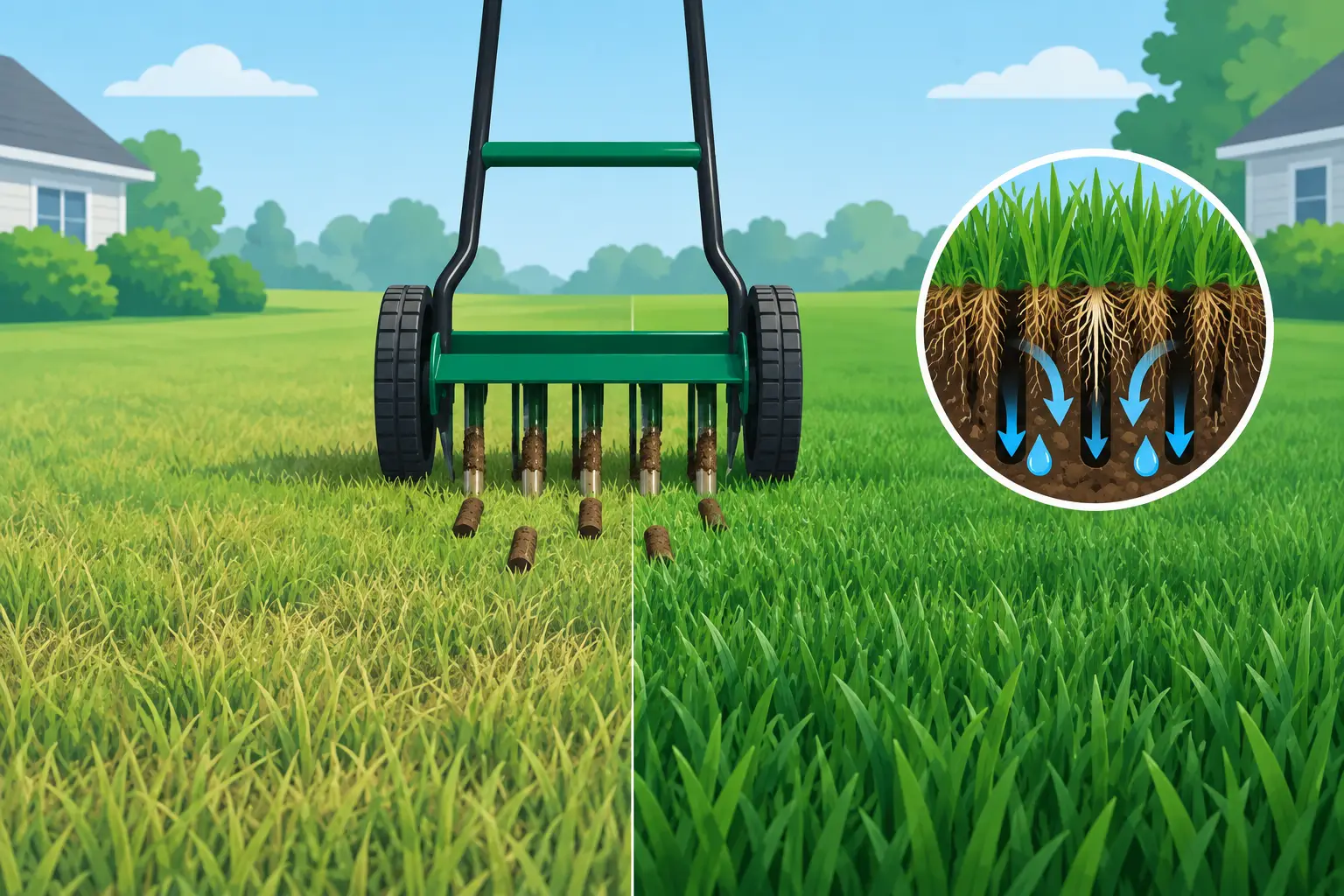

A lawn can be green on the surface and still struggle underneath. If water puddles after a rain, grass thins in busy areas, or your soil feels hard underfoot, lawn aeration may be the missing step. It creates small openings in compacted soil, giving grassroots better access to the air, moisture, and nutrients they need to grow.
For homeowners, property managers, and commercial owners, this is not about adding another chore to the calendar. It is about helping the lawn respond better to the mowing, watering, fertilizing, and weed-control work already being done.
What Lawn Aeration Actually Does
Healthy soil contains tiny spaces between soil particles. Those spaces hold air and water, allowing roots to spread and take up nutrients. Over time, foot traffic, pets, mowing equipment, construction activity, and Kentucky's changing weather can press those spaces out of the ground. Clay-heavy soils, which are common in many local properties, are especially prone to compaction.
Core aeration uses a machine that removes small plugs of soil and thatch from the lawn. The plugs are left on the surface, where they break down naturally. This is different from spike aeration, which simply pokes holes into the ground. Spikes can provide limited short-term relief, but core aeration generally does a better job of opening compacted soil because it physically removes material.
Once the soil is opened, rain and irrigation can move down toward the roots instead of running across the surface. Fertilizer can reach the root zone more effectively, and new grass seed has better contact with soil. The result is often a thicker, more resilient lawn over time, not an overnight transformation.
Signs Your Property May Need Lawn Aeration
Compaction is easy to overlook because it develops gradually. A lawn that used to recover quickly from summer stress may begin looking thin or tired, even when it receives regular care. If a screwdriver is difficult to push a few inches into moist soil, that is a practical sign the ground may be compacted.
Water behavior tells a story, too. Runoff, standing water, and dry patches can all point to soil that is not absorbing moisture evenly. You may also notice grass thinning along sidewalks, driveways, play areas, paths between parking spaces, or other places with regular traffic.
Thatch can be another reason to aerate. A thin layer of thatch is normal, but a dense layer between the green grass and the soil can block water and nutrients. Core aeration helps manage moderate thatch while improving access to the soil below. If thatch is unusually thick, a separate dethatching service may be needed first. The right approach depends on what is happening below the grass, not just what the lawn looks like from the curb.
When to Aerate in Kentucky
Timing matters because aeration temporarily disturbs the lawn. For cool-season grasses commonly found across Louisville, Oldham County, and Shelby County, early fall is usually the best window. Soil is still warm enough for root growth, cooler weather reduces stress, and weed pressure is often lower than it is in spring.
Fall aeration also pairs well with overseeding. The openings created by the aerator help seed reach the soil, while fall conditions give young grass a better chance to establish before summer heat arrives. A lawn that has thinned from traffic, drought, or disease can benefit greatly from this combination.
Spring aeration can still make sense for a heavily compacted lawn or a property that needs help before the growing season. The trade-off is that spring conditions can also encourage weed seeds to germinate. If you have recently applied a pre-emergent weed control product, aeration and seeding plans may need to be adjusted. Pre-emergent products are designed to prevent seeds from sprouting, including desirable grass seed.
Avoid aerating when soil is excessively wet, frozen, or drought-hard. Wet soil can become messy and damaged under equipment, while dry soil may be too hard for effective core removal. A professional assessment can help determine whether the lawn is ready or whether it needs a little more moisture before service.
What to Expect After Aeration
The small soil plugs left behind can make a yard look rough for a week or two. That is normal, and the plugs should not be raked away. Mowing, rainfall, irrigation, and natural activity will break them apart and return the soil to the lawn.
Most lawns can be mowed after aeration, although it is best to follow the service team's recommendation based on whether overseeding or fertilizer was applied. If new seed is part of the plan, watering becomes especially important. The goal is to keep the seedbed consistently moist during germination, then gradually transition to deeper, less frequent watering as roots develop.
Aeration is also a good time to review mowing habits. Cutting grass too short weakens roots and leaves soil exposed to heat. Keeping cool-season turf at an appropriate height supports deeper rooting and better moisture retention. Sharp mower blades, proper watering, and a sound fertilization plan will help extend the value of the aeration service.
Aeration Is Not a Fix for Every Lawn Problem
Lawn aeration is highly effective when compaction and moderate thatch are part of the problem. It will not, by itself, solve poor drainage caused by grading, irrigation leaks, heavy shade, insect damage, or a lawn that needs major soil improvement. A soggy low spot near a foundation may need drainage work, while grass under dense trees may require different plant choices or selective pruning.
That is why a one-size-fits-all treatment is rarely the best value. A reliable lawn care provider should look at the property as a whole: soil condition, grass type, traffic, watering patterns, thatch, weeds, sunlight, and the homeowner's goals. A front lawn preparing for a home sale may need a different plan than a high-traffic commercial property or a backyard used by children and pets.
A Better Fit With Your Ongoing Lawn Care
Aeration works best as part of a consistent maintenance program. Mowing keeps the lawn tidy, weed control reduces competition, fertilizer supports growth, and irrigation helps roots use the benefits of improved soil access. Aeration gives all of those efforts a better foundation.
For properties with recurring soil compaction, annual aeration is often worthwhile. Lower-traffic lawns with healthy soil may only need it every two or three years. There is no benefit in aerating simply because the calendar says so. The better question is whether the soil and grass are showing signs that they need help.
MowAction Lawn Care Services can evaluate your lawn's condition and recommend a practical plan based on your property, schedule, and goals. Whether you are trying to thicken a worn lawn, improve curb appeal, or prepare for overseeding, good communication and the right timing make the work count.
A healthier lawn starts below the surface. When the soil has room to breathe, the grass above it has a much better chance to stand up to traffic, heat, and everyday use.