

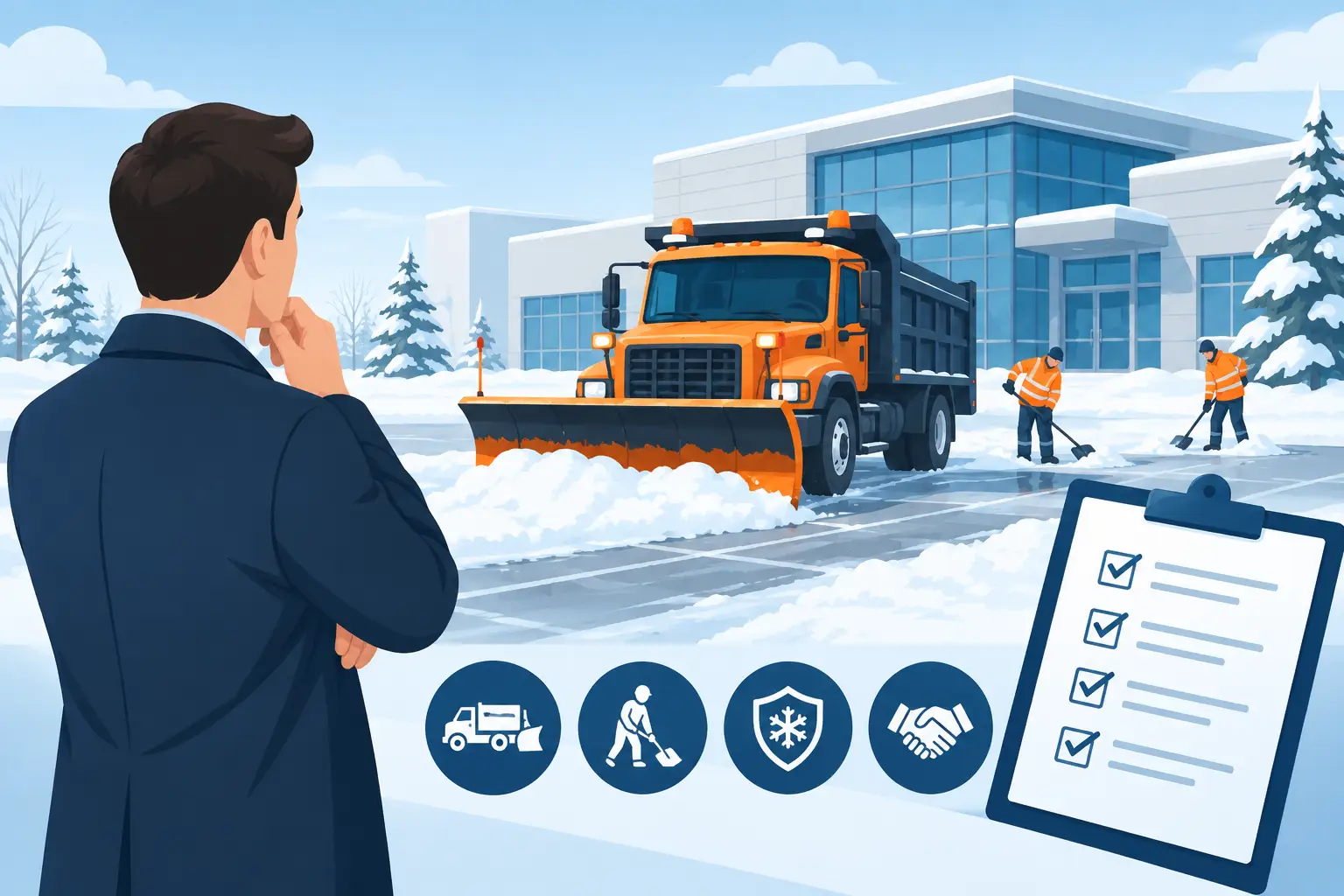

A snow-covered parking lot can change the tone of a business day before the doors even open. Employees arrive late, customers hesitate at the curb, and one untreated icy walkway can create a serious safety concern. The best commercial snow contractors do more than push snow to the edge of the lot. They help property owners stay prepared, responsive, and open for business when winter weather arrives.
For commercial properties, snow service is not simply another seasonal expense. It is part of how you protect people, maintain access, and preserve a professional first impression. Choosing the right contractor starts with looking beyond the lowest quote and asking how that company will perform when conditions are difficult.
What Commercial Snow Service Should Cover
Commercial snow removal needs vary by property, but reliable service usually includes more than clearing vehicle lanes. A well-planned scope can include parking lots, drive lanes, entrances, sidewalks, ramps, loading areas, stairs, dumpster access, and designated pedestrian paths. Ice control is just as important, especially during freezing rain, refreezing temperatures, and overnight weather events.
The right service plan should reflect how your property is used. A medical office may need early-morning sidewalk access. A retail center may need a clean, safe lot before customer traffic increases. An industrial site may need clear delivery routes and loading access throughout the day. There is no one-size-fits-all plan, and a contractor should ask thoughtful questions before promising a solution.
How to Identify the Best Commercial Snow Contractors
The best commercial snow contractors are easy to recognize because they plan before the forecast becomes urgent. They take the time to understand your site, explain how service will work, and give you confidence that someone is paying attention when weather conditions shift.
Look for Commercial-Grade Equipment and Capacity
A contractor may handle a small office lot with a pickup and plow, while a larger property may require multiple trucks, skid steers, loaders, sidewalk crews, salt spreaders, and backup equipment. The important question is not whether a company owns a large fleet. It is whether its equipment and staffing match your property’s size, layout, and service expectations.
Ask how the company handles equipment breakdowns, heavy accumulation, and back-to-back storms. A contractor with a realistic backup plan is usually more dependable than one that simply promises immediate service under every circumstance. Winter weather can overwhelm even strong crews, so honest communication and smart planning matter.
Pay Close Attention to Communication
Property managers should not have to chase down a contractor during a weather event. Clear communication is one of the strongest signs of a dependable snow service provider. You should know who to contact, how weather updates are handled, when crews are dispatched, and how you will be notified if conditions create delays or require additional attention.
Good communication also helps prevent confusion about service triggers. Some agreements begin plowing at a certain snow depth, while others are based on a zero-tolerance approach for high-traffic areas. The contractor should explain the difference in plain language so there are no surprises when the invoice arrives.
Ask About Ice Management, Not Just Plowing
Snow removal gets most of the attention, but ice is often the bigger risk. A lot can look clear while black ice remains near curbs, shaded sidewalks, ramps, and entranceways. An experienced commercial contractor will evaluate drainage patterns, shaded areas, foot traffic, and the surfaces that tend to refreeze first.
Deicing materials should be selected based on the property and the conditions. Standard rock salt is often practical for many paved areas, but some surfaces, landscaping, concrete, and high-traffic entry points may call for a different approach. There can be a cost difference, but the right material can reduce damage concerns and improve traction where it matters most.
Review the Service Agreement Carefully
A clear snow contract protects both the property owner and the contractor. It should spell out the areas being serviced, the expected response process, the snowfall trigger, ice control expectations, billing structure, and any special access requirements.
Seasonal contracts can make budgeting easier because costs are predictable across the winter. Per-push or per-event pricing can be a good fit for properties that need flexibility or have limited service areas. Neither option is automatically better. The best choice depends on your budget, risk tolerance, and the level of service your property requires.
Be especially clear about what happens during prolonged storms. Will crews return for multiple passes? Is sidewalk service separate from parking lot plowing? Is deicing billed by application or included in the agreement? Details like these are where dependable service is either defined or left open to misunderstanding.
Site Preparation Makes Winter Service Better
A good snow contractor can work more efficiently when a property is prepared before the first storm. Mark curbs, fire hydrants, landscaped islands, drains, speed bumps, and other obstacles that may be hidden by snow. Make sure parked vehicles, trailers, dumpsters, and stored materials do not block key routes.
It is also smart to identify snow storage areas before winter. Piling snow in the wrong place can block sight lines, narrow parking spaces, damage landscaping, or create drainage problems when temperatures rise. A contractor who walks the site with you before the season can help establish safe locations that keep snow away from entrances and high-traffic areas.
For properties throughout Louisville, Oldham County, and Shelby County, winter conditions can change quickly from wet pavement to freezing surfaces. Early preparation gives your contractor a clearer plan and gives your team fewer problems to manage during a storm.
Red Flags Worth Taking Seriously
A low price may be tempting, but unusually cheap commercial snow service can become expensive if crews arrive late, skip ice control, or fail to communicate. Be cautious when a contractor cannot clearly explain their process, service area, equipment capacity, or insurance coverage.
Other warning signs include vague contracts, no site inspection, slow responses before the season starts, and broad promises without details. If it is difficult to get an answer in mild weather, it will likely be harder during an active storm. Your contractor does not need to promise perfection, but they should be straightforward about how they prepare and respond.
Choose a Partner, Not a Last-Minute Plow Truck
The strongest commercial snow relationships are built before the first forecast. Property managers and owners should feel comfortable discussing priorities, problem areas, tenant concerns, and changes to the site throughout the season. That kind of working relationship helps crews make better decisions on the ground.
A local exterior maintenance provider can also bring useful year-round knowledge to the job. A crew familiar with your curbs, landscaping, drainage, lighting, and traffic patterns has a better starting point than someone seeing the property for the first time in the middle of a storm. MowAction Lawn Care Services approaches property care with that same practical, responsive mindset: clear communication, professional effort, and service that supports the entire property.
Before winter arrives, walk your site, define your priorities, and ask the questions that matter. The right contractor will not just clear snow after it falls. They will help your property remain safer, more accessible, and ready for the people who count on it.