

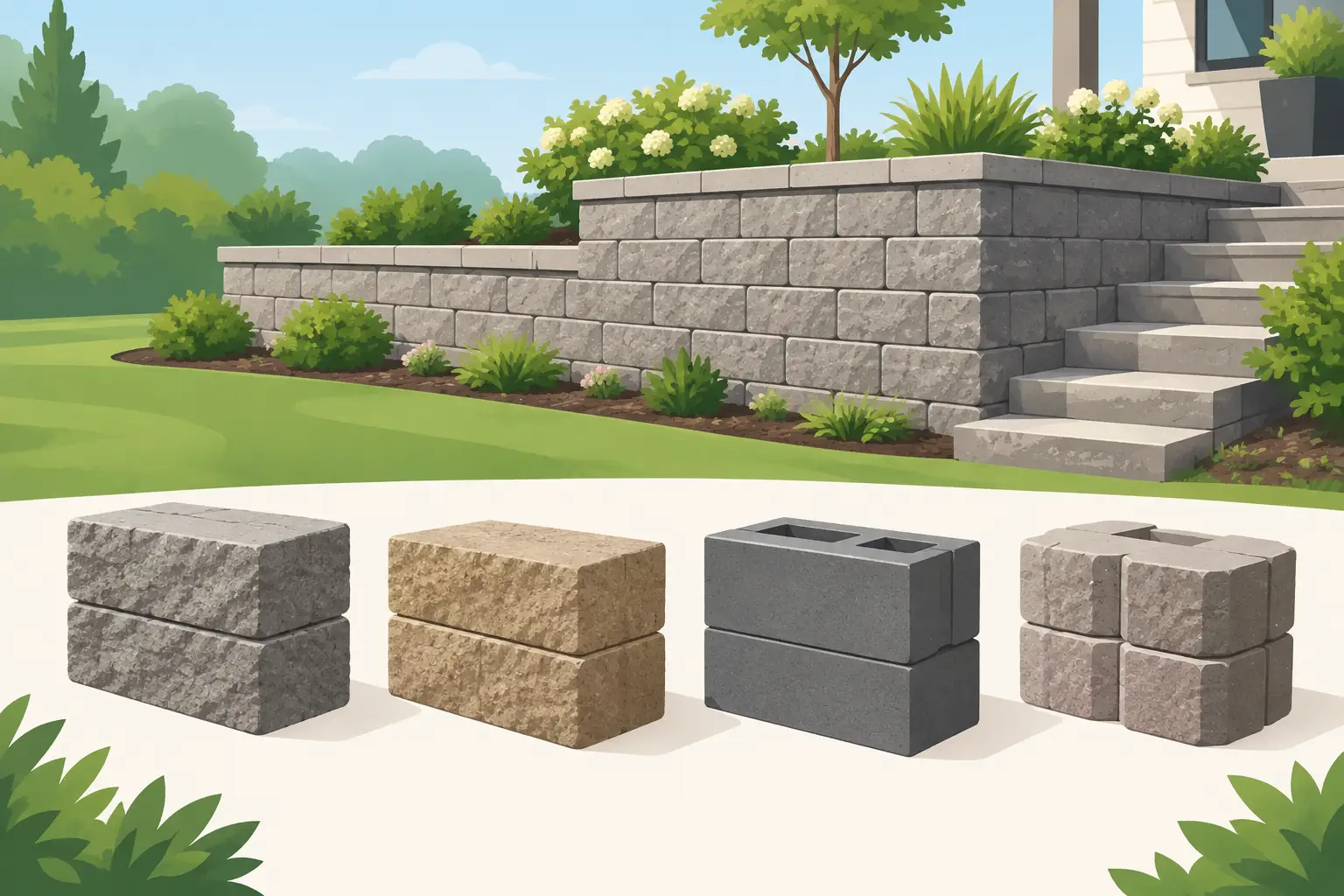

A retaining wall has a real job to do. It may hold back a sloped yard, create a level patio area, protect a driveway edge, or give planting beds a cleaner shape. The best retaining wall block types are the ones that match that job, your property’s drainage conditions, and the look you want around your home or business.
Choosing based on color alone can lead to a wall that feels out of place or, worse, one that struggles after heavy rain and seasonal freeze-thaw cycles. A good wall begins with the right material, but it also depends on proper base preparation, drainage, and installation.
What Makes a Retaining Wall Block a Good Fit?
The right block is not always the biggest or most expensive option. Wall height, soil pressure, water flow, access for equipment, and the finished landscape plan all matter. A low garden wall has very different needs than a wall supporting a parking area or holding back several feet of hillside.
For many residential properties, manufactured concrete wall blocks offer a practical balance of strength, appearance, and value. They are made to stack in a consistent pattern and often include a built-in lip or pin system that helps each course lock into place. Natural stone can create a more traditional look, while large landscape blocks may be better suited for commercial areas and larger grade changes.
Before settling on a style, look beyond the wall itself. Consider where water will go, whether a fence or patio will sit near the top of the wall, and how the wall will connect with lawns, mulch beds, walkways, and landscape lighting. Those details determine whether the finished project looks intentional and performs well for years.
Best Retaining Wall Block Types for Most Properties
Segmental concrete retaining wall blocks
Segmental concrete blocks are the most common choice for residential retaining walls. These are the engineered blocks many homeowners recognize from landscape supply yards. They come in a wide range of colors, face textures, sizes, and shapes, including straight-face, tumbled, and split-face styles.
Their biggest advantage is dependable performance. Most systems are designed with a setback, meaning each row sits slightly behind the one below it. That creates a backward lean that helps the wall resist soil pressure. Many also use interlocking lips, grooves, or pins to keep courses aligned.
Concrete segmental blocks work well for planting-bed walls, terraced slopes, patio borders, and medium-height retaining walls. They can look clean and modern or more rustic depending on the finish selected. For homeowners who want a polished result without the higher cost of natural stone, this is often the best all-around choice.
The trade-off is that careful installation still matters. Even a quality block system can shift if the gravel base is uneven or if drainage is ignored. A wall may look straight on installation day but develop problems after a wet season if water builds up behind it.
Natural stone blocks and wall stone
Natural stone is a strong option when the goal is a timeless, high-end landscape. Limestone, fieldstone, sandstone, and similar materials can complement traditional homes, wooded properties, and gardens with a more natural character. In Kentucky, limestone is especially familiar and can feel well suited to the local landscape.
Some natural stone walls use cut, uniform pieces that stack more predictably. Others use irregular stones fitted together by an experienced installer. The first approach offers a more formal finish; the second can create a relaxed, old-world appearance.
Natural stone costs more than standard manufactured block in many cases, both for material and labor. It is also less forgiving for do-it-yourself installation because each stone may need to be selected, positioned, and adjusted individually. Still, for a prominent front-yard wall or a patio feature where appearance is the priority, stone can be worth the investment.
Concrete wall caps and matching corner units
Caps and corners are not a separate wall system, but they are an important part of choosing blocks. A wall with exposed rough edges or unfinished corners can make an otherwise well-built project look incomplete. Matching capstones provide a finished top surface and can turn a retaining wall into usable seating around a patio or fire pit.
Corner units matter just as much when a wall changes direction, creates a raised bed, or wraps around steps. Choosing a block line with matching caps, corners, and step units makes it easier to build a cohesive outdoor space rather than a collection of disconnected features.
Large commercial landscape blocks
Large-scale concrete blocks are typically used for commercial sites, steep grades, drainage areas, loading zones, and properties where equipment access makes installation more efficient. These blocks are much larger and heavier than residential segmental units, often requiring machinery to place safely.
They are built for function first, though many have textured faces that still look professional. For commercial property owners, this type of wall can be a smart solution when erosion control and long-term stability matter more than a decorative garden-wall appearance.
Because of their size and the load they support, these projects should be planned by qualified professionals. Site grading, drainage design, and local requirements become more significant as a wall grows taller or carries heavier loads.
Choosing Block by Wall Height and Purpose
A low wall under about 2 feet may be mostly decorative, but it still needs a compacted base and a plan for water. Short walls are excellent for defining beds, creating level planting areas, or separating lawn from patio spaces. Smaller segmental blocks or natural stone are often good fits here.
Walls between 2 and 4 feet require more attention to excavation depth, gravel base thickness, drainage stone behind the wall, and proper compaction. This is where engineered concrete systems are especially useful because their installation specifications are designed around stability.
Once a wall approaches 4 feet in height, or supports a driveway, structure, steep slope, or heavy traffic area, the project may require engineering, reinforcement grid, permits, or all three. Height is not the only concern. A 3-foot wall at the bottom of a saturated slope can face more pressure than a taller wall holding back dry, level ground.
Drainage Is More Important Than Block Color
Water is one of the main reasons retaining walls fail. Rainwater that cannot drain through the soil creates pressure behind the wall. Over time, that pressure can bow the wall outward, push blocks out of alignment, or wash away soil and base material.
A properly built wall usually includes clean drainage stone behind the blocks, a compacted aggregate base below them, and a perforated drain pipe where conditions call for it. The finished grade should direct surface water away from the wall rather than toward it. In areas with clay-heavy soil or runoff from roofs and paved surfaces, drainage planning deserves extra attention.
This is also why a retaining wall should not be treated as a simple stack of blocks. The work below and behind the visible face is what supports its long-term performance.
Style Choices That Work With Your Landscape
For a clean, contemporary property, straight-face concrete blocks in charcoal, gray, or blended neutral tones pair well with geometric planting beds, pavers, and modern landscape lighting. For more traditional homes, tumbled concrete blocks or natural limestone can soften the appearance and blend with mature trees and established gardens.
Color should connect with the surrounding property rather than compete with it. Consider the home’s brick, siding, trim, patio materials, and existing stonework. A retaining wall can either frame the landscape quietly or become a focal point near an entry, outdoor living area, or sign monument.
If the project includes steps, a patio, sod installation, or new planting beds, choosing materials together is often more cost-effective and produces a better visual result. It also helps prevent the common problem of building a wall first, then trying to force every other landscape feature to match it later.
When Professional Installation Makes Sense
A small, low raised bed may be manageable for an experienced homeowner with the right tools and plenty of time. However, walls on slopes, walls near structures, and walls taller than a few courses are not good places to guess. The cost of correcting a leaning or failing wall is usually much higher than building it correctly from the start.
Professional installation brings proper excavation, compaction equipment, material selection, drainage planning, and a clearer view of how the wall fits into the full property. For homeowners and property managers in Louisville, Oldham County, and Shelby County, working with a local team also means selecting a solution suited to local soil, weather, and site conditions.
The best wall does more than hold soil in place. It gives your property a level, useful, finished look that makes outdoor maintenance easier and creates space you will actually enjoy using.