

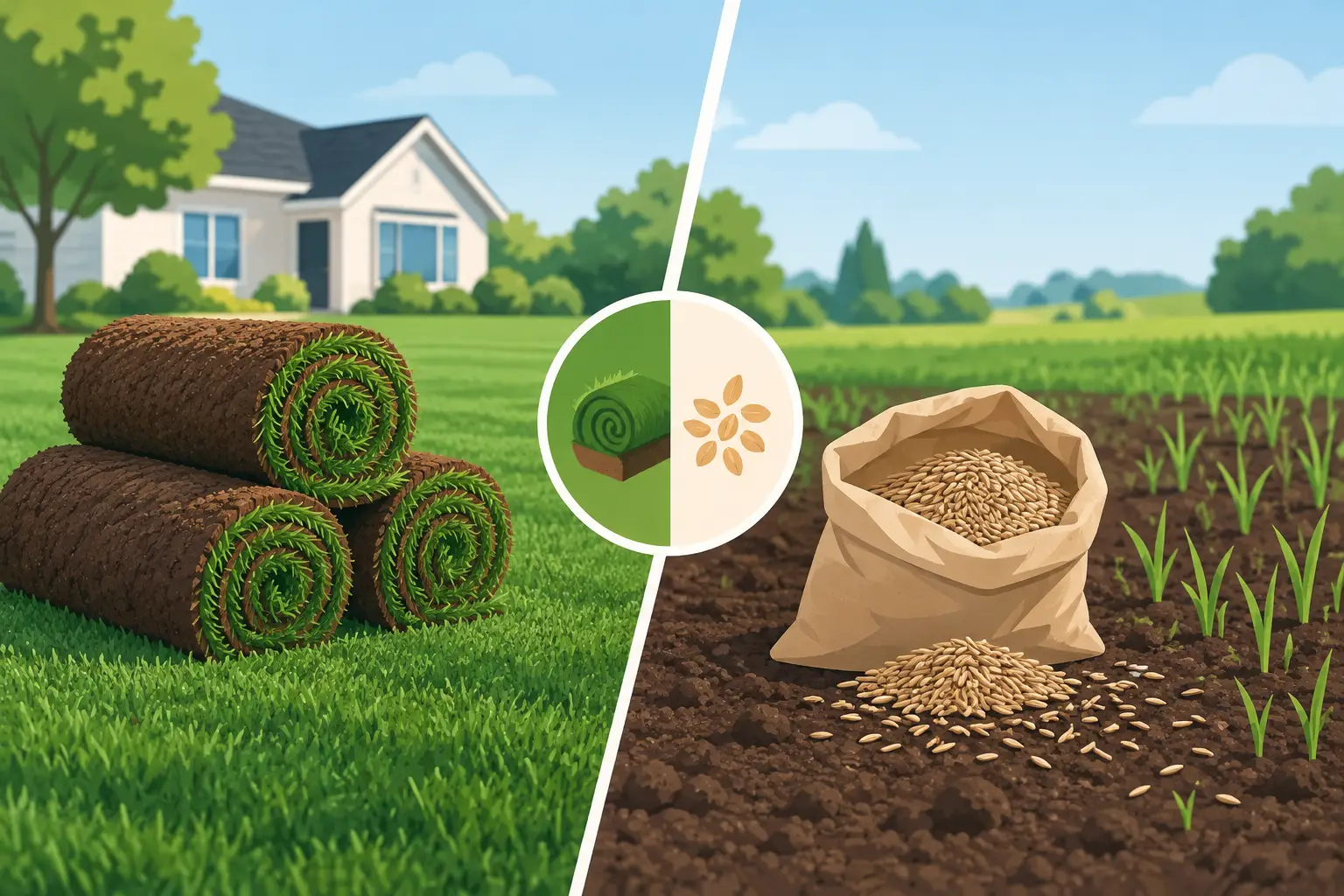

A bare front yard before a graduation party, a muddy side yard after drainage work, or thin grass under mature trees all raise the same practical question: sod versus seed Kentucky property owners should choose based on more than appearance. Both can create a healthy, attractive lawn, but they deliver results on very different timelines and require different levels of care.
For homeowners, property managers, and business owners, the right answer usually comes down to your schedule, budget, lawn conditions, and willingness to protect new grass while it establishes. A good lawn begins with proper preparation, whether it arrives on a pallet or in a bag.
Sod Versus Seed Kentucky Lawns: The Core Difference
Sod is mature turf that has been professionally grown, cut into rolls or squares, and installed over prepared soil. It creates an immediate green surface, which makes it a strong choice when curb appeal or erosion control cannot wait. Seed starts from scratch. It costs less up front and gives you more control over the grass blend, but it needs time, favorable weather, and consistent attention.
In the Louisville area and throughout Oldham and Shelby counties, lawns often face clay-heavy soil, summer heat, periods of heavy rain, and partial shade from established trees. Those conditions can influence the decision. Sod can stabilize exposed soil quickly, while seed can be tailored to the amount of sun, traffic, and moisture a particular lawn receives.
Neither choice fixes poor grading, compacted soil, drainage problems, or a failed irrigation system. If water pools after a storm or runs off before soaking in, address that issue first. New sod and new seed both struggle when the ground underneath is not ready to support roots.
When Sod Is the Better Investment
Sod is about speed, predictability, and a finished look. A properly installed sod lawn can make a home or commercial property look dramatically better in a day. That immediate visual improvement matters before listing a home, opening a business, hosting an outdoor event, or completing a larger landscape project.
It also has a practical advantage on slopes and bare areas where rain can wash soil away. Seeded slopes may need erosion-control blankets and careful watering to stay in place. Sod holds the surface together from the start, though the soil still needs to be graded correctly and the rolls need close contact with the ground.
Sod is often the better fit when you need to use the area sooner. “Sooner” does not mean immediately. Fresh sod needs regular watering and time for roots to knit into the soil. Foot traffic, pets, mowing, and outdoor furniture should be limited during those first few weeks. Still, compared with seed, the lawn reaches a usable, polished condition much faster.
The trade-off is cost. Sod includes the expense of growing, harvesting, delivering, and installing mature grass. Preparation can add to the project cost as well, especially if the site needs soil amendments, grading, debris removal, or irrigation adjustments. For a high-visibility front lawn or a commercial entrance, that investment can be worthwhile. For a large backyard where timing is flexible, seed may offer better value.
What makes sod succeed
Sod should be installed as fresh as possible, laid over smooth and prepared soil, and watered deeply enough to moisten the soil beneath it. Seams should be staggered, edges should fit tightly, and the surface may need rolling to remove air pockets. These details are not cosmetic. They are what help the roots establish instead of drying out between the sod and the existing soil.
When Seeding Makes More Sense
Seeding is the practical choice when budget matters, when you are covering a large area, or when you want a specific grass mix. For many Kentucky lawns, turf-type tall fescue is a dependable option because it handles the region’s transition-zone weather better than many warm-season grasses. A quality blend may also include varieties selected for shade tolerance, disease resistance, or improved color.
Seed allows the grass to establish directly in your property’s soil. With good preparation and proper watering, roots develop naturally in place. It is also easier to overseed thin areas than to patch a lawn with small pieces of sod that may not match perfectly.
The challenge is patience. Grass seed needs consistent moisture at the surface until it germinates. That often means light, frequent watering at first, followed by deeper watering as seedlings develop. Heavy rain can move seed, birds can disturb it, and a missed watering cycle during warm weather can set progress back quickly.
Seed also requires a longer protection period. New seedlings are more delicate than established sod, and they should not be treated like a finished lawn. Avoid heavy traffic until the grass has grown in and has been mowed several times. Weed control products must be selected carefully as well, since some treatments can damage young grass.
Fall is usually the best seeding window
For cool-season lawns in Kentucky, late summer through early fall is generally the strongest time to seed. Soil is still warm enough to encourage germination, while cooler air reduces stress on young grass. Fall seeding also gives roots time to develop before the heat of summer arrives.
Spring seeding can work, especially after winter damage or a construction project, but it comes with more competition from weeds and less time for roots to mature before summer. If spring is your only option, expect to be more diligent about watering and weed management.
The Preparation Matters More Than the Product
A common mistake is treating sod and seed as shortcuts around soil work. They are not. The best installation begins with clearing old vegetation and debris, correcting low spots, loosening compacted ground, and creating a smooth final grade that directs water away from structures.
Soil testing can be especially helpful when a lawn has repeatedly struggled. The results can show whether the soil needs lime, nutrients, or organic matter. On compacted properties, aeration and appropriate topdressing may improve the root zone before seeding or sodding.
Irrigation deserves the same attention. New sod and seed need reliable moisture, but overwatering can be as harmful as underwatering. Saturated soil limits oxygen around roots and can lead to disease. A working sprinkler system or a clear manual watering plan helps protect the investment from day one.
How to Choose for Your Property
Choose sod when the lawn needs an immediate finished appearance, bare soil needs fast stabilization, or a project deadline is close. It is also a smart option for smaller, high-impact spaces where the added cost is manageable and the visual return is clear.
Choose seed when you have a larger area, a tighter budget, or enough time to establish the lawn properly. It is especially useful when you want to select a grass blend for challenging shade, heavy use, or the changing weather conditions common in Kentucky.
Sometimes the strongest plan uses both. A front yard or steep grade may receive sod for quick results, while a lower-visibility backyard is seeded to manage costs. Existing lawns can also benefit from overseeding rather than a complete replacement, provided the underlying turf is still healthy enough to support improvement.
Care After Installation Sets the Result
The first several weeks determine whether a new lawn becomes thick and durable or thin and uneven. Sod needs frequent watering initially, then gradually less frequent and deeper watering as roots take hold. Seed needs the surface kept consistently damp during germination, then a gradual transition to deeper watering as the plants mature.
Mow only when the new grass is tall enough and the ground is firm. Use a sharp mower blade and avoid removing more than one-third of the grass height at once. Fertilizer should be based on the grass type, season, and soil needs rather than applied simply because the lawn is new.
For properties that need a clean, dependable result without the guesswork, MowAction Lawn Care Services can evaluate the site, prepare the ground, and recommend an approach that fits the property and the plan for using it. The best choice is the one that gives your lawn the time, care, and foundation it needs to stay green well after installation day.