

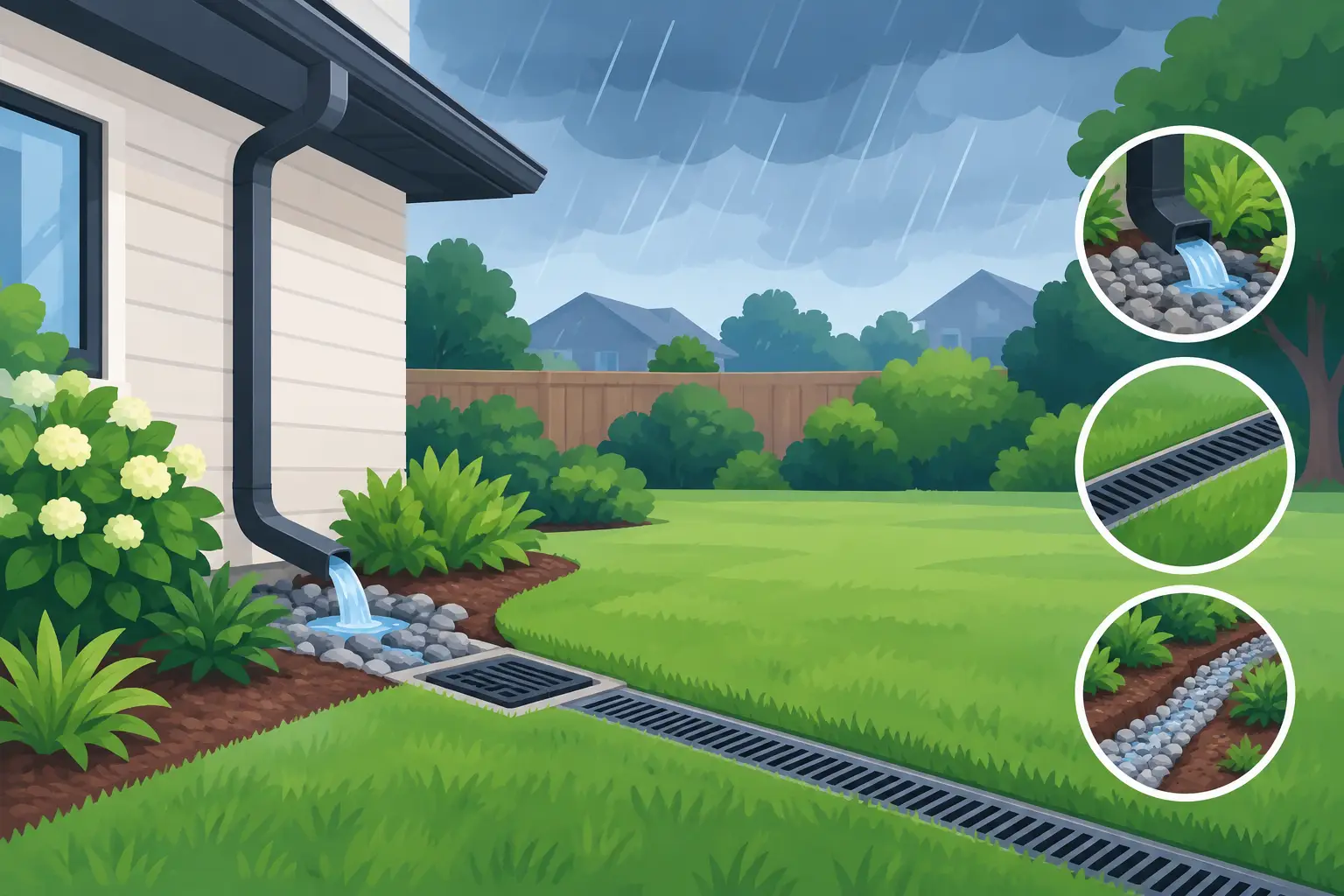
A hard Kentucky rain can show you more about your property in one afternoon than weeks of dry weather. If you are wondering how to prepare yard drainage, start by watching where water collects, where it flows, and what it threatens. A soggy patch of turf may be inconvenient, but water pooling beside a foundation, patio, driveway, or commercial entry can turn into a much more expensive problem.
Good drainage is not about forcing every drop off the property as quickly as possible. It is about moving water away from structures, preventing erosion, and giving the lawn and landscape enough time to absorb what they can. With a little planning before the next heavy rain, homeowners and property managers can make smarter decisions about cleanup, grading, drains, and landscape improvements.
Start With a Walk Around the Property
Before buying materials or digging a trench, inspect the property during light rain or shortly after a storm. This is the best time to see the real path water takes. Look for standing water that remains longer than 24 to 48 hours, muddy low spots, mulch that washes out of beds, bare soil on slopes, and water marks along foundations or garage doors.
Pay close attention to roof runoff. A roof sheds a surprising amount of water, and downspouts that empty next to the house can saturate the soil around the foundation. Check whether each downspout directs water away from the building and whether the discharge area stays clear. Extensions can help, but they need to send water to a safe location, not toward a neighbor's property, a sidewalk, or another low spot in the yard.
For commercial properties, inspect parking lot edges, walkways, loading areas, dumpster pads, and entrances. Standing water in these places is more than an appearance issue. It can create slip hazards, soften surrounding soil, and make a poor first impression on customers and tenants.
Identify the Source Before Choosing a Fix
The same symptom can have different causes. A wet lawn may result from poor grading, compacted soil, a damaged irrigation line, a downspout discharge point, or a blocked catch basin. Installing a drain without understanding the source can waste time and money.
Start with the simplest possibilities. Clear leaves, sticks, and mulch from grates, swales, gutters, and downspout outlets. Make sure splash blocks have not shifted and that buried drain outlets are open. If irrigation is running too often or a sprinkler head is leaking, correct that issue before assuming the yard needs a major drainage system.
Then consider the grade. The ground near a home should generally slope away from the foundation. Over time, soil can settle around the house, landscape beds can be built too high, or edging and hardscapes can redirect runoff toward the building. A gentle adjustment to the grade may solve a problem that looks much larger than it is.
How to Prepare Yard Drainage With a Clear Plan
A drainage plan should follow the water from its source to its final destination. Sketch the property on paper and mark buildings, downspouts, slopes, low areas, hardscape features, trees, utility boxes, and property lines. You do not need an engineering drawing for a basic assessment, but you do need a clear picture of where water begins and where it can safely go.
Choose an outlet before installing any drainage feature. Water may discharge into a properly graded portion of the yard, a designated drainage area, a dry well, a catch basin, or an approved stormwater connection, depending on the property and local requirements. Never assume that sending water across a property line is acceptable. Drainage changes can affect neighboring properties, and local rules may apply to larger projects.
It also helps to separate immediate work from long-term improvements. Clearing a blocked outlet and extending a downspout are practical first steps. Regrading a yard, installing a French drain, building a retaining wall, or adding a drainage system beneath a patio may require professional design and installation. The right approach depends on the size of the problem, the soil conditions, the slope, and the structures you need to protect.
Match the Drainage Solution to the Problem
Surface drainage is often the answer when water naturally flows across the lawn but has no clear path. A shallow, gently sloped swale can guide water through the yard while still blending into the landscape. Properly placed soil, sod, and plants help stabilize the area and keep it looking intentional rather than like a ditch.
A French drain is useful when water is trapped below the surface or repeatedly saturates a specific area. It typically uses a perforated pipe surrounded by clean drainage stone and wrapped in filter fabric. The pipe collects groundwater and carries it toward a planned outlet. French drains work well in many situations, but they must be installed at the correct depth and slope. A poorly placed system can clog, hold water, or simply move the problem to another area.
Catch basins and solid drain pipe are often better for concentrated runoff from downspouts, paved surfaces, or low points. These systems collect surface water and move it through a closed pipe. They are especially useful near patios, driveways, and commercial walkways where open channels are not practical.
In some yards, landscaping is part of the fix. Native or water-tolerant plants can stabilize a slope, reduce erosion, and improve the appearance of a drainage area. Mulch helps retain moisture in planting beds, but it should not be piled against siding or used to block the flow of water. Decorative stone can also work in a dry creek bed or runoff channel, provided the base is prepared correctly.
Protect Foundations, Patios, and Retaining Walls
The most urgent drainage concern is water near a building. Persistent moisture around a foundation can contribute to settling, damp basements or crawl spaces, mold concerns, and damage to finished surfaces. Keep soil and mulch below siding, maintain a slope away from the structure, and make sure downspouts carry water well beyond the foundation zone.
Patios and paver areas need attention as well. Water should drain away from the house and should not settle along the edge of a patio. If pavers are sinking, joints are washing out, or water stands after rain, the base may need to be repaired. Adding a drain on top of a poorly prepared base may not solve the underlying issue.
Retaining walls need planned drainage behind them. Soil holds water, and that water creates pressure against the wall. Drainage stone, pipe, fabric, and proper grading are not optional details in a well-built retaining wall. They are what help the wall perform through wet seasons and freeze-thaw cycles.
Avoid Common Drainage Mistakes
The quickest-looking fix is not always the best one. Filling a low spot with topsoil may temporarily hide standing water, but it can redirect runoff toward a home or create a new wet area. Covering a drainage issue with extra mulch has the same limitation.
Avoid routing downspouts into a drain system that has no dependable outlet. Also avoid placing drain outlets where they will erode a slope, flood a walkway, or freeze near an entry in winter. Before digging, call 811 to have underground utilities marked. A drainage trench can cross utility lines, irrigation wiring, landscape lighting cables, or other buried features.
Finally, do not overlook maintenance. Gutters, catch basins, drain grates, and outlet points need periodic cleaning. Leaves and seasonal debris can block a system that was working perfectly a few months earlier.
When Professional Help Makes Sense
A professional assessment is worthwhile when water reaches the foundation, erosion is worsening, a retaining wall is moving, or the yard stays wet despite basic corrections. It is also a smart choice when drainage work must fit around patios, irrigation systems, landscape lighting, mature trees, or commercial traffic areas.
MowAction Lawn Care Services helps property owners throughout Louisville, Oldham County, and Shelby County plan practical outdoor improvements with dependable communication and hard-working service. A drainage project can often be coordinated with grading, sod installation, hardscape work, or seasonal cleanup so the finished property looks cared for, not torn up.
The best time to address drainage is before the next storm exposes the same weak spot again. Take note after every heavy rain, correct the simple issues first, and build a plan that protects both the appearance and the long-term health of your property.