

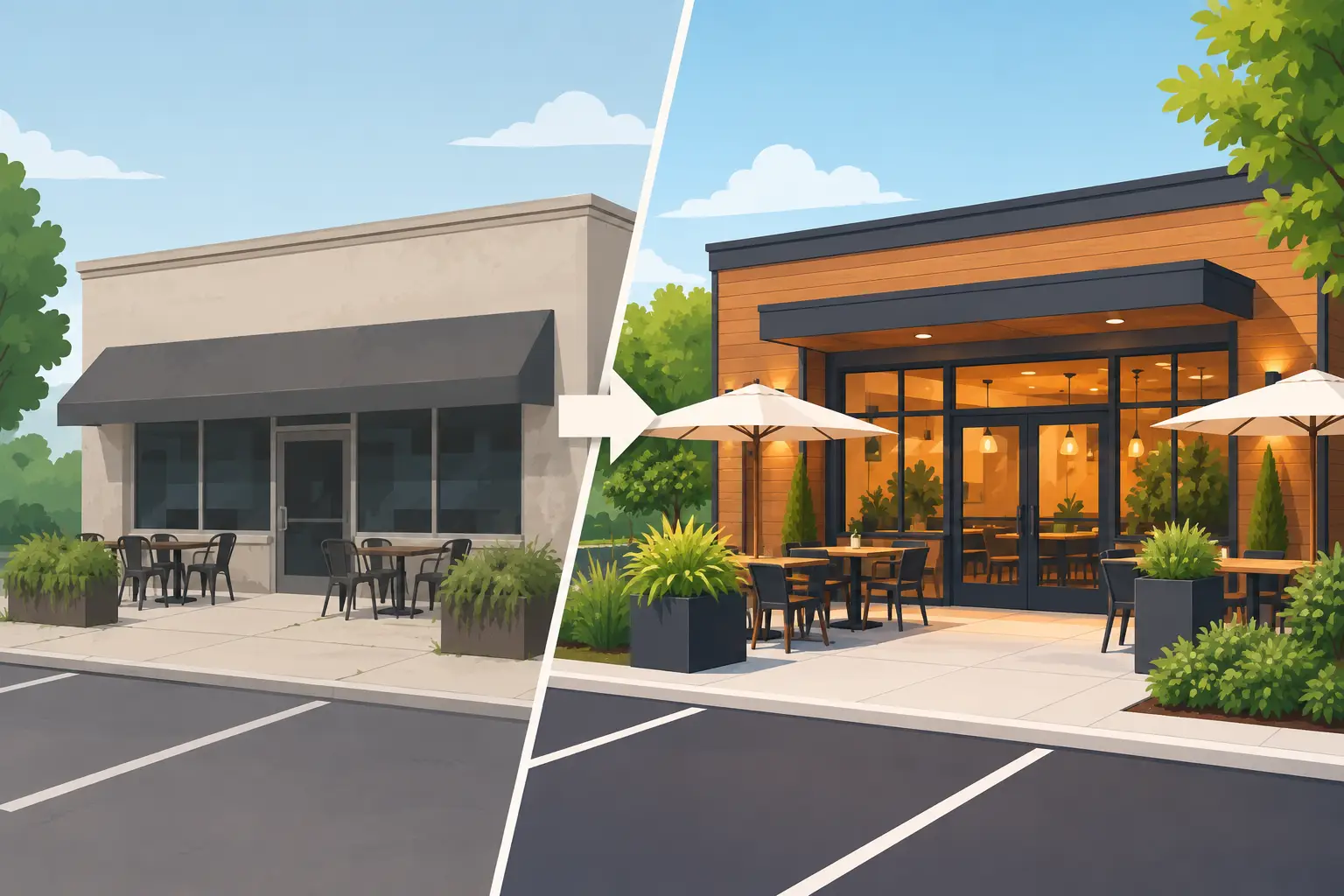
A restaurant landscape makeover example is not just about planting a few fresh shrubs by the sign. For a restaurant, the exterior begins serving customers before anyone opens the door. A cracked walkway, patchy lawn, faded mulch, or dark patio can quietly suggest that the same lack of care exists inside. On the other hand, a clean, welcoming property gives guests confidence that they are about to have a good experience.
Consider a busy neighborhood restaurant with solid food, loyal regulars, and a good location near a major road. The building had potential, but the grounds were working against it. The front planting beds were overgrown, weeds had taken over the mulch, water collected near the entrance after rain, and the patio felt exposed and uninviting during warmer months. The owner did not need an extravagant outdoor renovation. They needed a practical plan that made the property easier to maintain and more appealing to customers.
The Starting Point: A Property That Felt Tired
The restaurant’s biggest issue was not one dramatic problem. It was a collection of small details customers noticed without necessarily naming them. The lawn along the road was thin and uneven. Mature shrubs blocked parts of the storefront and hid the restaurant sign. The entrance path had no visual direction, so guests often walked across the edge of the lawn. At night, the front door and patio seating area were poorly lit.
These issues affect more than appearance. Overgrown plant material can create security concerns by limiting sightlines. Poor drainage can leave slick pavement and muddy traffic areas. A neglected landscape also takes more staff time, because employees end up pulling weeds, moving patio furniture around wet spots, or answering questions from guests who cannot easily find the entrance.
The first step was a site review focused on how guests, staff, deliveries, and water moved through the property. That review made it clear that the project needed to balance curb appeal with function. The goal was to create an exterior that looked cared for on a busy Saturday night and still held up after a Kentucky thunderstorm.
Restaurant Landscape Makeover Example: The Plan
The makeover began with cleanup and selective removal. Not every existing plant had to go. A few healthy trees and established foundation shrubs were worth keeping, but they needed professional pruning to restore their shape and improve visibility. Removing crowded, declining plants opened the front of the building and made the signage easier to see from the road.
Next came the drainage correction. The crew reshaped low areas near the walkway so water would move away from the entrance instead of pooling where customers stepped out of their cars. In places where grading alone was not enough, drainage solutions could be added beneath the landscape bed or along pavement edges. The right approach depends on the slope of the property, the volume of runoff, and where water can safely discharge.
Once the site drained properly, the landscape design could support the restaurant’s daily operations. Fresh sod repaired worn lawn areas near the road and entrance. Defined bed edges helped prevent mulch from washing onto sidewalks. New mulch gave the property a finished look while helping soil hold moisture and limiting weed growth. Low-maintenance shrubs and perennials were placed in groups rather than scattered across the property, making the beds look fuller without creating a long list of plants that require individual attention.
Color was used carefully. Bright seasonal flowers were concentrated near the entry and outdoor dining area, where they could make the strongest impression. The rest of the property relied on dependable green structure, ornamental grasses, and plantings with varied texture. That choice kept the design polished while reducing the cost and labor of constantly replacing flowers across a large commercial site.
Making the Entrance Easier to Find and Use
A restaurant entrance should feel obvious from the parking lot. In this example, the path to the front door was clarified with clean landscape borders, trimmed shrubs, and lighting that drew the eye toward the entry. Decorative containers near the door added color and made the arrival feel intentional without crowding the walkway.
The owner also addressed safety and accessibility. Plantings were kept low near sidewalks and parking areas so they would not obstruct visibility. Tree limbs were raised where needed to provide clearance. Any hardscape repairs were planned with foot traffic in mind, especially around changes in elevation, patio gates, and service entrances.
This is where a landscape makeover becomes a business decision rather than a cosmetic project. Guests should be able to park, see where they are going, and reach the door without stepping through puddles, brushing past overgrown shrubs, or navigating a dark path. Those details are simple, but they set the tone for the entire visit.
Turning an Underused Patio Into an Asset
The patio was the restaurant’s missed opportunity. It had tables, but little comfort or character. Afternoon sun made several seats unpleasant, and the view was mostly parking lot. The makeover added planting beds around the patio perimeter, using layered shrubs and ornamental grasses to soften the view without closing the space in.
A small paver seating extension created room for a few additional tables and gave the patio a more finished appearance. Pavers were a practical choice because they can be designed to complement the building and can be repaired in sections if needed. Concrete may make more sense for some restaurants because of budget, existing site conditions, or heavy service traffic. The best material is the one that fits the use of the space and the owner’s maintenance expectations.
Landscape lighting made a noticeable difference after sunset. Path lights improved the route from the parking area, while subtle uplighting highlighted key trees and the restaurant façade. The goal was not to make the property overly bright. It was to create a safe, comfortable setting that encouraged diners to stay for another round, dessert, or a relaxed conversation outside.
Why Maintenance Has to Be Part of the Design
A beautiful installation can lose its value quickly if no one has a plan to maintain it. Restaurants are busy places, and managers should not have to spend their mornings checking irrigation timers or deciding which shrubs need pruning. This project was designed around plants that could perform well with regular mowing, weed control, trimming, mulching, and seasonal cleanup.
Irrigation was another important consideration. New sod, flowers, and young shrubs need consistent water while they establish. A sprinkler system, or repairs to an existing one, can protect that investment and help the landscape stay presentable during dry stretches. However, irrigation should be managed responsibly. Overwatering creates its own problems, including weak roots, disease pressure, wasted water, and runoff.
Seasonal service keeps the property from slipping backward. Spring cleanup prepares beds and lawn areas for growth. Summer visits keep turf, weeds, and plant material under control. Fall leaf removal helps protect turf and keeps entrances clear. In winter, reliable snow and ice service can help a restaurant stay accessible when conditions change quickly.
For commercial properties in Louisville, Oldham County, and Shelby County, having one dependable team manage routine care and larger improvements can make scheduling far easier. MowAction Lawn Care Services can help restaurant owners build a maintenance plan around their property, traffic patterns, and budget.
What This Makeover Changed
The restaurant did not become a different business overnight. It became a better-presented version of the business it already was. The refreshed entrance made it easier for first-time guests to find the door. Better drainage reduced wet, messy areas after rain. The patio became a place customers requested instead of a space staff used only when indoor tables filled up.
Just as important, the owner gained a property that was easier to manage. Defined beds, durable plant selections, improved irrigation, and scheduled maintenance reduced last-minute landscaping headaches. The exterior looked consistent from week to week, which matters when guests are deciding where to eat based on the first impression from the road.
A successful restaurant landscape makeover does not need to be oversized or complicated. Start with the problems customers and staff feel every day, then invest in improvements that make the property safer, clearer, more welcoming, and easier to maintain. When the outside of a restaurant shows the same care as the service inside, guests notice before they ever see a menu.