

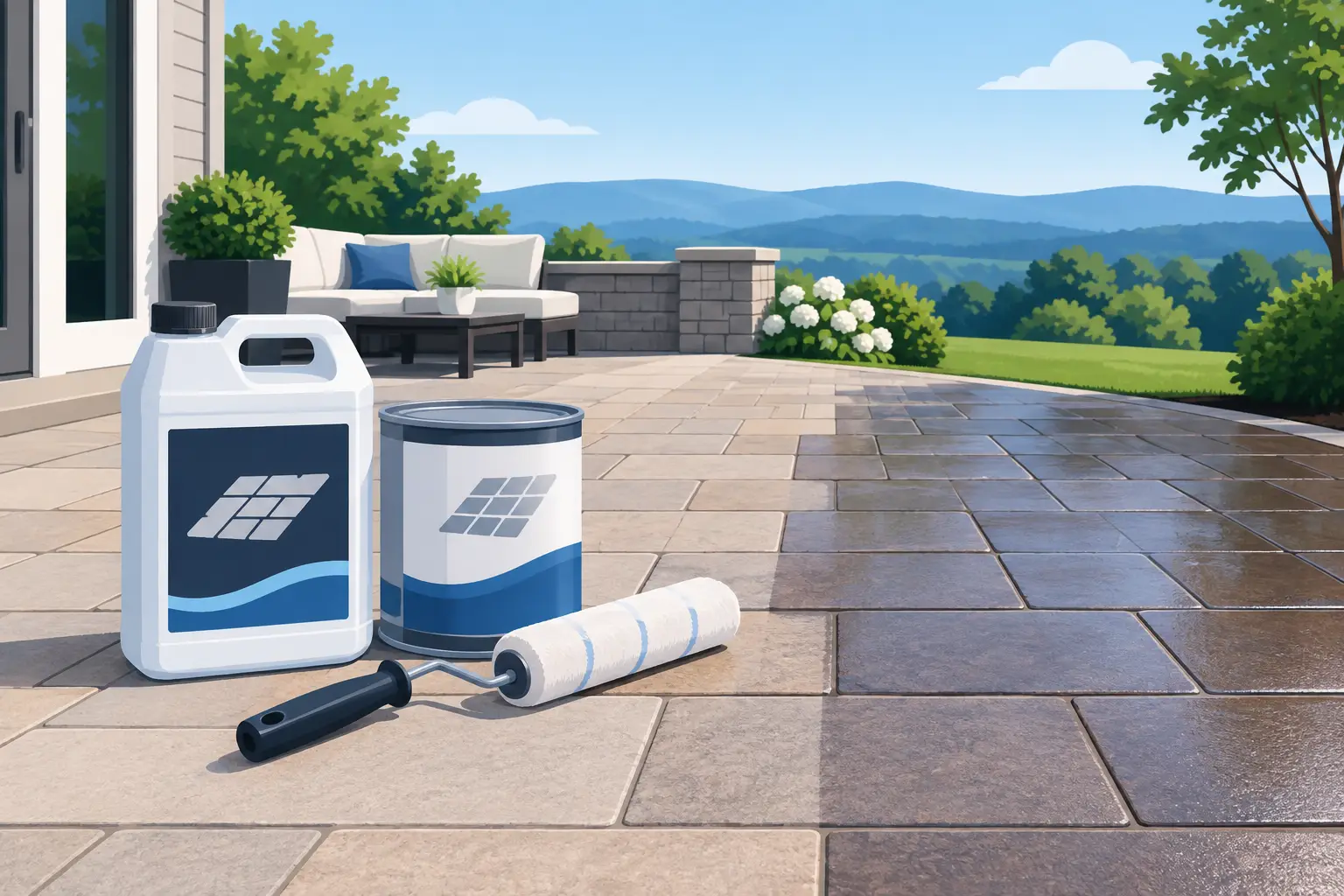
A good paver patio should handle cookouts, muddy shoes, patio furniture, and Kentucky weather without looking tired after one season. This patio paver sealers review focuses on what actually matters: water protection, appearance, traction, durability, and whether the product fits the condition of your pavers. The best choice is rarely the shiniest can on the shelf. It is the sealer that protects your specific patio without creating peeling, haze, or a slippery surface.
What a Paver Sealer Should Do
Concrete pavers are durable, but they are not completely nonporous. Rainwater, spills, leaf stains, dirt, and freeze-thaw cycles can gradually dull their color and wear away sand from the joints. A quality sealer helps limit moisture absorption, makes cleanup easier, and can reduce fading and staining.
Some sealers are made to preserve a natural, nearly invisible finish. Others darken the paver color and create a wet-look appearance. A few provide a noticeable gloss. None of these looks is automatically better. The right finish depends on the paver style, the amount of sun the patio receives, and how much maintenance the property owner is comfortable taking on.
Sealer is not a repair for a failing patio. If pavers are uneven, joints are empty, drainage is poor, or the base has settled, those issues need attention first. Applying sealer over movement, stains, trapped moisture, or loose joint material can make a small problem more frustrating and expensive to correct.
Patio Paver Sealers Review: The Main Types
Penetrating, natural-look sealers
Penetrating sealers absorb below the surface instead of leaving a visible film on top. They are usually the best fit for homeowners who like the existing color of their patio and simply want protection from water and stains. Because they do not create much of a surface coating, they are less likely to change traction or develop a glossy, uneven appearance.
This is often the practical choice for textured concrete pavers around walkways, outdoor kitchens, and areas that get frequent foot traffic. The trade-off is that the color enhancement is subtle or nonexistent. If the pavers already look faded and you want a richer, freshly installed appearance, a natural-look sealer may feel underwhelming.
Water-based color-enhancing sealers
Water-based sealers have become a popular middle ground. Many deepen paver color without the stronger odor commonly associated with solvent-based products, and they can be easier to apply and clean up. They are a sensible option for patios close to doors, windows, landscaping, or neighbors.
The finish can range from low-sheen to a soft wet look. Product quality matters here. Lower-grade formulas may leave an uneven finish if applied too heavily or on a surface that was not cleaned thoroughly. For a patio with mixed sun and shade, careful preparation and thin, even coats are more important than adding extra product.
Solvent-based wet-look sealers
Solvent-based sealers are known for producing deeper color and a more dramatic wet-look finish. On the right patio, especially darker tumbled pavers or decorative hardscape borders, the result can make the entire outdoor area look more defined and polished.
They also come with more responsibility. Stronger fumes require good ventilation and proper safety practices. Heavy application can leave pavers looking overly glossy, and a thick surface film may become slick when wet. They are best used when the appearance is worth the added attention to application conditions and future maintenance.
High-gloss acrylic sealers
High-gloss products deliver the most noticeable shine. For a commercial entry, a formal courtyard, or a protected patio with decorative pavers, that finish can be intentional. For most residential patios, however, high gloss is not the easiest long-term option.
A glossy coating shows dirt, scuffs, wear patterns, and application mistakes more readily than a matte or low-sheen product. It can also require more frequent renewal. If traction is a concern, particularly near a pool, on steps, or at a business entrance, a gloss sealer should be considered carefully and paired with an appropriate anti-slip additive when recommended by the manufacturer.
How to Choose the Right Sealer for Your Patio
Start with the surface itself. Older pavers that have lost color may benefit from a color-enhancing sealer. Newer pavers with an attractive natural finish usually need only moisture and stain protection. If the patio gets full afternoon sun, choose a product rated for UV exposure so the finish does not fade or yellow prematurely.
Next, think about how the space is used. A patio used for family dinners, pets, and weekend entertaining needs easy cleanup and good traction more than a showroom shine. A commercial property needs a finish that looks professional but will not create a safety concern during rain. Properties with a lot of tree cover should prioritize stain resistance and cleaning, since leaves, pollen, and organic debris can discolor pavers even when they are sealed.
Joint sand deserves special attention. Some sealers are compatible with polymeric sand and can help stabilize the joints after the sand has been installed and activated correctly. Others are not designed for that purpose. Never assume a sealer will fix missing sand or stop weeds on its own. Proper joint preparation, drainage, and routine maintenance are what keep a paver patio stable.
Preparation Makes or Breaks the Result
Most disappointing sealer jobs are preparation problems, not product problems. Pavers need to be clean, dry, and free of residue before any sealer goes down. That may mean removing furniture, sweeping thoroughly, treating algae or mildew, cleaning oil spots, and allowing enough dry time after washing.
Avoid sealing immediately after pressure washing. Water can remain in the joints and below the paver surface longer than it appears. If moisture is trapped, the sealer may turn cloudy, fail to bond, or dry unevenly. Weather matters as well. A dry forecast, moderate temperatures, and no expected rain during the cure window give the sealer the best chance to perform.
Apply thin, controlled coats rather than trying to achieve the final look in one heavy pass. Puddling is a warning sign. It can leave shiny patches, sticky spots, or a film that later flakes away. Edges, corners, and textured pavers may need extra attention, but more product is not always the answer.
Realistic Expectations for Longevity
No patio paver sealer lasts forever. Foot traffic, sun exposure, cleaning methods, drainage, and the type of finish all affect how long protection remains effective. Penetrating sealers often wear more quietly, while surface coatings may make it obvious when they need to be refreshed.
For many patios, a check every one to three years is more useful than following a rigid calendar. Watch for water soaking in quickly, fading color, new stains that are hard to remove, or joints beginning to wash out. Those signs can indicate it is time for maintenance.
Routine care extends the life of any sealer. Sweep abrasive grit before it grinds into the surface, clean spills promptly, and use a gentle cleaning approach before reaching for harsh chemicals. Pressure washing can be effective when handled correctly, but excessive pressure can scar pavers and dislodge joint sand.
When Professional Help Is Worth It
A straightforward, small patio in good condition can be a manageable do-it-yourself project. Larger patios, uneven pavers, stubborn staining, drainage concerns, and older sealed surfaces are different situations. Old coatings may need to be stripped or tested before a new product is applied, and that work calls for the right equipment and experience.
For homeowners and property managers in Louisville, Oldham County, and Shelby County, MowAction Lawn Care Services can help evaluate whether your pavers need cleaning, repairs, joint work, sealing, or a more complete patio refresh. A clear assessment before product is applied can protect the investment you have already made in your outdoor space.
The best sealer is the one that fits the patio's condition and daily use, not the one with the boldest finish. Give the surface the preparation it deserves, choose protection that matches your goals, and your patio will be ready for the next gathering instead of becoming another weekend repair project.