

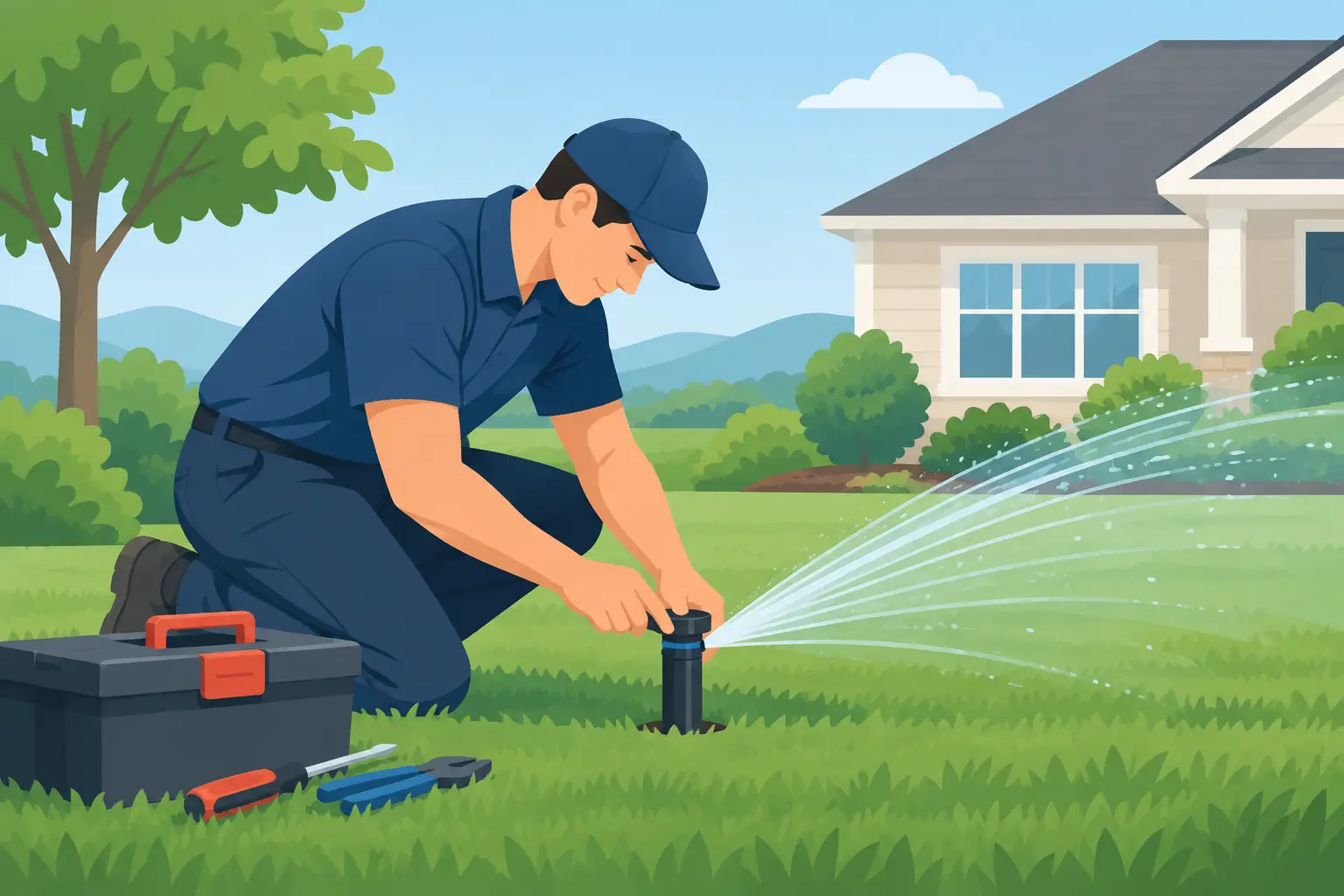
A green lawn can turn patchy fast when one irrigation zone stops doing its job. A soggy spot near the driveway, a sprinkler head that sprays the sidewalk, or a controller that runs at the wrong time can waste water and leave turf stressed. For dependable sprinkler repair Crestwood homeowners and property managers can act on quickly, the best first step is identifying whether the issue is visible, underground, or tied to the system controls.
Irrigation problems are rarely convenient. They tend to show up during hot, dry weather, when lawns, landscape beds, and newly installed plants need steady moisture most. Addressing a small issue early protects your landscaping, helps control your water bill, and keeps a minor repair from becoming a larger excavation project.
Signs Your Irrigation System Needs Attention
Some sprinkler problems are obvious. Others slowly show up in the condition of the lawn. If one area stays brown while the rest of the property looks healthy, the issue may be a clogged nozzle, a damaged head, low water pressure, or a valve that is not opening completely.
Keep an eye out for these common warning signs:
- Water pooling around sprinkler heads, valve boxes, sidewalks, or foundations
- Heads that do not pop up, retract, rotate, or spray evenly
- Water spraying onto pavement, fences, siding, or parked vehicles
- A zone that will not shut off or will not turn on at all
- Unexpectedly high water use or consistently dry sections of turf
These symptoms can overlap, so it is wise not to assume the visible sprinkler head is always the source of the problem. Water may surface several feet away from a cracked pipe or broken fitting underground. Likewise, a dry zone is not automatically a sign of a leak. It could be a controller setting, a wiring issue, a closed valve, or a pressure problem affecting that particular zone.
Common Sprinkler Repairs in Crestwood
Broken or Misaligned Sprinkler Heads
Sprinkler heads take a beating from mowing equipment, foot traffic, pets, vehicles, and seasonal ground movement. A tilted head may spray low and soak one small area. A broken riser can cause a geyser every time the zone runs. Even a head that sits too low can become blocked by grass or mulch, preventing it from distributing water correctly.
Replacing or adjusting a head is often a straightforward repair when the surrounding pipe and fitting are intact. The important part is setting the replacement at the correct height, selecting a nozzle that matches the zone, and adjusting the spray pattern so water reaches the lawn rather than the pavement. A head that is simply replaced without those adjustments can continue wasting water.
Leaks in Pipes, Fittings, and Valves
Underground leaks are more complicated because the damaged area must be located before a repair can be made. Look for unusually green grass, soft soil, puddling, or water running after the system shuts off. A leak on the main line may create a constant wet spot, while a leak on a zone line usually appears only when that zone is operating.
Freeze-thaw cycles, shifting soil, root growth, and accidental damage during digging can all affect irrigation piping. Repairing a leak properly means exposing only the necessary area, replacing failed fittings or damaged pipe, and checking the line under pressure before the soil is restored. Quick patches may seem less expensive at first, but they can fail again if the pipe is stressed or the original cause is not addressed.
Controller, Sensor, and Wiring Problems
When the sprinkler system does not follow its schedule, the controller is not always to blame. Settings may have been changed after a power outage, a rain sensor may be interrupting a cycle, or a damaged wire may prevent one valve from receiving a signal. In some cases, the controller appears to run normally, but the zone never activates because the solenoid at the valve has failed.
Modern controllers can help reduce overwatering, especially when seasonal schedules are adjusted thoughtfully. But technology still needs oversight. A lawn’s watering needs change with rainfall, temperature, shade, soil type, and plant maturity. Running the same schedule in May and August, for example, rarely makes sense in Kentucky.
Pressure and Coverage Issues
Low pressure can leave heads barely spraying, while excessive pressure can create a fine mist that drifts away before it reaches the ground. Poor coverage may also result from mismatched nozzles, heads spaced too far apart, or landscaping that has grown into the spray pattern.
This is where repair and lawn care work well together. Shrubs, ornamental grasses, mulch, and edging can all affect how water reaches the turf and planting beds. A reliable service team looks at the whole area rather than treating each sprinkler head as an isolated part.
When a Simple Adjustment Is Enough and When It Is Not
Homeowners can often handle a few basic checks before scheduling service. Confirm that the controller has power, review the watering schedule, and walk the property while each zone runs. Clear leaves or mulch away from heads and make note of wet spots, weak sprays, and zones that do not operate. Do not dig around a suspected leak if you are unsure where utility lines, irrigation wiring, or pipe runs are located.
A simple adjustment may be enough when a nozzle is clogged, a spray pattern needs to be turned, or the schedule is set incorrectly. More involved repairs are usually the better choice when a valve will not close, water is pooling from an underground leak, multiple heads have low pressure, or electrical components are involved.
There is also a practical trade-off between repairing an aging system one piece at a time and making broader upgrades. If a system has one damaged head after landscaping work, a targeted repair is sensible. If it has recurring leaks, outdated controls, uneven coverage, and several failing valves, it may be time to discuss improvements that make the system easier to manage and more efficient to operate.
Protect Your Lawn Between Service Visits
A well-maintained irrigation system should support your landscape, not create more work. During the growing season, inspect the system at least once a month and make a few seasonal adjustments. Mow carefully around visible heads, avoid piling mulch over them, and keep planting beds from blocking sprays. After a heavy storm, check for runoff and standing water before returning to a normal schedule.
Watering deeply and appropriately is generally better for turf than frequent, shallow watering. However, the right run time depends on the sprinkler type, soil conditions, slope, sun exposure, and zone layout. Clay-heavy soil may need shorter cycles with a pause between them to reduce runoff, while a shaded section may need less water than open turf in full afternoon sun.
Before winter, systems should be properly prepared for freezing conditions. Water left in exposed components or irrigation lines can expand and cause damage that is not visible until spring. Seasonal attention is one of the simplest ways to avoid starting a new growing season with broken heads, cracked fittings, or a system that will not run.
Choose a Local Team That Looks Beyond the Leak
Good sprinkler repair is about more than getting water flowing again. It is about making sure the system waters the intended areas, protects the landscape investment, and fits the needs of the property. Homeowners may need help protecting a newly seeded lawn or landscape beds, while commercial properties often need dependable coverage that supports a clean, professional appearance without creating slippery walkways or wasted water.
MowAction Lawn Care Services provides irrigation support alongside lawn maintenance, landscape improvements, and seasonal property care, giving Crestwood-area customers one responsive team for both immediate repairs and ongoing outdoor needs. A clear assessment, professional-grade equipment, and straightforward communication make it easier to decide what should be repaired now and what can be planned for later.
If you notice runoff, dry turf, broken heads, or a zone that will not behave, do not wait for the lawn to show the damage. A timely inspection and a free estimate can help put your irrigation system back to work where it belongs: quietly keeping your property healthy, attractive, and ready to enjoy.