

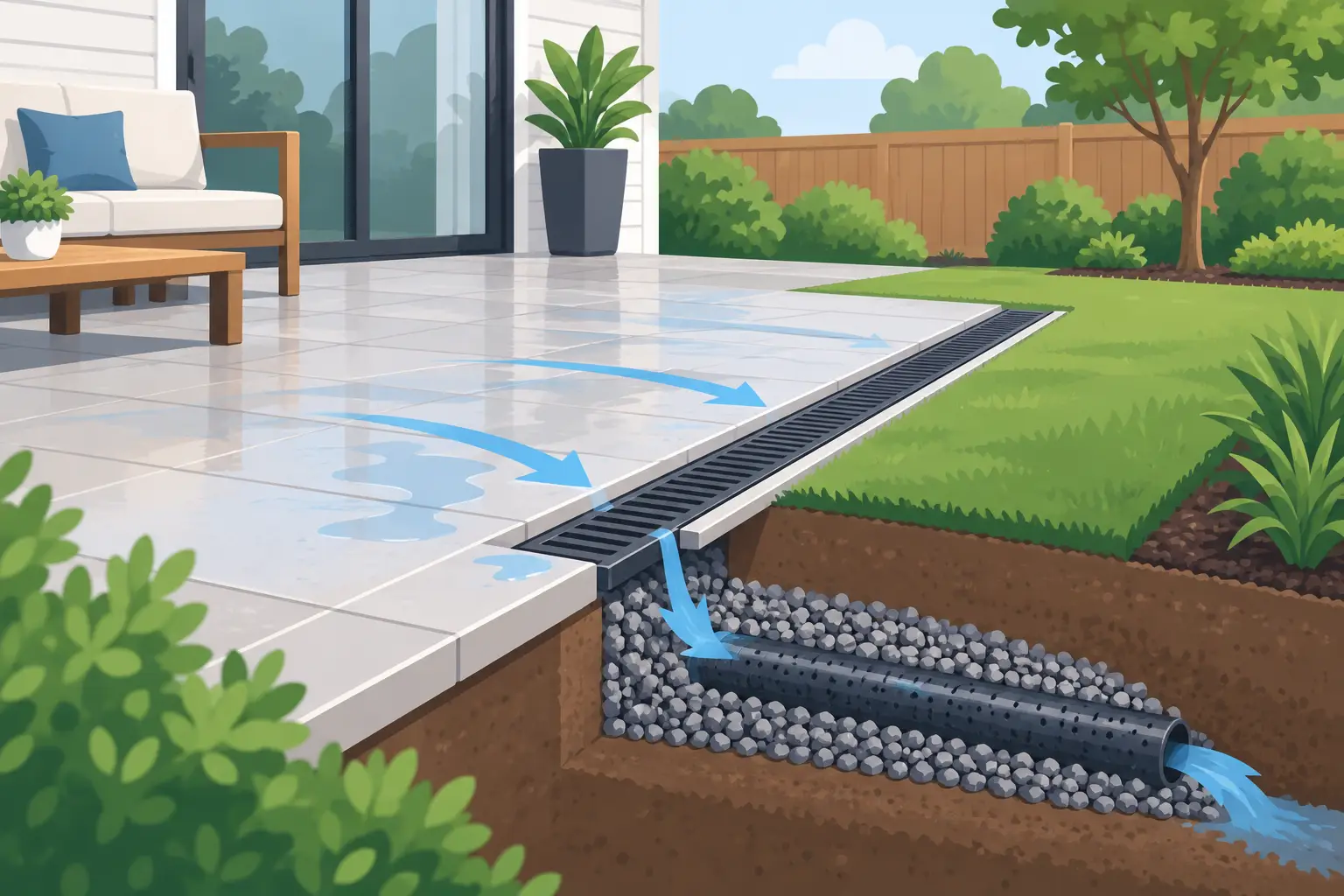
A patio should be the place where you set down a drink, gather with family, or enjoy a quiet evening outdoors - not the spot where rainwater pools for days. Effective patio drainage solutions move water away from the hardscape, protect nearby landscaping, and help prevent the costly problems that start when moisture has nowhere to go.
For homeowners and property managers, the right fix depends on why water is collecting in the first place. A small puddle near an edge may call for a simple grading adjustment. Water running toward a home, soaking a lawn, or settling between pavers usually needs a more complete drainage plan. The goal is not to send water somewhere else without thinking. It is to direct it safely to an area that can handle it.
Why Patio Drainage Problems Need Prompt Attention
Standing water is more than an inconvenience. On a paver patio, it can wash away the joint sand and bedding material below the surface. Pavers may begin to shift, settle, or develop uneven edges. On concrete patios, recurring water can find small cracks, worsen freeze-thaw damage, and leave staining behind.
The trouble often extends beyond the patio itself. Water that drains toward the house can contribute to wet basement walls, foundation concerns, and muddy planting beds. When runoff spills onto a lawn, it can create bare spots, compacted soil, and areas that stay soft long after the rest of the property has dried.
In Louisville, Oldham County, and Shelby County, heavy spring rain and summer storms can reveal drainage weaknesses quickly. A patio that looks level to the eye may still slope the wrong direction by enough to hold water or direct it toward the structure. Catching the issue early is usually easier and more affordable than repairing a settled patio later.
Start With the Source of the Water
Before choosing a drain, determine where the water is coming from. Rainfall landing directly on the patio is one source, but it is not always the main one. Roof runoff, neighboring grades, downspouts, and nearby hillsides can send far more water across a patio than the surface itself receives.
Watch the area during or right after a good rain. Look for the first place water appears, the route it follows, and where it finally stops. Also check whether gutters overflow or downspouts discharge too close to the patio. This simple observation can prevent a common mistake: installing a drain at the puddle while leaving the actual source untouched.
A professional site assessment is especially helpful when the patio sits near a foundation, retaining wall, driveway, or low-lying yard. These areas affect one another. Changing the grade in one place can improve drainage in another, or create a new problem if the water path is not planned carefully.
Patio Drainage Solutions That Fit the Problem
Correcting the Patio Slope
Proper slope is the foundation of good drainage. Most patios should pitch gently away from the home so water has a natural path off the surface. The grade needs to be subtle enough for comfortable furniture placement and everyday use, but consistent enough that water does not stop in low spots.
If a newer patio was installed with an improper pitch, regrading may be the most dependable solution. For paver patios, that can involve lifting the affected pavers, rebuilding the base as needed, and reinstalling the surface at the correct slope. This is more involved than adding a drain, but it addresses the underlying issue rather than treating a symptom.
Channel Drains for Water at the Patio Edge
A channel drain, sometimes called a trench drain, is a long, narrow drain set flush with the patio surface. It is particularly useful where a patio meets a home, garage, pool deck, or another paved area. Water enters through a grate and travels through a connected pipe to a suitable discharge point.
This option works well when there is limited room to change the slope or when a hardscape surface naturally directs water toward a structure. The grate style can be selected to complement pavers, concrete, or other patio materials, making the system less noticeable than many property owners expect.
Channel drains do require maintenance. Leaves, mulch, grass clippings, and sediment can collect in the grate. Keeping the channel clear after storms and seasonal cleanups helps it perform when it is needed most.
Catch Basins for Concentrated Runoff
A catch basin is a box-like drain that collects water at a low point. It is often a smart choice where downspouts, driveway runoff, or a sloped yard send water toward the patio. From the basin, underground piping carries water away from the space.
Catch basins are effective for concentrated flow, but their placement matters. Installing one in the lowest visible spot is not enough if the pipe has no practical outlet. The system needs a destination that follows local conditions and keeps runoff away from foundations, neighboring properties, and areas that already struggle with saturation.
French Drains for Wet Ground Around the Patio
When the soil around a patio stays wet, a French drain may be a better fit than a surface drain. This system uses perforated pipe surrounded by clean gravel to collect water moving through the ground. It is commonly installed along a patio edge, behind a retaining wall, or between a hardscape and a soggy lawn.
French drains are useful for subsurface moisture, but they are not designed to handle every major sheet of water rushing off a roof or large paved surface. In many properties, they work best as part of a larger plan that also manages downspouts and surface runoff.
Downspout Extensions and Underground Drain Lines
A surprisingly large number of patio drainage issues begin at the roofline. If a downspout empties beside a patio, water can erode the edge, splash onto the surface, and saturate the base below it. Extending that discharge point farther from the patio may solve a minor issue quickly.
For a cleaner, longer-lasting result, downspouts can connect to underground solid drain lines. These pipes move roof runoff to a planned outlet, keeping walkways clearer and reducing the volume of water reaching the patio. The outlet must be positioned thoughtfully so it does not create erosion or pooling elsewhere in the yard.
Landscape Grading and Drainage-Friendly Planting Beds
Not every solution needs to be a visible drain. Sometimes the best improvement is reshaping the surrounding landscape so water moves around the patio rather than into it. A properly graded planting bed, shallow swale, or carefully placed berm can guide runoff toward a safer part of the property.
Drainage-friendly landscaping can also soften the look of a functional system. River rock, mulch, ornamental grasses, and moisture-tolerant plants may help stabilize areas that receive occasional runoff. The design should still leave room for maintenance and should not trap water against a patio edge or foundation.
Avoid Quick Fixes That Create Bigger Problems
Adding more joint sand to pavers, spreading gravel over a puddle, or filling a low spot with soil may make the problem look better briefly. These approaches rarely correct the water path. In some cases, they trap moisture below the surface and make settling worse.
It is also risky to direct drainage straight onto a neighbor's property, toward a sidewalk, or against a retaining wall. Water needs a controlled route and an outlet that fits the site. A drainage solution should protect the patio without simply relocating the problem.
Build Drainage Into a New Patio Project
The best time to address patio drainage is before the first paver is set or the first section of concrete is poured. During planning, the patio elevation, finished slope, surrounding grade, downspout locations, and nearby planting beds should all be considered together.
This matters even more for patios with outdoor kitchens, fire features, seating walls, or steps. Those features can limit where water can travel after construction. Building the drainage plan into the hardscape project keeps the finished patio attractive, functional, and easier to maintain.
A well-built patio should feel simple to own. Rain should drain away without leaving puddles, loose pavers, washed-out mulch, or a muddy path through the yard. If water is taking over your outdoor space, MowAction Lawn Care Services can assess the conditions and help create a practical solution that protects both your patio and the property around it.