

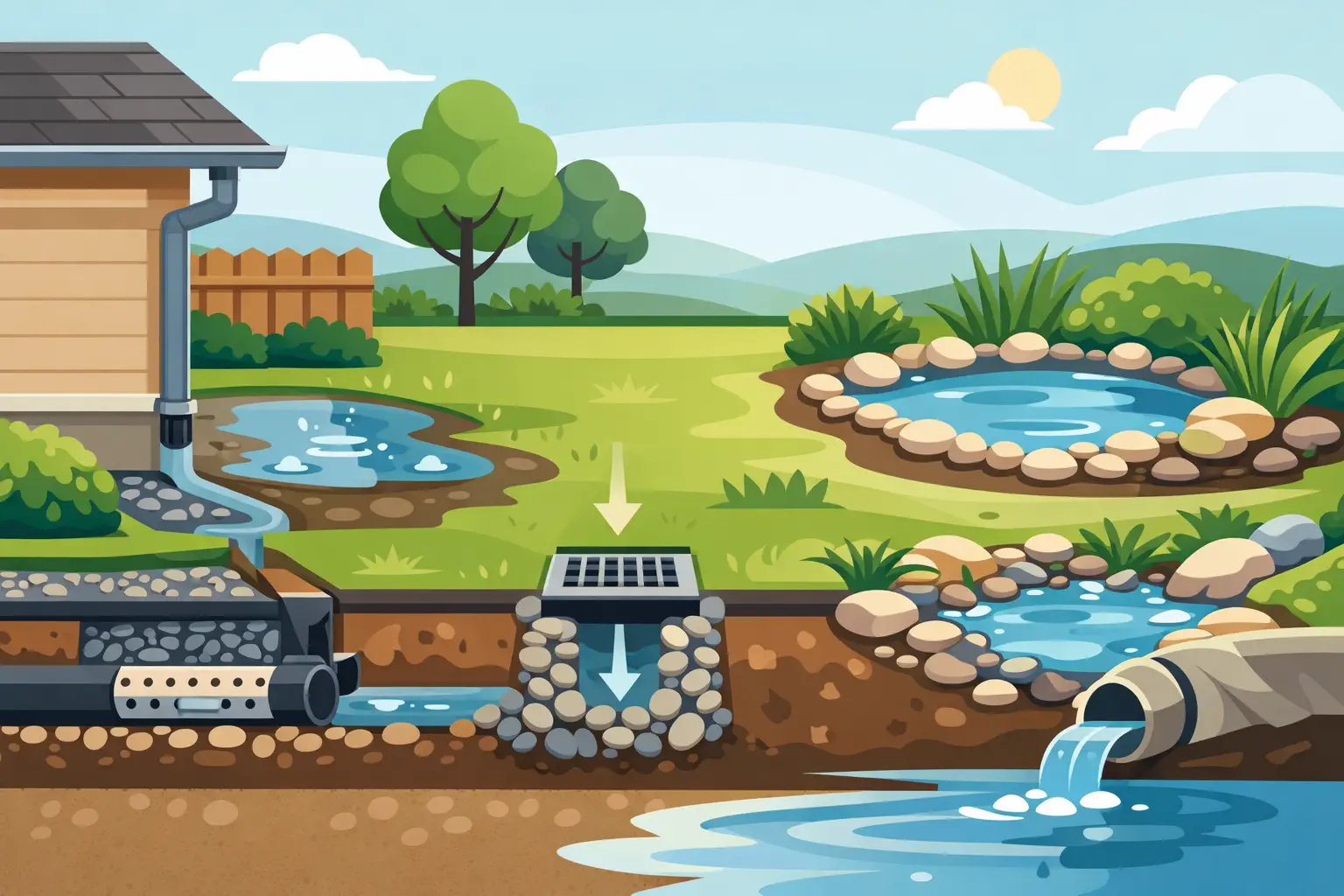
A backyard should be a place to mow, relax, play, and enjoy - not a place where you have to walk around puddles for days after a storm. If you are wondering how to improve backyard drainage, start by paying attention to where water collects, how long it stays there, and what may be blocking its path. The right solution can protect your lawn, landscaping, patio, and foundation while making the whole property easier to use.
In Louisville, Oldham County, and Shelby County, heavy rain, compacted soil, and sloped lots can all create drainage trouble. Some problems have a simple fix, while others need thoughtful grading, drainage installation, or hardscape adjustments. The goal is not to make water disappear. It is to move it safely away from your home and out of the areas you want to keep dry.
Start by Finding the Source of the Water
Before adding gravel, drain pipe, or new plants, watch your yard during a steady rain. Look for water coming from downspouts, neighboring properties, low spots in the lawn, compacted areas near patios, and slopes that point toward the house. A puddle is often only the visible symptom of a bigger drainage pattern.
Take note of whether water stands in the same location every time or only after especially heavy storms. If a low area dries within a day, the lawn may be able to tolerate it with minor improvements. If water remains for several days, kills grass, attracts mosquitoes, or creeps toward the foundation, it needs more attention.
Also check gutters and downspouts. A roof can shed a surprising amount of water in a short storm. When that water empties beside the foundation or onto a worn section of lawn, it can create erosion and mud even when the rest of the yard drains reasonably well.
Improve the Grade Around Your Home
Proper grading is one of the most effective ways to improve backyard drainage because it addresses the direction water naturally wants to travel. The ground around a house should slope away from the foundation, guiding rainfall toward a safe drainage area rather than allowing it to settle beside the walls.
Small grading corrections may involve adding and shaping topsoil near the home, then restoring the area with sod or seed. Larger problems can require reshaping a section of the yard so water moves around a patio, retaining wall, garden bed, or outdoor living space. The finished grade needs to look natural, but appearance alone is not enough. It must send water where it belongs.
Be careful with do-it-yourself grading near the foundation. Adding too much soil can cover siding, trap moisture, or create other problems. It is also easy to move water away from one trouble spot only to send it toward a neighbor's property, a fence line, or another low area. A professional assessment is worthwhile when the issue affects the home, driveway, or a major landscaped space.
Redirect Downspouts Before They Create Damage
Downspout extensions are often the quickest practical improvement for wet areas near the house. Direct the discharge well away from the foundation and into an area that can handle the flow. Depending on the property, that might mean an above-ground extension, a buried solid drain line, or a carefully planned swale.
A buried downspout line keeps the yard cleaner and eliminates a tripping hazard, but it must have enough slope to carry water away. It also needs a proper outlet. Sending roof runoff into an underground pipe with nowhere to drain simply moves the standing-water problem out of sight.
Keep gutters clear as well. Overflowing gutters can dump water exactly where you do not want it, leaving mulch washed out and soil saturated near the home. Seasonal cleanup is a small task that can prevent a much larger drainage headache.
Use Swales and Drainage Channels for Surface Water
A swale is a broad, shallow channel shaped into the landscape to guide surface water across the yard. Unlike a narrow ditch, a well-designed swale can blend into a lawn or planting bed while quietly carrying runoff away during storms. It is especially useful on larger yards where water follows a predictable path downhill.
For a more decorative approach, a dry creek bed uses river rock and strategically placed stone to create a visible drainage route. It can handle runoff from a downspout, slope, or low spot while adding texture to the landscape. The trade-off is that rock features need careful design. If they are too shallow or poorly placed, water may wash soil around them instead of flowing through them.
Surface solutions work best when there is a safe place for the water to exit. That may be a lower portion of the property, an approved drainage area, or another location that does not create problems for neighboring homes or businesses.
Consider a French Drain for Persistent Wet Spots
A French drain is a trench filled with drainage stone and perforated pipe. Water enters through the surrounding gravel, flows into the pipe, and is carried toward a suitable outlet. It is a dependable option for soggy lawn sections, wet planting beds, and areas where water gathers below the surface.
French drains are not a universal answer. They need the right depth, pipe slope, filter fabric, gravel, and discharge point to work properly over time. Installing one in heavy clay soil without solving the outlet issue can lead to disappointing results. In some cases, a combination of regrading and a French drain is the better long-term approach.
If the wet area sits next to a patio, retaining wall, or foundation, drainage installation should be planned with those structures in mind. Water pressure behind hardscaping can cause settling, shifting, and damage that is more expensive to repair than the original drainage work.
Relieve Compacted Soil and Restore the Lawn
Not every wet yard needs excavation. Compacted soil can prevent rainfall from soaking into the ground, especially in high-traffic areas and lawns with a heavy clay base. Core aeration removes small plugs of soil, helping air, water, and nutrients reach the root zone. It can improve drainage while also encouraging stronger turf.
Aeration works best when paired with good lawn care. Bare or thin grass allows rain to hit and move soil more easily, while a healthy lawn slows runoff and helps stabilize the ground. Overseeding after aeration, correcting mowing height, and avoiding repeated traffic on wet turf can all make a meaningful difference.
Do not rely on sand alone to fix clay soil. Mixing a small amount of sand into clay can create a dense, hard layer rather than improving drainage. Organic matter and proper soil management are generally better choices for garden beds, while broader lawn drainage problems may need grading or a drain system.
Choose Plants That Can Handle the Conditions
Landscape beds can help manage water when they are designed for the site's actual conditions. In a damp area, select plants that tolerate occasional wet soil rather than repeatedly replacing plants that need dry roots. Deep-rooted perennials, ornamental grasses, and suitable shrubs can help hold soil in place and soften the look of a drainage feature.
This does not mean every wet corner should become a rain garden. A rain garden is most effective when it is carefully located away from the foundation and built to accept runoff safely. It should drain within a reasonable period, not become a permanent pond. Plant selection, soil preparation, and the depth of the basin all matter.
Know When It Is Time to Bring in Help
Call for professional drainage guidance when water enters a basement or crawl space, pools against the foundation, causes major erosion, undermines a patio, or leaves large sections of turf unusable. These are signs that the problem may involve more than a low spot in the lawn.
For busy homeowners and property managers, a coordinated plan can save time and prevent repeat work. MowAction Lawn Care Services can evaluate the overall landscape, then help connect drainage improvements with grading, sod installation, retaining walls, patios, irrigation, and ongoing lawn maintenance. That approach helps ensure one improvement does not interfere with another.
The best drainage solution is the one that fits your yard's slope, soil, landscaping, and budget. Start with the water path, correct the obvious sources, and make changes that protect the property for the next hard rain - not just the next sunny afternoon.